
12 Ways AI Infrastructure is Transforming the IPO Market: Insights from RAISE Summit 2025
By Chad Wilson | SiliconANGLE | Updated July 10, 2025
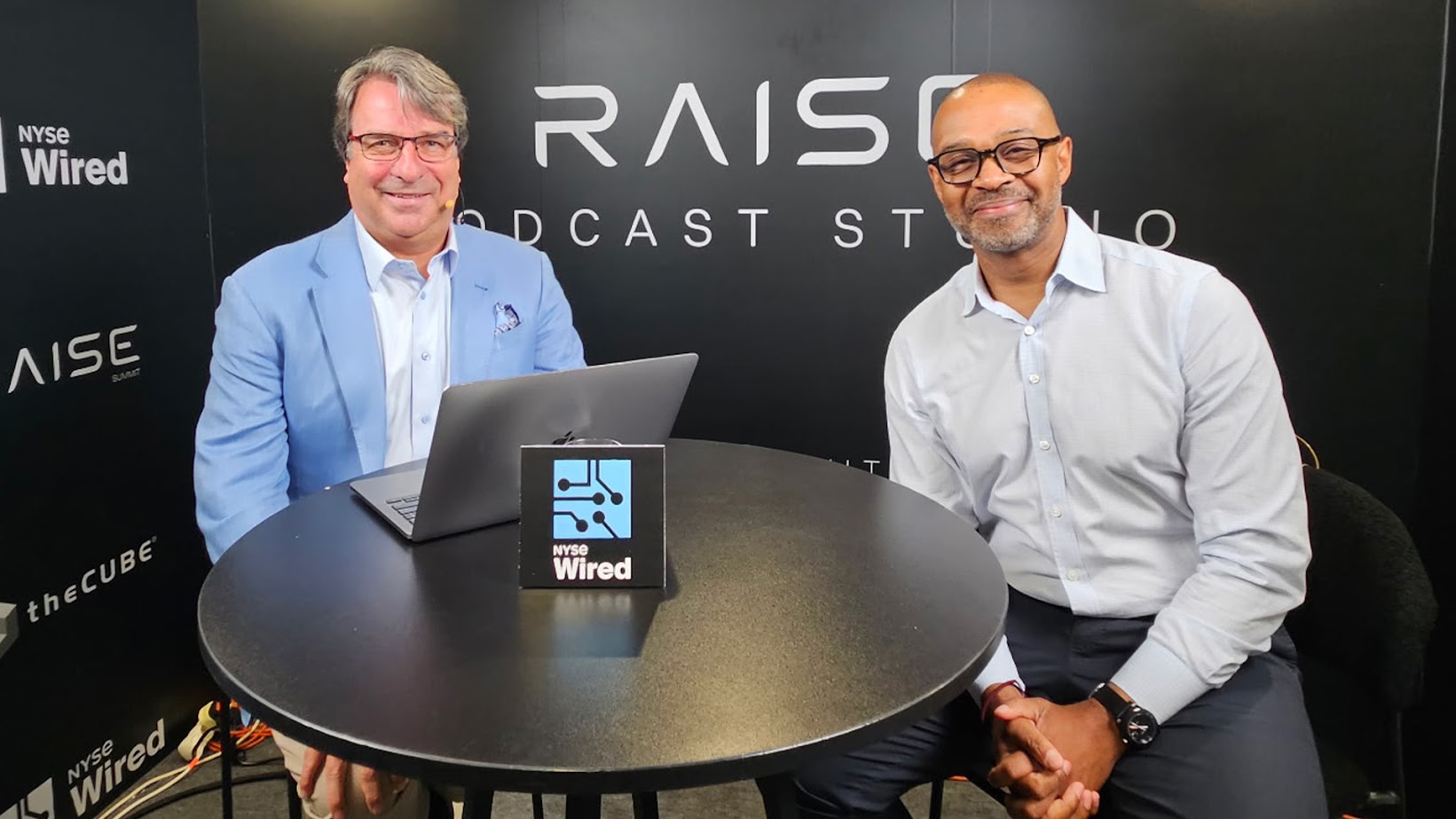
Artificial intelligence (AI) infrastructure is now a driving force in capital markets, radically transforming how companies approach initial public offerings (IPOs) and investors assess enterprise value. The 2025 RAISE Summit in Paris, hosted by theCUBE and NYSE, brought together top leaders from tech, cloud, and finance to reveal that AI is far more than a buzzword—it’s become fundamental to what it means to be IPO-ready and competitive in today’s global marketplace.
Below are 12 key signs, backed by fresh insights from the summit, revealing how AI infrastructure is reshaping public market momentum, regulatory compliance, enterprise growth strategies, and the broader landscape of capital markets in 2025.
1. AI Infrastructure Drives IPO Performance and Investment
With public markets nearing record highs and liquidity flowing in, AI has become central to IPO narratives. According to Michael Harris, Vice Chair at the NYSE, investors now scrutinize the depth and sustainability of a company’s AI infrastructure as closely as its revenue growth. Companies capable of demonstrating robust AI-driven operational efficiency and product innovation are enjoying heightened IPO valuation and post-IPO performance, prompting a surge in U.S. listing interest from European and global firms.
2. Sovereign Cloud Becomes Compliance Backbone
Sovereign cloud adoption is accelerating among enterprises seeking to meet complex, cross-border regulatory demands without sacrificing innovation agility. As outlined by Vultr CMO Kevin Cochrane, industries such as healthcare, finance, and government are embedding governance and policy enforcement into their core infrastructure with sovereign cloud platforms. This enables faster, compliant AI deployments while avoiding costs and delays associated with later-stage audits and retrofits.
3. Data Foundation is the Gateway to Scalable AI
Enterprise-scale AI depends on a strong, flexible data infrastructure. NetApp CEO George Kurian emphasized the shift from model-centric innovation to building reliable, high-performance storage and data management layers. Only with this in place can organizations confidently scale AI, ensuring that breakthroughs in compute power translate to real operational value across the business.
4. Simplifying Enterprise AI Deployment
Nutanix, in partnership with NVIDIA, is at the forefront of providing turnkey AI stacks that abstract away infrastructure complexity. CEO Rajiv Ramaswami outlined how most businesses want to operationalize AI—not train massive models—and Nutanix’s full-stack approach enables rapid deployment for inference workloads across data centers, edge locations, and the cloud. This shift is turning AI infrastructure into an accelerator for business builders, not a roadblock.
5. Google Cloud’s End-to-End AI Stack Sets Scale Standard
Google Cloud is raising the bar for AI scalability and interoperability, from its custom AI-optimized hardware to open protocols and fully integrated cloud services. CMO Alison Wagonfeld highlighted the company’s emphasis on ecosystem collaboration and agent-based architecture (notably through Multi-Cloud Protocol and Agent-to-Agent standards), cementing Google’s reputation as an enterprise AI infrastructure pioneer.
6. Red Hat Leads Open-Source AI Evolution
Open source remains critical in scaling AI across organizations. Red Hat CEO Matt Hicks spoke on minimizing cost per token and maximizing GPU utilization with innovations like Red Hat AI Inference Server and cluster-ready LLM projects. By lowering the barriers for scalable AI inference and emphasizing hybrid AI stacks, Red Hat is expanding the market for operationalized enterprise AI beyond single-model experimentation.
7. App Building Moves Toward Agent-Driven Simplicity
Industrial-strength AI infrastructure is empowering new classes of builders. Heroku’s emphasis on managed scalability and agent-powered applications, championed by CMO Betty Junod, is enabling rapid prototyping and deployment for users beyond traditional developer roles. The adoption of agent interoperability protocols and low-friction development environments positions platforms like Heroku at the center of the next application wave.
8. Model Evaluation and Memory Bottlenecks are Next AI Frontiers
Efficient AI infrastructure now extends beyond raw compute to the need for robust evaluation methods and memory bandwidth. Databricks VP Naveen Rao underscored how feedback loops and product-focused success metrics are as vital as compute in ensuring large models create real-world impact. Next-gen solutions focus on reducing hallucinations, improving context sharing, and unlocking collaborative agent workflows.
9. Data Platforms Like Snowflake Evolve for AI-First Workloads
Benoit Dageville, Co-Founder of Snowflake, described innovations that treat unstructured data as a first-class citizen alongside structured data, making AI the new SQL for business insights. Snowflake is optimizing pipelines and GPU resources, integrating semantic views, and enabling agent-powered data exploration—crucial developments for AI-powered enterprise applications and stronger IPO positioning.
10. Domain-Specific AI Spurs Vertical Infrastructure Demand
Industries from healthcare to finance are demanding specialized AI models for unique sector challenges. Cerebras CEO Andrew Feldman reported surging infrastructure needs as businesses shift from experimentation to critical, production-grade vertical models. To remain competitive, infrastructure vendors are fast-tracking innovations focused on high-throughput, domain-adapted hardware and agent workloads.
11. Speed-to-Market and the Rise of AI Factories
AI infrastructure firms like CoreWeave are revolutionizing how quickly enterprises can go from concept to scalable deployment. General Manager Mike Mattacola said CoreWeave’s modular, regionally-optimized expansion strategies compress build timelines from years to weeks. With Europe and other markets adopting AI at record pace, speed, trust, and integration have become the hallmarks of winning infrastructure partners.
12. The Unrelenting Drive for AI Compute at Scale
Groq’s token-based, high-efficiency compute model is shaking up the landscape for sovereign-scale and enterprise AI. CEO Jonathan Ross described deploying powerful inference hardware and software in entirely new markets—from Finland to Saudi Arabia—without the GPU bottlenecks experienced by competitors. As agentic AI and reasoning-based applications surge, companies capable of rapid, global, and scalable infrastructure delivery are reaping extraordinary rewards in capital markets.
IPO Readiness and AI: The Road Ahead
As we enter the second half of 2025, the convergence of investor scrutiny, technological breakthroughs, and global demand is putting unprecedented focus on AI infrastructure for IPO candidates. Companies aiming to go public must now answer not only questions about growth, but also about the durability, scalability, and regulatory readiness of their AI ecosystems.
From sovereign clouds to modular data centers, open-source innovation to agent-powered apps, the race is on—to scale, secure, and monetize AI like never before. The businesses that can execute on these critical infrastructure trends will be the prime beneficiaries in both public valuations and long-term performance.
For a deeper dive into these trends and interviews from the C-suite leaders driving the AI infrastructure revolution, watch the full coverage of the RAISE Summit here.


