
Trump Announces New Tariffs on Pharmaceuticals, Trucks, and Furniture in Major Policy Expansion
By Osmond Chia & Charlotte Edwards, BBC Business Reporters
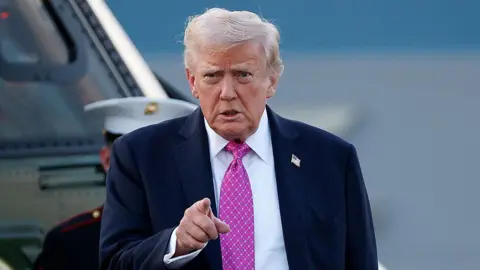
In a major escalation of his administration’s trade policy agenda, US President Donald Trump has announced a sweeping new set of tariffs targeting a range of imported goods. The measures include a 100% tariff on branded or patented drug imports effective from October 1st (unless the manufacturer is operating production plants in the United States), a 25% import tax on all heavy-duty trucks, and a 50% levy on imported kitchen and bathroom cabinets. In addition, the US will impose a 30% tariff on upholstered furniture beginning next week, as part of an effort to address concerns over the “large scale flooding” of these products into the US market by foreign competitors.
Policy Justification: Protecting US Manufacturing
Announcing the tariffs on his social media platform, Truth Social, President Trump cited the surge in imports of pharmaceuticals, trucks, and furniture as a threat to American jobs and manufacturing. He framed the measures as a defense against unfair global competition, arguing, “The reason for this is the large scale ‘FLOODING’ of these products into the United States by other outside Countries.” Trump’s administration has contended that these protections are necessary to encourage domestic investment and rebuild critical supply chains disrupted by years of offshoring.
Domestic and International Reactions
The new policies have triggered strong responses from both US-based businesses and international partners. American business groups, including the US Chamber of Commerce, have repeatedly urged the White House to use restraint, warning that the heightened tariffs could drive up costs for manufacturers and consumers alike, while destabilizing established supply chains. Many truck manufacturers in the US rely heavily on imported components, particularly from countries like Mexico, Canada, Germany, Finland, and Japan. According to Chamber data, Mexico and Canada supplied more than half of all imported truck parts for the medium and heavy-duty sector in 2023.
Internationally, key pharmaceutical exporters—such as the UK, Ireland, Germany, Switzerland, and Japan—are poised to take a hit, with the United Nations reporting that the UK alone exported over $6 billion in pharmaceutical goods to the US last year. Ireland’s Trade Minister Simon Harris, however, emphasized that a recent EU-US agreement capped tariffs on pharma products exported by the EU at 15%, suggesting that there may be some limitations on the reach of the new levies for European firms.
A UK government spokesperson acknowledged industry concerns and affirmed ongoing diplomatic engagement with the US, underscoring the high stakes for cross-Atlantic business.
Market Impact: Uncertainty Looms
The pharmaceutical sector, already grappling with volatility, is bracing for further disruption. Jane Sydenham, investment director at Rathbones, described the tariff news as the latest twist in a “rollercoaster ride” for the industry, notably impacting share prices on both sides of the Atlantic. Instability in trade policy environments has historically exerted downward pressure on valuations, as investors discount the risk of unpredictable cost jumps and regulatory shifts.
However, Neil Shearing, chief economist at Capital Economics, noted that the actual impact on branded drug imports may be less severe than initial headlines suggest. Many top pharmaceutical firms already have US production facilities or have announced plans to relocate manufacturing, which would exempt them from the new tariffs. Additionally, generic drugs are reportedly unaffected by the levy, softening the blow for some segments of the supply chain.
Industry-Specific and Political Implications
Trump’s move to implement harsh tariffs on sectors like heavy-duty trucks and furniture is seen as an attempt to shield domestic icons such as Peterbilt and Mack Trucks from intensified foreign rivalry. The administration asserts that protecting these industries will secure US manufacturing jobs and strengthen supply-chain resilience. The duties on cabinets and upholstered furniture respond to what the President describes as import surges that have “hurt local manufacturers.”
The new tariff announcements are part of a broader trend in US economic policy under Trump, who has frequently used tariffs to address perceived trade imbalances. Earlier this year, he imposed sector-specific tariffs on steel, copper, aluminum, automobiles, and auto parts. In August, sweeping new tariffs on goods from more than 90 countries went into effect, reflecting the president’s ongoing push toward economic nationalism and the intention to reclaim industrial production from overseas.
Criticism and Legal Challenges
Trade experts have raised red flags over the efficacy and propriety of the new tariffs. Deborah Elms of the Hinrich Foundation characterized the measures as “terrible” for American consumers, arguing that higher import costs will almost inevitably be passed down to retail prices. She also pointed out that, compared to earlier retaliatory tariffs—which aimed to correct specific trade deficits—these new industry-wide taxes may serve as a backup to maintain government revenue amid mounting legal contestations in US courts regarding the administration’s sweeping tariff plan.
Further, with rising supply chain costs and ongoing logistical bottlenecks, US manufacturers themselves may feel the pinch, especially those dependents on specialized foreign inputs that are unavailable domestically or prohibitively expensive to source within US borders.
Looking Ahead: Election-Year Stakes
The latest tariff escalation comes as the US gears up for a highly charged election season, with trade and economic policy dominating campaign rhetoric. Supporters of the administration argue that hardline trade policies are boosting employment and encouraging investment, while critics point to higher consumer prices, international tension, and the risk of retaliatory measures from affected trading partners. As legal challenges and international appeals gather steam, the ultimate scope and longevity of the new tariffs remain uncertain.
For now, companies in the pharmaceuticals, automotive, and furniture sectors—and their workers and consumers—are staring down a period of heightened market uncertainty, as the US government doubles down on its commitment to protectionist economic policy.


