
How China is Challenging Nvidia’s AI Chip Dominance
By Osmond Chia | 12 hours ago
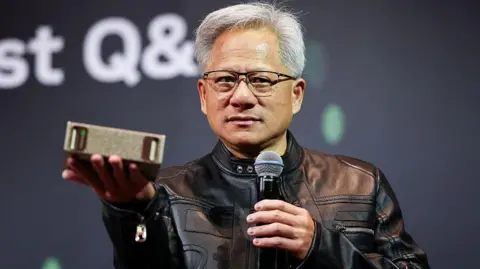
The global race to dominate artificial intelligence (AI) hardware is heating up as China asserts itself as a formidable challenger to Nvidia’s AI chip dominance. Fueled by massive state investment and a robust entrepreneurial ecosystem, China’s leading technology companies—including DeepSeek, Alibaba, Huawei, and Cambricon—are making significant strides in the fabrication and deployment of high-performance semiconductors. This effort is part of a broader strategic imperative to reduce reliance on Western technology and achieve self-sufficiency despite U.S. export controls.
China’s Strategic Investment and Technological Leap
For decades, the United States—anchored by Silicon Valley titans such as Nvidia—has controlled the high-end chip market, supplying the processors necessary to power next-generation AI applications and data centers globally. However, China is quickly narrowing this gap. According to BBC reports and industry analysts, Chinese government initiatives have infused tens of billions of dollars into the sector over recent years, supporting an ecosystem of research and commercial innovation aimed specifically at AI chips—the core engines powering everything from generative AI models to autonomous vehicles.
In 2024, Chinese AI developer DeepSeek stunned the industry by launching a large language model that rivals, and in some benchmarks even surpasses, OpenAI’s ChatGPT. DeepSeek’s model was reportedly trained on significantly fewer high-end chips, signaling fresh efficiency in hardware utilization and system design. The announcement briefly rattled global markets, causing a dip in Nvidia’s share value and sending shockwaves through Silicon Valley.
Chinese Tech Giants Join the ‘AI Chip Race’
China’s push is not limited to startups. Alibaba, one of the world’s largest e-commerce and cloud computing firms, announced a new AI chip in 2024 that state media claim matches the performance of Nvidia’s H20 processor, while being more energy-efficient. Notably, the H20 is a reduced-capability chip Nvidia tailored for the Chinese market under U.S. export constraints.
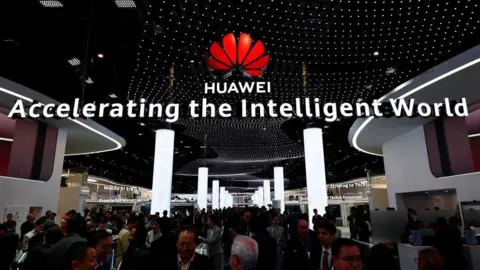
In parallel, telecom and smartphone powerhouse Huawei unveiled its most advanced AI chips and rolled out a three-year plan explicitly aimed at challenging Nvidia’s dominance. Huawei has pledged to open-source its software and chip design tools domestically, aiming to foster a broad base of local developers and further wean China off American semiconductor technology.
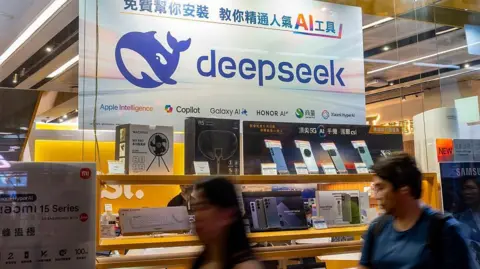
Other homegrown chip designers are also making inroads. Cambricon Technologies, whose share price more than doubled in 2024, is poised to benefit from rising government and commercial demand for domestically produced processors. MetaX has secured deals with China Unicom, a state-owned telecommunications giant, to supply AI chips for critical infrastructure.
Challenges: Hype vs. Reality and the Road Ahead
Despite this flurry of high-profile launches and growing investor interest, analysts caution against overinflating expectations. Many performance claims made by Chinese firms lack peer-reviewed data or standardized testing, making comparisons with global leaders like Nvidia difficult.
“While the gap is shrinking, U.S. chips still outpace China’s in complex analytics and scalability,” observes Dr. Jawad Haj-Yahya, a computer scientist who has directly tested both American and Chinese offerings. The consensus is that Chinese semiconductors can now run many predictive AI workloads competitively but still lag in the most advanced, multi-layered neural training and inference tasks critical to frontier AI systems.
Experts also point to the relative immaturity of China’s semiconductor supply chains. The U.S., along with partners in Taiwan and South Korea, maintains deep expertise in chipmaking equipment, design, and logistical integration. Trade tensions and technology transfer controls—most notably U.S. restrictions on Nvidia’s advanced GPU shipments to China—further complicate the landscape, aiming to slow down China’s progress just as its domestic industry hits its stride.
Geopolitical Stakes: AI, Chips, and Trade War
The technological rivalry is layered atop an escalating U.S.-China trade war. Recent U.S. administrations have introduced sweeping tariffs and tightened controls on semiconductor exports, arguing national security concerns and the need to prevent cutting-edge AI technology from bolstering rival powers. China has responded with its own measures, both economic and regulatory; in 2025, Chinese authorities launched an anti-monopoly probe into Nvidia’s business practices, underscoring Beijing’s willingness to wield policy levers in support of domestic champions.
Chinese President Xi Jinping’s doctrine of “high-quality development” explicitly prioritizes technology independence—from AI and quantum computing to renewables—and has been succinctly described as seeking not to rely on “anyone’s gifts.” Major state investment in R&D is funneling new graduates and established engineers into ambitious chip startups, giving rise to predictions that China might achieve full self-sufficiency in high-end AI chips within five to seven years.
The Role of Talent, Innovation, and Market Power
Nvidia CEO Jensen Huang, speaking on the BG2 podcast in late 2024, credited China’s rapid progress to its vast pool of skilled engineers and fierce domestic competition. “This is a vibrant, entrepreneurial, high-tech modern industry,” he said, warning that free trade and open markets are essential for American companies to keep their edge as Chinese firms catch up.
Yet questions remain about innovation culture. Some academics, including National Taiwan University professor Chia-Lin Yang, argue that China’s ‘whole-of-nation’ approach—where policy and industry align around shared milestones—can stifle radical innovation. She contends that disruption and out-of-the-box creativity are difficult in tightly regulated, goal-driven sectors, although China’s raw talent pool may soon close the innovation gap.
Conclusion: A Shifting Balance in the AI Era
As China’s AI chip ecosystem matures, the ongoing technology rivalry is shaping global supply chains, industry standards, and the allocation of talent. For now, the U.S. retains the lead in the most sophisticated AI semiconductors, but China’s rapid ascent presents a credible threat to incumbents, with new breakthroughs and major contracts emerging almost every quarter. The next few years will determine whether China can gain the “raw performance” required for the world’s most complex AI systems and finally break Nvidia’s stranglehold on AI hardware.


