
‘It’s Going to Be Really Bad’: Fears Over an AI Bubble Bursting Intensify in Silicon Valley
By Lily Jamali, Technology Correspondent | Published 11 hours ago
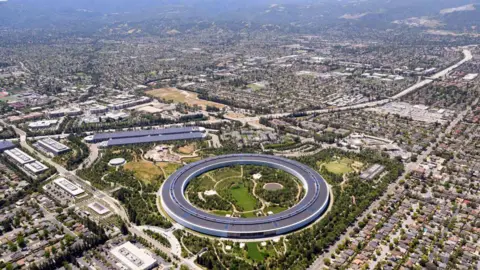
Silicon Valley’s AI Gold Rush: Between Opportunity and Overvaluation
A palpable sense of unease is spreading across Silicon Valley as industry leaders, economists, and investors confront what many now describe as an ‘AI bubble.’ With the rapid rise in artificial intelligence (AI) company valuations, blockbuster investment deals, and engineering-driven hype, comparisons are being drawn to previous periods of excessive optimism in the technology sector—most notably the dot-com bubble at the turn of the century.
This shift in sentiment comes as companies like OpenAI, Nvidia, and AMD dominate headlines with multi-billion dollar transactions and frenetic growth forecasts. AI-linked stocks have powered a significant portion—estimated at 80%—of the S&P 500’s gains in 2024. Meanwhile, Gartner projects that global spending on AI will surpass $1.5 trillion before the end of 2025, a staggering sum reflecting both excitement and potential risk.
Expert Warnings and Bubble Signals
OpenAI CEO Sam Altman, speaking candidly with the press at the company’s recent DevDay, acknowledged the ‘bubbly’ conditions chilling investors and policymakers alike. “I know it’s tempting to write the bubble story,” Altman noted, conceding that certain parts of the AI landscape are inflated. Even so, he maintains that OpenAI’s breakthroughs—including ChatGPT, DALL-E, and advances in multi-modal AI—hold substantial long-term value.
Not everyone is reassured. Major financial authorities, including the Bank of England and the International Monetary Fund, have issued explicit warnings about the risks of overheating in the AI sector. JP Morgan Chase CEO Jamie Dimon added his voice this week, cautioning that the level of uncertainty facing tech markets merits far greater attention: “The level of uncertainty should be higher in most people’s minds.”
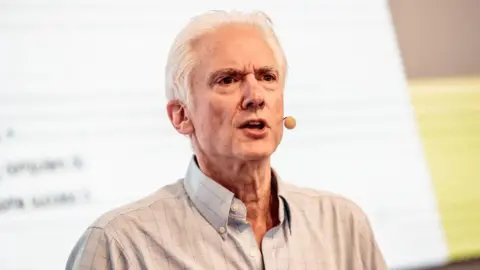
Jerry Kaplan, an iconic Silicon Valley entrepreneur and author, told an audience at the Computer History Museum that he has witnessed “four bubbles” in his career, but the current AI frenzy dwarfs previous cycles, both in stakes and potential fallout: “When [the bubble] breaks, it’s going to be really bad, and not just for people in AI. It’s going to drag down the rest of the economy.”
Billions at Stake: A Web of Tangled Deals
Central to the AI investment boom is OpenAI. The company, which catapulted into mainstream consciousness with the launch of ChatGPT in 2022, is currently valued at $500 billion after recent share sales—a record for a private technology company. OpenAI sits at the nexus of a rapidly expanding network of financing arrangements:
- Nvidia partnership: In 2024, OpenAI signed a $100 billion deal with Nvidia, the world’s most valuable publicly traded company, to develop next-generation data centers fuelled by Nvidia’s advanced chips.
- AMD engagement: This week, OpenAI announced plans to acquire billions in AI processors from AMD, potentially making it one of the chipmaker’s largest stakeholders and further intensifying competition among hardware suppliers.
- Cloud titans involved: Microsoft, which has invested over $13 billion in OpenAI, and Oracle, which has formalized a $300 billion deal to host AI data infrastructure, add to the complexity and magnitude of these arrangements.
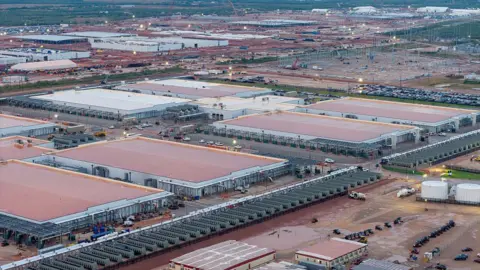
- Stargate project: Massive AI supercomputer campuses—most notably a $500 billion, 10-gigawatt complex under construction in Texas—are being built with investments from Oracle, SoftBank, and others, signaling the sector’s long-term ambitions.
Critically, these interlocking deals often combine direct investments with incentives that some analysts describe as ‘circular financing’ or ‘vendor financing.’ In such arrangements, companies lend to, invest in, or reward their own customers—blurring the true scale of organic demand and fueling growth cycles that may be unsustainable over time.
For example, Nvidia, which has a stake in AI infrastructure providers like CoreWeave (also serving OpenAI), is defending its approach to strategic investment: CEO Jensen Huang emphasized that the company places no exclusivity requirements on use of its investments, aiming “to support them and help them grow—and grow the ecosystem.”
Telltale Signs of Overheating
Veterans like Kaplan see familiar signals of a bubble. Companies are announcing massive infrastructure projects and product launches for which they may not possess adequate capital. Retail investors, hoping to capture a share of future AI riches, have sent stocks like AMD soaring in a matter of days, echoing patterns of speculative excess from prior tech cycles.
The physical manifestation of the AI arms race is equally striking: sprawling data centers are being built in remote areas—frequently deserts—raising environmental concerns in addition to financial ones. “We’re creating a new man-made ecological disaster: enormous data centers…that will be rusting away and leaching bad things into the environment,” Kaplan warns. These projects, he fears, could be abandoned once capital dries up, leaving environmental and financial wreckage behind.
The Debate: Malinvestment or Generational Progress?
While skepticism mounts, some tech leaders argue that today’s investments—even if excessive—will ultimately foster lasting innovation. Jeff Boudier, a product lead at the prominent AI community platform Hugging Face, notes that the modern internet itself was forged on the ashes of the telecom bubble. “If there is overinvestment into infrastructure for AI workloads, there may be financial risks tied to it,” Boudier says, “but it’s going to enable lots of great new products and experiences—including ones we’re not thinking about today.”
And there is continued faith in AI’s potential for societal transformation: from healthcare breakthroughs to revolutionizing logistics, science, and creative work. The question, increasingly, is who will have the capital (and the staying power) to shepherd the sector through a potential downturn.
As Rihard Jarc, founder of UncoverAlpha, observes: “Nvidia looks like the last lender or investor. Who else has the capacity right now to invest $100 billion in another company?” Jarc’s sentiment is emblematic of broader investor caution amidst uncertain economics and complex capital flows.
Conclusion: Caution—and Opportunity—ahead
With global AI investments eclipsing historic records and valuations headlining global finance coverage, Silicon Valley stands at a crossroads. AI offers the promise of seismic technological advancements, but the speed of capital inflows, tangled financing structures, and environmental considerations are combining to create a precarious environment. If the bubble bursts, its impact will not be confined to AI alone—it may reverberate throughout the technology sector and the general economy.
For now, optimism and apprehension compete in equal measure. Whether the current AI investment frenzy will catalyze the next era of computing or echo the painful lessons of bubbles past remains to be seen.


