
Trump’s Hazy Ukraine Arms Announcement Marks Significant Tonal Shift
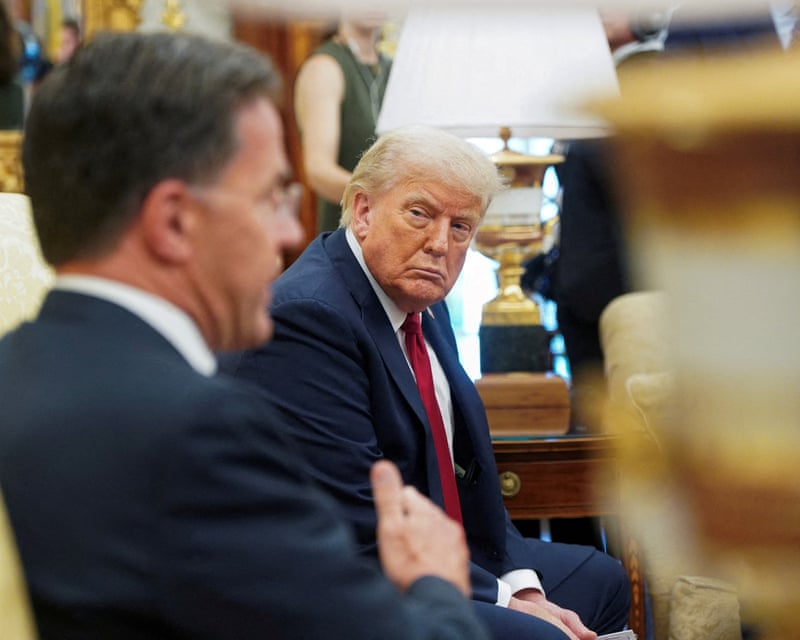
President Donald Trump’s recent announcement regarding U.S. arms sales to Ukraine, delivered in a characteristically ambiguous Oval Office press conference alongside NATO Secretary General Mark Rutte, has marked a pivotal moment—and a notable shift in tone—in American policy towards the ongoing conflict in Eastern Europe. While the specifics of the aid remain uncertain, Trump’s signaling of support for Kyiv, paired with a fresh warning of crippling tariffs on Moscow, suggests a U.S. administration realigning its stance on Russian aggression.
A New Model: U.S. Weapons, European Payments
During the 30-minute briefing, Trump confirmed that the U.S. would supply weapons to Ukraine, with the financial burden primarily shared by other NATO member states. Though the president stopped short of detailing the scale of this initiative—no financial figures or exact breakdowns of military hardware were provided—he referenced the inclusion of full Patriot air-defense systems among the proposed package. NATO’s Mark Rutte elaborated briefly that the deal would also include “missiles and ammunition.”
This creative cost-sharing model comes on the heels of nearly three years and $67 billion in direct U.S. military and security assistance to Ukraine under President Biden (according to the U.S. State Department). That sum has funded anti-tank Javelins, HIMARS artillery, drones, anti-air systems, and vital ammunition. If Trump’s new arrangement results in an aid package in the $10–20 billion range, it would continue the message of robust Western backing for Ukraine’s resistance to Russia’s invasion.
Detailed Impact Still Uncertain
Analysts and officials in Kyiv have welcomed the development as a validation of Ukraine’s persistent lobbying, especially after a period of strained ties with the Trump administration. As recently as February 2025, Ukrainian President Volodymyr Zelenskyy faced an icy reception—and the temporary suspension of U.S. weapons deliveries—amid contentious Oval Office exchanges. Both arms shipments and intelligence sharing have since resumed, with this week’s news offering hope to Ukrainian forces seeking renewed Western resolve amid ongoing Russian missile and drone attacks.
The lack of details, however, clouds the potential impact. Deliveries of critical air defense—like Patriot batteries—could be transformative if provided at meaningful scale, but Western officials and Ukrainian commanders alike will be watching closely to learn what materiel, deployment timelines, and operational support actually materialize from this agreement.
Tariff Threat: 100% Duties on Russian Goods
Adding pressure, Trump announced he would levy a 100% tariff on all Russian imports to the United States if President Putin does not agree to a ceasefire within 50 days. This threat, while a significant escalation, is met with skepticism from international economists and foreign policy watchers. Trump’s prior use of tariffs—in particular, the sweeping duties imposed on Chinese goods and later partial rollbacks—suggests that implementation could remain fluid and subject to negotiation.
Nevertheless, the specter of massive new tariffs comes as the Russian economy, already contending with severe Western sanctions and the costs of a protracted war, faces further isolation. In 2024, Russia’s GDP contracted by an estimated 3%, with the ruble losing significant value and key export sectors like energy facing diminishing European demand. Additional U.S. trade barriers could further constrict the Russian economy, adding to incentive for negotiation in the conflict.
A Shift in Tone—and Political Calculations
Notably, Trump’s rhetoric on Russia and Ukraine has evolved. After campaigning and entering office with boasts of his ability to “make a deal” with Vladimir Putin—often, critics said, at the expense of Ukrainian sovereignty—Trump expressed clear frustration at Moscow’s intransigence. He shared, in almost confessional asides, that his wife, Slovenian-born First Lady Melania Trump, has repeatedly challenged his optimism about Putin’s intentions: I go home and I tell the first lady: ‘I spoke with Vladimir today, we had a wonderful conversation,’
Trump recounted. And she said: ‘Oh really? Another city was just hit.’
Four attempts to broker a peace, he said, had been thwarted by immediate new Russian attacks, notably with Kyiv and other cities bombarded on the heels of apparent diplomatic progress. This disillusionment was evident as Trump quipped, We’re very unhappy – I am – with Russia.
Global Reactions: Kyiv Welcomes, Moscow Dismisses
Ukrainian officials have cautiously applauded the shift. Foreign Minister Dmytro Kuleba acknowledged, “Even incremental increases in advanced defensive systems can save lives and cities.” For Zelenskyy—who just months ago was all but ejected from the White House—the pivot is a validation of Ukraine’s long-held hope that Western pragmatism would ultimately overcome wishful engagement with the Kremlin.
In Moscow, however, the initial reaction was defiant. Kremlin spokespeople dismissed the tariff warnings, blaming the West for prolonging the conflict. Yet, with coordinated European and U.S. actions, Russia’s diplomatic and economic isolation continues to mount. This week, the EU reaffirmed its own plans to purchase American air defense hardware for joint delivery to Ukraine, signaling new levels of transatlantic cooperation despite internal debates.
European Commitment and Geopolitical Stakes
Europe’s willingness to foot much of the bill—driven by German, French, and Polish advocacy—demonstrates the high stakes felt by NATO members along Russia’s periphery. The move comes as the war’s momentum shifts back and forth: Ukraine, after regaining territory in 2024’s Kherson and Zaporizhzhia offensives, faces a renewed Russian push in the east during 2025. With food and energy security at risk and refugee numbers near 8 million since the invasion, European leaders are keen to avoid any perception that the alliance is wavering in support.
The Road Ahead
While Trump’s announcement is short on clear figures and delivery dates, the symbolic value is high. For Kyiv, Western public unity and continued arms flows are essential lifelines. For Moscow, Western unity and fresh economic threats raise the costs of further escalation or persistent refusal to negotiate.
Observers now await additional details on the scale, timeline, and execution of the U.S.-European plan. As the conflict drags on, U.S. and European resolve—and Moscow’s response to economic and military pressure—could shape both Ukraine’s battlefield prospects and global security priorities for months to come.
Updated July 2025 with latest diplomatic, economic, and military developments related to the U.S.-NATO-Ukraine alliance and Russia’s ongoing war.


