
Supreme Court Clears Path for Trump Administration’s Plan to Dismantle Education Department, Lay Off 1,400 Employees
By Mark Sherman, Associated Press — Updated July 14, 2025
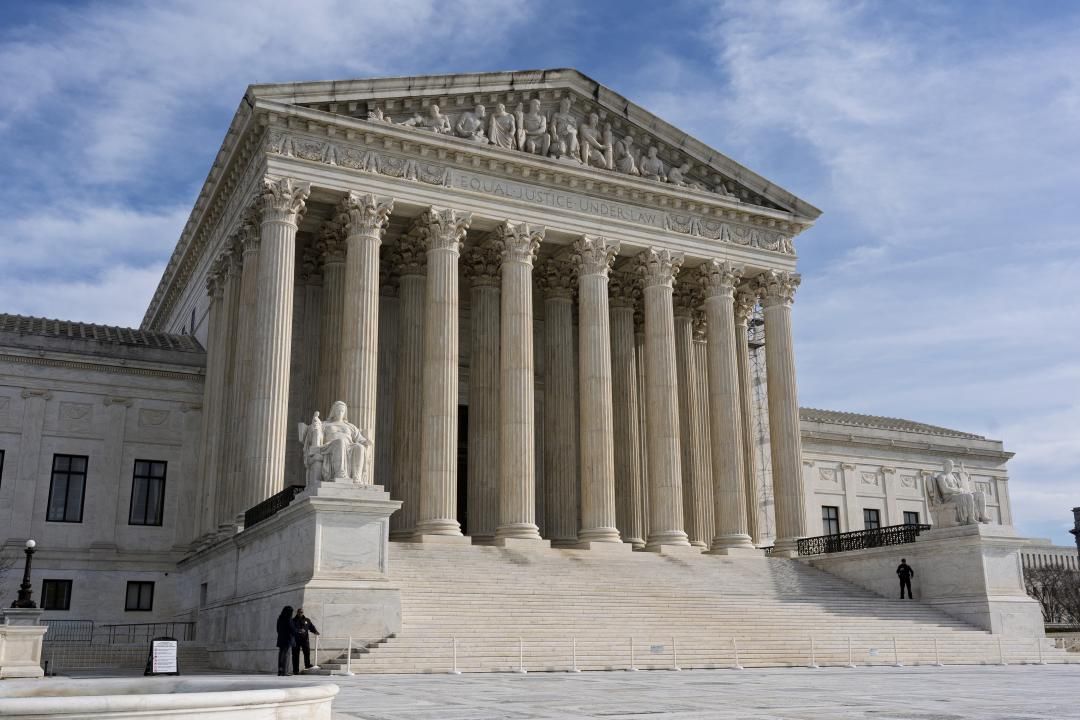
In a landmark ruling that could reshape the structure of federal education in the United States, the Supreme Court on Monday allowed President Donald Trump’s administration to move forward with plans to lay off nearly 1,400 employees from the U.S. Department of Education. The decision, determined by a divided bench, halts a lower-court injunction and reignites debate over the federal role in public education and the scope of presidential power.
The order, passed with the three liberal justices dissenting, comes after U.S. District Judge Myong Joun of Boston blocked the layoffs and questioned the legality of the administration’s plans. Trump’s proposals to dismantle the Department of Education were a central feature of his 2024 re-election campaign, aiming to shift federal education functions back to states as part of a broader effort to downsize the federal government.
“The high court has handed a Major Victory to Parents and Students across the Country,” Trump declared on his social media platform Monday night, stating that the administration would begin the “very important process” of returning education authority to the states. Secretary of Education Linda McMahon echoed this sentiment, emphasizing presidential authority over federal agencies in her statement following the decision.
Judicial Division—What the Supreme Court Ruled
The Supreme Court’s brief order provided no reasoning, consistent with custom on emergency appeals—cases often referred to as the “shadow docket.” Justice Sonia Sotomayor, joined by Justices Ketanji Brown Jackson and Elena Kagan, issued a forceful dissent, criticizing the majority for enabling executive actions that, according to her, may lack legal foundation. “When the Executive publicly announces its intent to break the law, and then executes on that promise, it is the Judiciary’s duty to check that lawlessness, not expedite it,” Sotomayor wrote.
Civil rights and education advocacy groups have denounced the Supreme Court’s refusal to provide more detailed justification. Skye Perryman, CEO of Democracy Forward, called it a “devastating blow to this nation’s promise of public education for all children.” The American Federation of Teachers and a coalition of Democratic attorneys general expressed concern that the ruling would leave critical Department of Education responsibilities unfulfilled, from enforcing civil rights protections to distributing student financial aid.
Background of the Case and Legislative Impact
Since Trump’s return to office in January 2025, restructuring the federal workforce has topped his agenda. In June, the Supreme Court gave the administration latitude to reduce federal staff across agencies, consistently rejecting lower court findings that the cuts likely violated federal statutes. The Education Department layoffs are the most far-reaching yet, representing approximately 10% of the agency’s workforce, based on current staffing data from the U.S. Office of Personnel Management.
The Department of Education plays a fundamental role in the U.S. education system, overseeing $100 billion in annual federal funding programs. Critics of the layoffs warn that eliminating key staff will undermine existing programs like Title I support for schools serving low-income students, oversight of special education, and the management of the Free Application for Federal Student Aid (FAFSA), which currently supports over 17 million students nationwide.
Both legal challenges—consolidated into the case before the Supreme Court—included school districts, labor unions, and Democratic-led states. The plaintiffs allege that the wholesale reduction in staff and services effectively constitutes an unlawful shuttering of the department and a violation of Congressional mandates.
Wider Implications: From the Federal Workforce to State Authority
Trump’s efforts to take apart the Department of Education reflect ongoing disputes over federalism in America. Supporters argue that decentralizing power will allow states to design public education policies better suited to local needs and free classrooms from what they view as burdensome federal regulations. Critics argue it will widen the gap between well-resourced and underfunded districts and threaten enforcement of key civil rights protections.
Elimination of 1,400 Education Department jobs—after administrative leaves that began in March—will have a tangible impact on the agency’s ability to manage programs, according to the American Federation of Government Employees Local 252. Department officials have stated they were “actively assessing how to reintegrate” employees after the injunction, but are now expected to advance terminations promptly.
While the administration frames the move as a return of autonomy to states, observers note many states rely heavily on federal funding streams and technical guidance. According to a 2024 report by the National Center for Education Statistics, federal funds account for about 8% of total K-12 education funding—vital to disadvantaged communities.
Ongoing Legal and Political Fallout
The Supreme Court’s ruling does not end the legal battle. The lawsuits challenging the legality of the department’s unwinding will continue in lower courts, where judges may still decide whether the administration’s actions are compliant with federal law. The Biden-aligned coalition of states and education groups, which brought the initial suit, signaled that they do not intend to give up.
The decision has quickly become a new flashpoint in the national debate over education policy, states’ rights, and the separation of powers. As the 2026 midterm elections approach, both political parties are likely to seize on the ruling: Republicans touting the downsizing as bureaucratic efficiency and Democrats warning of damage to public education systems.
Separately, more than 20 states have recently filed suit against the Trump administration challenging the freeze of billions in Title I, after-school, and summer program funding. With federal education policy entering an era of profound uncertainty, states, districts, and millions of American families are bracing for further changes to the landscape of public education.


