
China Calls for Global AI Cooperation Days After Trump Administration Unveils Low-Regulation Strategy
Published: July 26, 2025
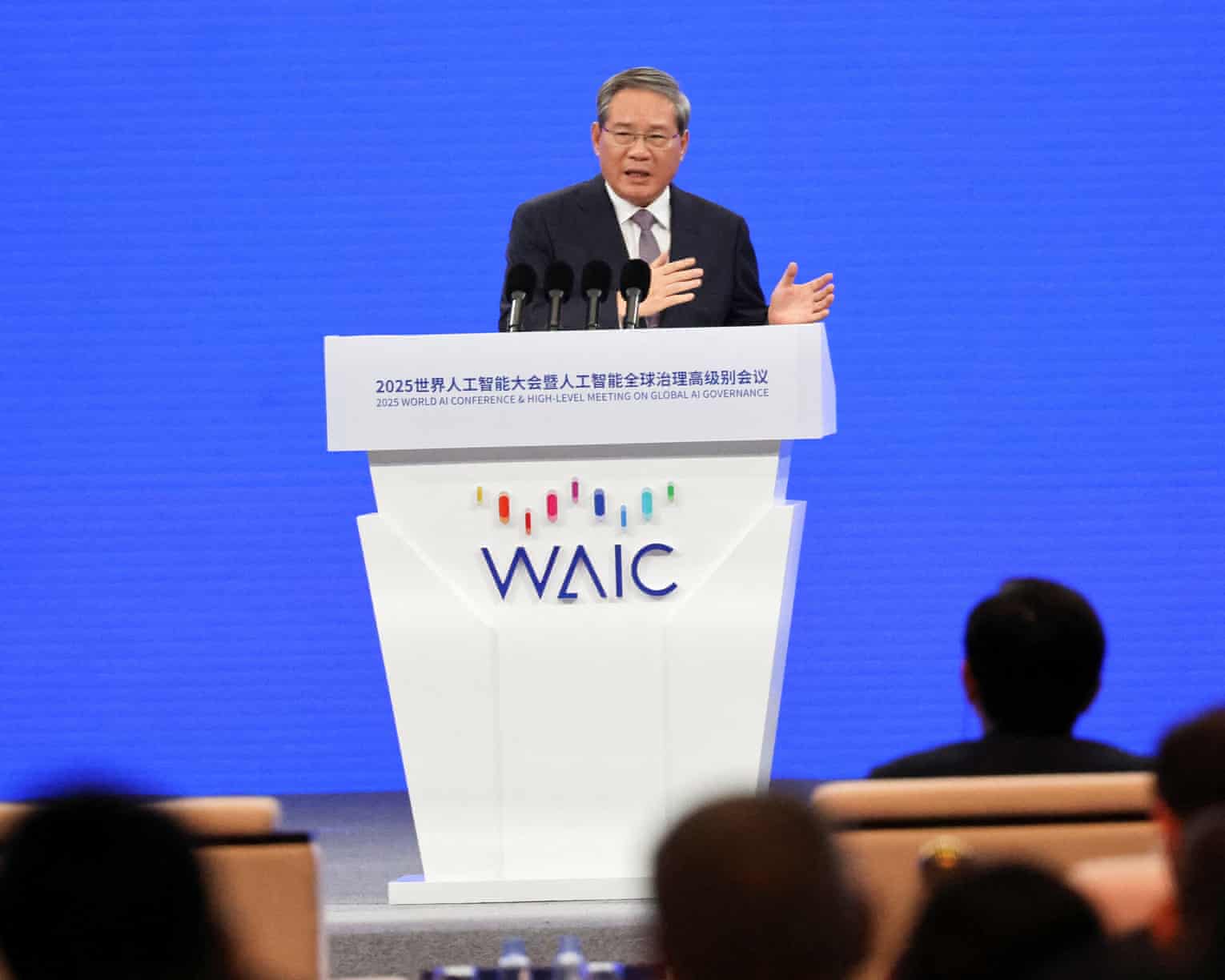
China’s Premier, Li Qiang, has called for intensified global cooperation in the development and governance of artificial intelligence (AI) during the opening of the 2025 World Artificial Intelligence Conference (WAIC) in Shanghai. His statement comes at a pivotal moment, just days after the United States, under former President Donald Trump’s administration, announced a sweeping new AI strategy prioritizing industry-driven innovation with minimal regulatory oversight.
Li Qiang addressed thousands of global industry leaders, policymakers, and researchers gathered at the flagship summit: “As AI reshapes every sector of society and economy, the risks and opportunities transcend national boundaries. We urge all nations to collaboratively establish global mechanisms for the responsible development, deployment, and governance of AI.”
Diverging Approaches on the Global Stage
The Chinese Premier’s remarks highlight a clear divergence in international AI policy. On July 23, 2025, the Trump administration declared an ambitious plan to accelerate AI sector growth by dismantling a range of environmental and land-use regulations, and by promoting voluntary self-governance among tech companies. While US officials argue that low-regulation enables innovation and international leadership, critics point to risks such as insufficient safety standards, algorithmic bias, and lax data protections.
The US Department of Commerce emphasized in its announcement that “America will lead the tech race through agility, investment, and competitive freedom, not red tape.” However, civil rights and environmental groups have challenged the plan, warning of job dislocation, potential misuse of AI technologies, and unintended impact on local and global communities.
China’s Vision for AI Diplomacy
China’s government views AI as a transformational technology that requires not only national investment but also multilateral stewardship. Over the past year, Beijing has accelerated its efforts to host high-profile summits, forge international AI research partnerships, and propose ethical guidelines for safe deployment. The World Artificial Intelligence Conference serves as a strategic platform for China to position itself as a leader in setting standards for AI safety, fairness, and inclusivity.
“We must share responsibility for ensuring AI benefits all humanity,” said Li Qiang, referencing recent incidents involving automated systems in critical sectors. “By establishing open channels for dialogue, transparency, and shared protocols, together we can prevent technological risks from escalating out of control.”
China has already introduced some of the world’s first regulatory frameworks on generative AI, including rules that urge transparency in deepfake content and restrictions on automated decision systems in financial and judicial contexts. These contrast sharply with the US’s lighter regulatory approach.
Global Stakes: Cooperation or Fragmentation?
Major economies are racing to shape the rules of engagement for AI, with the European Union, United States, and China each advancing distinct regulatory philosophies. The European Union’s AI Act, for example, imposes stringent risk categorization and bans on certain high-risk applications, reflecting a precautionary regulatory approach. In contrast, the US model now prioritizes rapid rollouts and voluntary guidelines, while China seeks to blend state oversight with calls for global consultation.
This policy divergence carries both economic and ethical implications. According to a recent McKinsey report, generative AI could add between $2.6 trillion and $4.4 trillion annually to global GDP, but only if managed in a stable, trusted way. A patchwork of uncoordinated rules could hamper innovation, fragment technology ecosystems, and create risks for privacy, security, and human rights.
Speaking at WAIC, Google’s AI chief Demis Hassabis called for a “Geneva Convention for AI safety,” urging government leaders to emulate postwar cooperation on nuclear technology. “We urgently need cross-border standards and joint testing systems to guarantee transparency, explainability, and security in powerful AI models,” Hassabis emphasized.
Tech Industry Reactions
Leading global tech firms are watching the growing regulatory gap with concern. Many US and EU companies warn that under-regulation could lead to public trust crises, manipulation of AI technologies, and unchecked environmental impacts — especially as data centers expand rapidly and energy consumption climbs. Conversely, Chinese firms see an opportunity to champion responsible AI stewardship by aligning with emerging priorities around equity and societal benefit.
“Responsible AI doesn’t stop at national borders,” said Ling Wei, chief policy officer at Chinese AI giant Baidu. “We welcome structured engagement with regulators and the global research community, but we need to be realistic about the economic and strategic stakes.”
Companies on both sides of the Pacific are ramping up compliance and ethics teams to adapt to fast-shifting global expectations, with many calling for unified standards to avoid costly clashes and barriers to technology trade.
Looking Ahead: Toward a New AI Governance Order?
China’s call for collaboration will be tested as governments navigate lack of consensus over data privacy, intellectual property, AI in warfare, and the role of public interest in industry policy. The United Nations and the Organisation for Economic Co-operation and Development (OECD) have both launched new working groups to explore shared global AI principles, but concrete progress remains slow.
“Ultimately, the world faces a stark choice,” said Professor Yu Ping of Tsinghua University, an advisor to the Chinese AI policy task force. “Will we seize the chance to build a responsible, shared future for artificial intelligence? Or will fragmented interests and ideological divides lead to a global AI arms race?”
As geopolitical tension rises and the stakes increase around the deployment of ever more powerful AI systems, the international community’s ability to build common ground on transparency, ethics, and cross-border oversight will be critical in shaping the next era of technological progress.


