
Trump and UK Prime Minister Keir Starmer Meet in Scotland to Address Trade, Gaza Humanitarian Crisis, and Global Security
Updated July 28, 2025 by NBC News
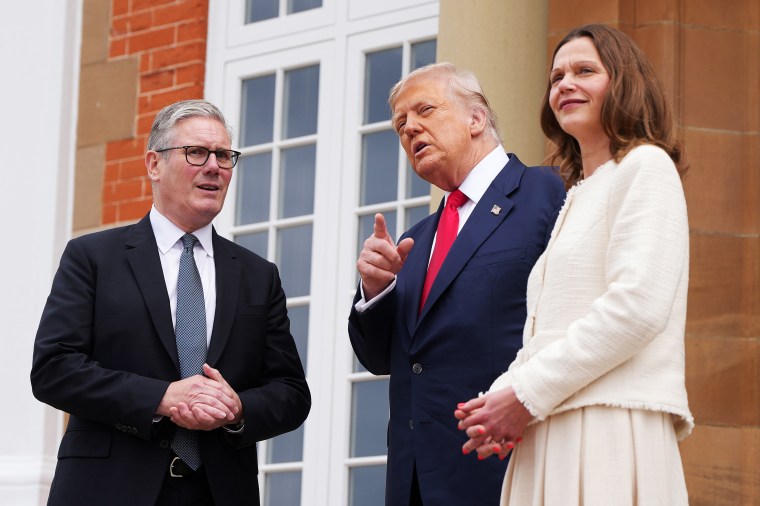
Turnberry, Scotland — President Donald Trump and British Prime Minister Keir Starmer convened at Trump Turnberry this morning for high-stakes discussions focused on cementing a US-UK trade deal and responding to escalating global crises. The two leaders embraced as Starmer arrived, the moment marked by bagpipes and the eager attention of world media.
Their summit comes at a time of profound shifts in the global economic and political order. The US has implemented or proposed bold new tariffs on European and Chinese goods, recalibrating long-standing trade norms. Meanwhile, the humanitarian crisis in Gaza and the ongoing war in Ukraine are shaping new diplomatic urgencies across the Western alliance.
Formalizing a New US-UK Trade Accord
An official US-UK trade agreement has eluded negotiators since Brexit, but both Trump and Starmer signaled significant progress. In May, the nations announced a bilateral framework intended to lower tariffs on select goods, increase investment in digital services, and boost energy cooperation. According to UK officials, the deal could generate over £20 billion ($25.7 billion) in new trade over the next five years, offering a critical boost to Britain’s post-Brexit economy and securing American market access for key UK industries, including pharmaceuticals and advanced manufacturing.
White House Press Secretary Karoline Leavitt said, “Today’s meeting is about moving from words to action. The focus is on finalizing outstanding provisions—particularly those related to data, services, and financial compliance.”
The backdrop is Trump’s more aggressive global tariff policy. Just hours before meeting Starmer, the President announced the US would implement a baseline 15% tariff on most imported goods from countries without a trade deal—excluding USMCA partners. This sweeping strategy aims to protect American manufacturing and rebalance global trade but has provoked strong responses from partners and adversaries alike.
The European Union has responded by accelerating trade talks with Asian economies and announcing a €600 billion ($650 billion) fund to support EU exporters affected by the new US tariffs.
Humanitarian Focus: Gaza Crisis Takes Center Stage
The Gaza Strip remains at the heart of transatlantic diplomacy. Trump was visibly moved by media images of children suffering in Gaza, reportedly expressing to aides, “We can save a lot of people.” During their meeting, both leaders agreed to enhance humanitarian assistance and emphasized the urgent need for increased aid, safe corridors for food, and pressure on both Israel and Hamas to allow international relief in the enclave.
The White House confirmed the US had previously allocated $60 million in aid for Gaza. Following his emotional reaction, Trump announced plans to set up new food distribution centers coordinated with international agencies, while promising “an even more robust US involvement.”
The United Nations reports that, as of July 2025, more than 80% of Gaza’s residents are food insecure, with UNICEF warning that children make up the vast majority of severe malnutrition cases. Despite international pledges, access remains hampered by blockades, security concerns, and internal political strife.
Starmer echoed the United States’ call for “immediate relief and an international effort to restore basic living conditions,” aligning the UK’s diplomatic priorities with Washington on this humanitarian front.
Ukraine and Russia: The Threat of New Sanctions
The Ukraine conflict remains ever-present in US and European security calculations. At the Turnberry summit, Trump reasserted his administration’s deadline—less than two weeks—for Russia to halt hostilities in Ukraine or face the imposition of sweeping secondary sanctions. These “secondary” measures would target not just Russia, but any nation or entity buying Russian exports, tightening the economic noose on the Kremlin.
Such sanctions can have far-reaching effects. According to the US Treasury Department, the ongoing western sanctions have already shrunk Russia’s GDP by roughly 3% over the past year. An expanded regime could disrupt global energy and commodities markets, potentially raising costs for consumers worldwide—but officials argue these moves are necessary to accelerate peace talks.
Starmer voiced his government’s support for coordinated transatlantic action, stressing, “The integrity of international law is at stake. Britain will work with the United States and Europe to ensure diplomatic, economic, and, if necessary, military pressure remains on Russia.”
Parallel Trade Negotiations: China Awaits Outcome
As Trump and Starmer finalized their talks in Scotland, senior US officials, including Treasury Secretary Scott Bessent and Trade Ambassador Jamieson Greer, were in Stockholm to negotiate with Chinese leaders. These critical rounds are aimed at forestalling a new tranche of US tariffs set to impact billions in trade as an August 12th deadline looms.
While progress has been incremental, both sides have signaled a willingness to extend certain suspensions—reflecting the immense economic stakes involved. US-China trade reached $690 billion in 2023 according to the US Census Bureau, but headwinds from tariffs threaten to slow the global supply chain and increase consumer prices for electronics, apparel, and automotive components across both continents.
Broader Diplomatic Implications & Looking Ahead
The Trump-Starmer exchanges provided rare insight into how leaders are tackling an era of acute geopolitical risk: navigating the competing demands of domestic politics, economic nationalism, and humanitarian accountability. Trump’s assertive stance on trade is redefining US alliances, while his administration’s willingness to increase humanitarian initiatives reflects both the pressures of public opinion and the realities of modern televised crises.
Beyond Turnberry, the ripples of today’s discussions are likely to reverberate through capitals in Brussels, Beijing, and Moscow. Both the US and UK confirmed further meetings would be held in late August, with diplomatic teams tasked to draw up final agreement texts on trade and additional joint humanitarian efforts.
As global tensions persist, the outcome of these negotiations will shape not just bilateral relations, but the direction of international order for years to come. In the words of one senior UK official, “This is not just about tariffs and treaties—it’s about the West showing unity and moral leadership in a time of acute crisis.”


