
Crypto Crash: Why Are Altcoins Falling Today? Key Factors Behind the August 2025 Slump

The cryptocurrency market is experiencing a pronounced downturn in August 2025, with Bitcoin slipping below key psychological levels and nearly every major altcoin posting significant losses. While volatility is an inherent feature of digital assets, the synchronized drop across the sector has many investors and analysts asking: What’s causing this latest crypto crash, and what trends suggest further pain or relief ahead?
Bitcoin and Altcoins Slide as Trade Tensions Escalate
At the center of the ongoing crypto rout lies a complex interplay of macroeconomic and geopolitical forces. On August 1, 2025, Bitcoin prices dropped briefly below $115,000, continuing a two-week slide from a high of $123,000 in mid-July. Top-performing altcoins such as SPX6900, Pendle, and Virtuals Protocol have been the hardest hit, shedding more than 10% in a single session, while broader market indices reflect double-digit drawdowns since the start of the month.
The primary drag on crypto markets is the intensifying global trade conflict. In a significant escalation, U.S. President Donald Trump recently implemented heavy tariffs — including a 25% levy on Indian imports, 30% on South African goods, and 39% on most Swiss products. Although the U.S. has forged deals with select allies like Japan, the European Union, and the UK, these sweeping tariffs risk sustaining higher input costs and keeping domestic inflation stubbornly elevated. Global investors worry this could delay much-anticipated rate cuts by the Federal Reserve, reducing risk appetite across financial markets — including cryptocurrencies.
Federal Reserve Holds Firm, Dashing Rate Cut Hopes
The Federal Reserve’s most recent decision compounded market jitters. The central bank maintained its benchmark interest rate between 2.25% and 2.50%, signaling a data-dependent and cautious stance amid higher-than-target inflation. Despite market speculation that cuts might come before yearend, policymakers reiterated that any adjustment would depend on broader inflation and labor trends.
This hawkish pause has propelled the U.S. dollar higher and weighed on speculative assets, including digital currencies.
Historical Patterns: August Depression for Crypto Markets
An additional factor fueling the downturn is seasonality. August is typically a weak month for cryptocurrencies, with Ethereum’s returns suffering historically: it dropped by 22% in August 2024, 11% in 2023, and 7.3% in 2022, according to CoinGlass data. The average August return for Ethereum since 2015 is just above 5%, but negative years have been more common in recent history. Bitcoin’s August performance is similarly lackluster, declining by 8.6% in 2024, 11.2% in 2023, and 13.8% in 2022.
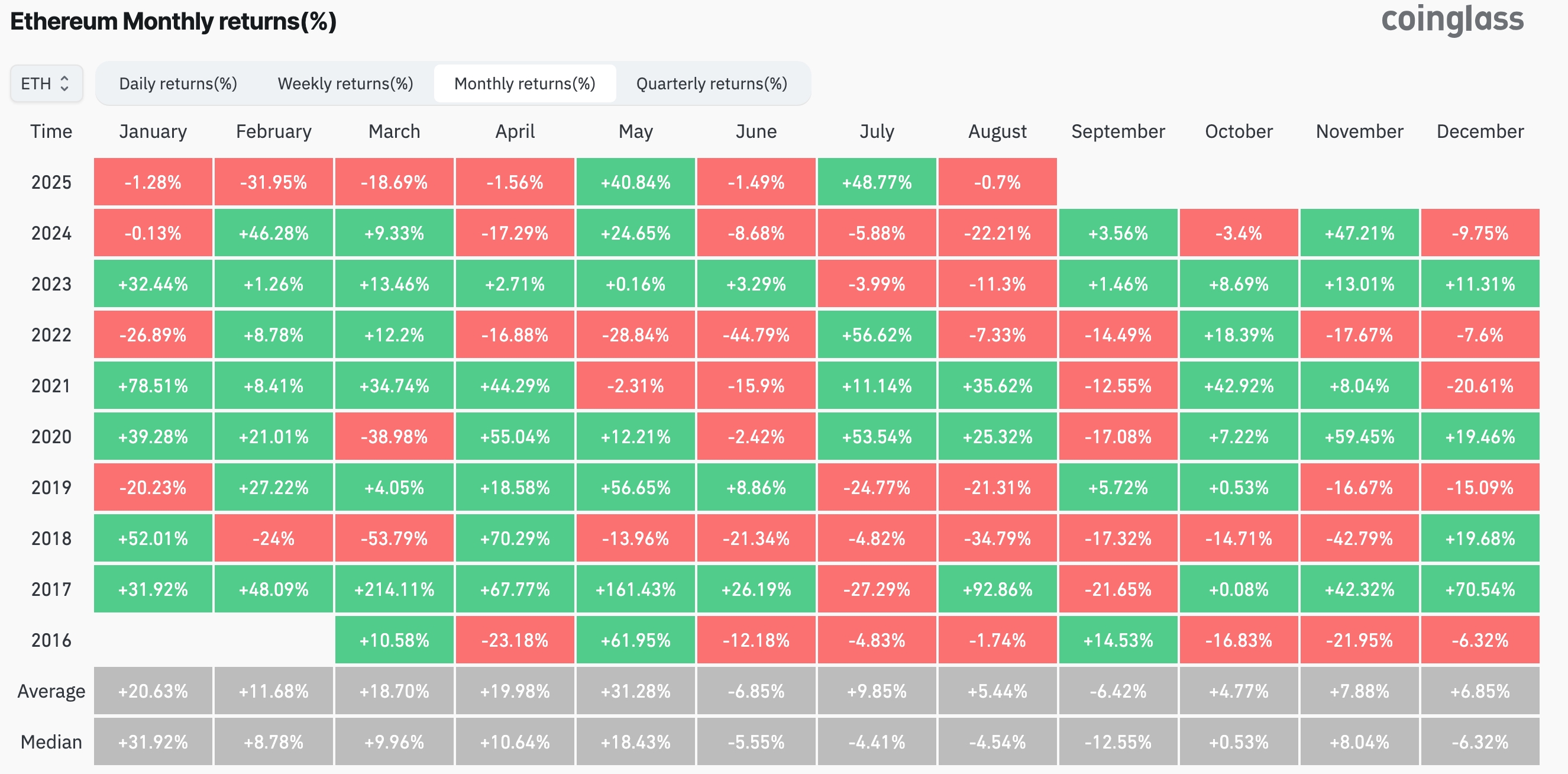
However, investors should be cautious in relying on historical averages. As seen in recent months, seasonality alone is not a reliable predictor—March 2025, for example, saw Bitcoin fall despite a multi-year trend of March gains.
Macroeconomic Sofness: US Labor Market Weakens
Adding to downward pressure are fresh concerns about the U.S. economy. In late July, the Bureau of Labor Statistics reported that only 73,000 jobs were added nationwide, well below forecasts, and the unemployment rate ticked up to 4.3%. A slowdown in hiring and rising unemployment heighten recession risks and signal potential trouble for all risk assets.
Federal Reserve officials echoed these concerns during their policy meeting, noting that new tariffs could further slow growth, stifle consumer confidence, and ultimately crimp demand for both traditional and crypto investments.
Institutional Inflows Dwindle for Bitcoin and Ethereum ETFs
After fueling a dramatic rally earlier in 2025, institutional money is now exiting the crypto market. According to digital asset analytics firm SoSoValue, U.S.-listed spot Bitcoin exchange-traded funds (ETFs) saw net outflows of $114 million in a single day in late July. Monthly inflows in July stood at $169 million—a fraction of the $2.7 billion peak seen during the spring surge. Meanwhile, Ethereum spot ETFs, which originally attracted over $2 billion in weekly inflows, brought in only $306 million this past week, down nearly 85% from previous highs.
This change in ETF flows is a strong signal that larger investors—such as hedge funds, asset managers, and family offices—are turning more cautious, either reallocating to safer assets or booking profits after an exuberant spring rally. Retail participation remains robust in meme coins and small-cap tokens, but institutional caution continues to pressure the broader market.
Profit Taking and Sector Rotation Exacerbate Sell-Off
The retreat in crypto prices also reflects natural cycles of profit-taking following rapid rallies. Many investors rushed into major coins and trending altcoins earlier in the year, driving prices to new all-time highs. As valuations stretched, seasoned traders locked in profits—a typical occurrence after a period of outsized returns.
Some popular altcoins, especially those in decentralized finance (DeFi) and the meme sector—including Bonk (BONK), dogwifhat (WIF), and Popcat (POPCAT)—have experienced double-digit losses. Market depth and liquidity have also declined, making sharp price movements more likely during periods of heavy selling.
Is There Relief In Sight?
While the current picture is bearish, the crypto market’s history shows resilience. Volatility often presents opportunities for disciplined investors. Traders and portfolio managers are closely watching the Federal Reserve, upcoming jobs reports, and new ETF inflow data for any signs of a reversal. Should macro pressures ease, or if bargain hunters return, the market could stabilize or even recover in the coming months.
- Key support levels: Bitcoin: $110,000–$112,000; Ethereum: $3,300–$3,400
- Market sentiment: Cautious, with volatility expected to remain elevated through late summer
- Long-term outlook: Still constructive, provided global growth concerns and trade disputes ease
However, risks remain elevated amid ongoing policy uncertainty and shifting demand from both institutions and retail investors.
Bottom Line
The August 2025 crypto crash reflects a confluence of global trade tensions, macroeconomic headwinds, seasonal price patterns, and changing institutional sentiment. For investors, the current environment demands caution, diversification, and an attentive eye toward policy changes and market signals. As with all periods of volatility, a disciplined, long-term perspective remains the most reliable guide.


