
Tesla Awards Elon Musk $29 Billion in Shares to Secure Leadership Amid AI Boom
By Faarea Masud, BBC News | 21 June 2024
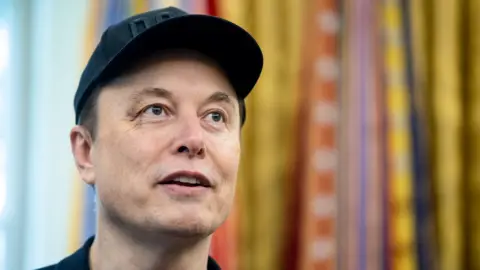
Tesla, the world’s leading electric vehicle (EV) maker, has granted its CEO, Elon Musk, a massive $29 billion share award. This decision follows a Delaware court’s earlier striking down of Musk’s previous $56 billion pay package—a record-breaking compensation in corporate history—on grounds it was unfair to shareholders. The latest share grant seeks to lock in Musk’s leadership as the company transitions from being an auto manufacturer to an AI and robotics powerhouse.
Background: Court Battle Over Compensation
The decision comes after a protracted legal dispute. In early 2024, the Delaware Court of Chancery invalidated Musk’s 2018 pay package, declaring it excessive and improperly awarded. The court cited concerns over board independence and the effect on minority shareholders. Musk, who had achieved all performance targets attached to that package—ranging from Tesla’s market capitalization surging to over $800 billion, to record production and profits—has since been appealing the ruling, arguing that shareholders should have the final say on executive compensation.
Tesla’s new $29 billion share award is structured to incentivize Musk’s continued commitment, with the company indicating that the deal will be voided or returned if his previous package is reinstated on appeal. This arrangement aims to prevent “double dipping” while acknowledging Musk’s pivotal role in the brand’s growth and vision.
The “AI Talent War” and Tesla’s Pivot
Tesla’s board statement emphasized the intensifying competition for AI expertise: “It is imperative to retain and motivate our extraordinary talent, beginning with Elon.” The global race to recruit and retain top AI minds is heating up, with major tech companies like Meta (Facebook), Microsoft, and Google offering lucrative packages to lure talent. Recent high-profile poaching attempts—like Meta CEO Mark Zuckerberg reportedly offering multimillion-dollar incentives to OpenAI engineers, and Microsoft recruiting key figures from Google DeepMind—underscore the sector’s strategic importance.
Tesla itself is at a crucial “inflection point,” striving to evolve beyond EVs toward AI-powered autonomous driving, robotics, and energy solutions. In May 2024, the company previewed its next-generation humanoid robot prototype and announced advancements in Full Self-Driving (FSD) software, positioning itself at the forefront of automation. Tesla’s AI Day events and Musk’s repeated messaging to investors highlight the company’s ambition to lead in both consumer and industrial AI integration.
Elon Musk: A Unique Leadership Asset
Tesla’s board was unequivocal in its praise, stating, “No one matches Elon’s remarkable combination of leadership experience, technical expertise, and vision.” Musk’s track record includes pioneering ventures such as SpaceX, Neuralink, The Boring Company, and more recently, xAI. His ability to deliver on ambitious targets—Tesla’s surging deliveries, record profitability, and near-monopoly positioning in the U.S. EV market—remains largely unmatched among CEOs.
As analyst Dan Ives of Wedbush Securities observed, “The biggest asset for Tesla is Musk. The board needs to do this, especially in the middle of an AI arms race, and it’s a huge step forward.” His statement echoes investor concerns that losing Musk’s focus—given his multiple ventures—could undermine Tesla’s strategic edge.
Implications for Shareholders and Corporate Governance
The board’s actions have reignited debate about executive compensation, shareholder rights, and corporate governance. While many shareholders view Musk’s leadership as irreplaceable, critics argue such high-stake packages raise issues about fairness, risk, and accountability. Institutional investors and governance watchdogs have pushed for more transparency and limits on equity awards.
The new award will also impact Musk’s voting power at Tesla, consolidating his influence over pivotal corporate decisions as the company looks to raise capital, expand into new markets, and face growing regulatory pressure globally. Should the Delaware court’s ruling be overturned on appeal, Musk would return the latest share grant, further subjecting the company’s leadership arrangements to legal scrutiny.
Tesla’s Next Chapter: AI, Robotics, and Global Expansion
This latest move comes as Tesla faces headwinds: slowing EV sales growth in key markets like China and the U.S., intensifying competition from BYD and other automakers, and macroeconomic uncertainty. Still, the company remains the market leader in EV technology, and Musk’s efforts to steer Tesla toward AI-driven products may define its next era of growth.
Tesla’s foray into robotics, AI chip development, and energy storage is viewed by analysts as a necessary pivot. The company’s forward-looking strategy—autonomous vehicles, AI-powered manufacturing, and robotaxis—could unlock new revenue streams and justify its high valuation. Musk’s involvement is widely seen as instrumental to executing this vision and managing technological and regulatory risks.
Conclusion: Securing Visionary Leadership in a Competitive Age
By granting Elon Musk a $29 billion share award, Tesla is making a high-stakes bet on continuity and bold leadership, seeking to maintain its dominance as technology and automotive boundaries continue to blur. As the AI revolution accelerates, keeping Musk at the helm is not only about rewarding past achievements, but also about navigating the volatile, opportunity-rich landscape ahead.


