
Elon Musk Claims xAI’s Grok 4 Outpaces OpenAI’s New GPT-5 Model
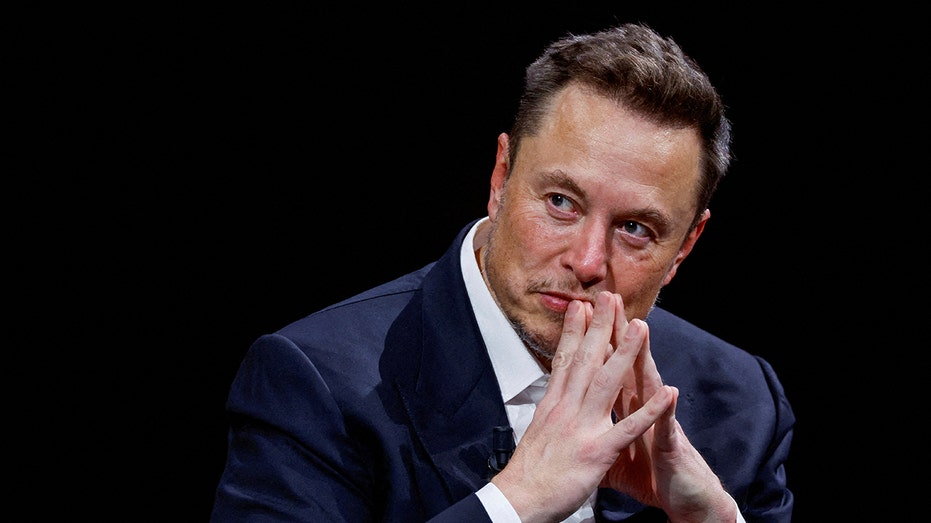
The rivalry between tech titans Elon Musk and OpenAI CEO Sam Altman escalated significantly this week, as Musk asserted that xAI’s latest model, Grok 4 Heavy, is already outperforming OpenAI’s new GPT-5. The claim, made Thursday on Musk’s social platform X (formerly Twitter), comes just hours after OpenAI introduced GPT-5, its highly anticipated and most advanced artificial intelligence model to date.
“Bottom line though: Grok 4 Heavy was smarter 2 weeks ago than GPT5 is now, and G4H is already a lot better,” Musk declared. The message instantly rippled across the AI and tech communities, adding fuel to an intensifying race for supremacy in the field of artificial intelligence.
OpenAI’s GPT-5: The Latest in Advanced AI
On July 11, 2024, OpenAI launched GPT-5, touting it as “a major leap in large language model capabilities.” According to CEO Sam Altman, GPT-5 can function as “a team of PhD-level experts in your pocket,” offering enhanced reasoning, nuanced language understanding, multi-step logic, and expanded ability to process voice, images, and complex documents. Available to all of ChatGPT’s estimated 700 million users, GPT-5 is widely seen as setting a new industry standard for generative AI.
OpenAI has doubled down on its pursuit of artificial general intelligence (AGI)—machines capable of performing any intellectual task a human can—stating that GPT-5 is a step closer to that vision. Early demonstrations reveal the model’s mastery of diverse domains, from scientific research synthesis to real-time code generation and creative writing. Businesses are already exploring GPT-5 for applications in customer service, drug discovery, legal analysis, and more.
xAI’s Grok 4 Heavy: Challenging the AI Status Quo
Musk’s xAI released Grok 4 on July 9, 2024, claiming it is “the most intelligent model in the world.” Grok 4 Heavy, its most powerful iteration, is built to rival and even surpass the capabilities of competitors like OpenAI and Google. The Grok series, initially distinguished by its snappy, real-time data access and playful tone, has matured into a formidable AI platform with strengths in multi-modal reasoning, context retention, and direct access to real-time data from X.
Early independent benchmarks and user feedback suggest Grok 4 Heavy is competitive with GPT-5 in language tasks and outpaces it on select reasoning benchmarks. xAI touts Grok’s ability to handle humor, sarcasm, and nuanced intent, aligning with Musk’s goal of developing “maximally useful, truthful AI.” By integrating Grok into X, xAI positions itself to tap into Musk’s broader ecosystem spanning Tesla, SpaceX, and Neuralink.
The Competitive Landscape: AI Arms Race Intensifies
The back-and-forth between Musk and Altman is more than bravado—it reflects a fierce global race for the lead in artificial intelligence. Big Tech companies are collectively investing over $400 billion into AI R&D in 2024 (Goldman Sachs, 2024), with product launches, acquisitions, and talent wars unfolding at record pace.
Industry analysts highlight the significance of model transparency, training data sources, safety mechanisms, and real-world applications in determining market leadership. OpenAI has faced criticism for gradually closing its previously open-source approach, while xAI advances a competing vision emphasizing transparency and alignment with human values. Meanwhile, Google’s Gemini, Anthropic’s Claude 3, and others continue to vie for attention with specialized capabilities.
Questions around AI regulation, security risks, and responsible deployment are coming to the forefront. At a recent White House tech summit, President Donald Trump emphasized the government’s commitment to ensure America leads in both the creation and regulation of AI. Federal agencies are now leveraging advanced AI models, with a focus on secure adoption and public welfare.
AI Adoption and Government Policy
Government technology agencies in the U.S. have begun widespread use of GPT-based solutions. According to data released in July 2024, at least 24 federal agencies are piloting or deploying ChatGPT technologies for knowledge management, document summarization, constituent services, and operations optimization. Efforts are underway to ensure data privacy and ethical use, as the White House and Congress propose new AI oversight measures. In response, tech companies have established new compliance and transparency standards for third-party developers and enterprise users.
This institutional adoption further raises the stakes for AI developers. Global powers such as the European Union, China, and India are crafting their own AI regulatory frameworks, aiming to safeguard both economic competitiveness and social interests. The rapid pace of model improvement, however, frequently outruns the development of regulation, underscoring the need for cross-industry cooperation and robust governance.
Looking Ahead: What’s Next for AI Giants?
The spotlight now remains on xAI and OpenAI to substantiate their claims with independent testing and real-world results. As organizations and individual consumers gain access to GPT-5 and Grok 4 Heavy, real-world benchmarks and user experience will ultimately determine who leads the next phase of AI’s evolution.
The rivalry is not just about model performance—it is about trust, ecosystem integration, safety, and societal impact. With Musk and Altman each casting their AI as the most advanced and reliable, the coming months will be crucial in establishing credibility, shaping industry standards, and defining the future of intelligence in the digital age.
For now, investors, technologists, and policymakers will be closely tracking both companies as they push the boundaries of what machines can achieve—and how these tools will reshape business, government, and everyday life going forward.


