
Trump Administration’s Federal Takeover of DC Police Sparks Backlash Amidst Broader US Policy Shifts
Federal Seizure of Washington DC Police: Legal and Political Firestorm
On August 11, 2025, President Donald Trump ordered the unprecedented federal takeover of Washington DC’s police force and the deployment of the National Guard, claiming it was necessary to address a spike in lawlessness in the nation’s capital. Trump’s announcement, delivered in characteristic combative style—”we’re going to take our capital back”—was sharply condemned by DC officials, legal experts, and civil rights advocates as a flagrant breach of the city’s autonomy and an overreaction based on dubious crime claims.
Washington DC Mayor Muriel Bowser labeled the takeover “illegal and undemocratic,” while Congressional Delegate Eleanor Holmes Norton pledged a vigorous legal challenge, stating, “The people of DC will not stand for the erosion of our locally elected government.” The White House stated the federal control would remain in effect for at least 30 days.
Despite Trump’s rhetorical focus on “violent gangs and bloodthirsty criminals,” recent DC crime statistics reveal that the city, while grappling with some public safety concerns, has not faced a spike justifying military-style intervention. According to the Metropolitan Police Department’s own data for 2025, homicides and property crime rates have seen modest fluctuations but remain below the highs recorded a decade prior.
National Response and Protests in the Capital
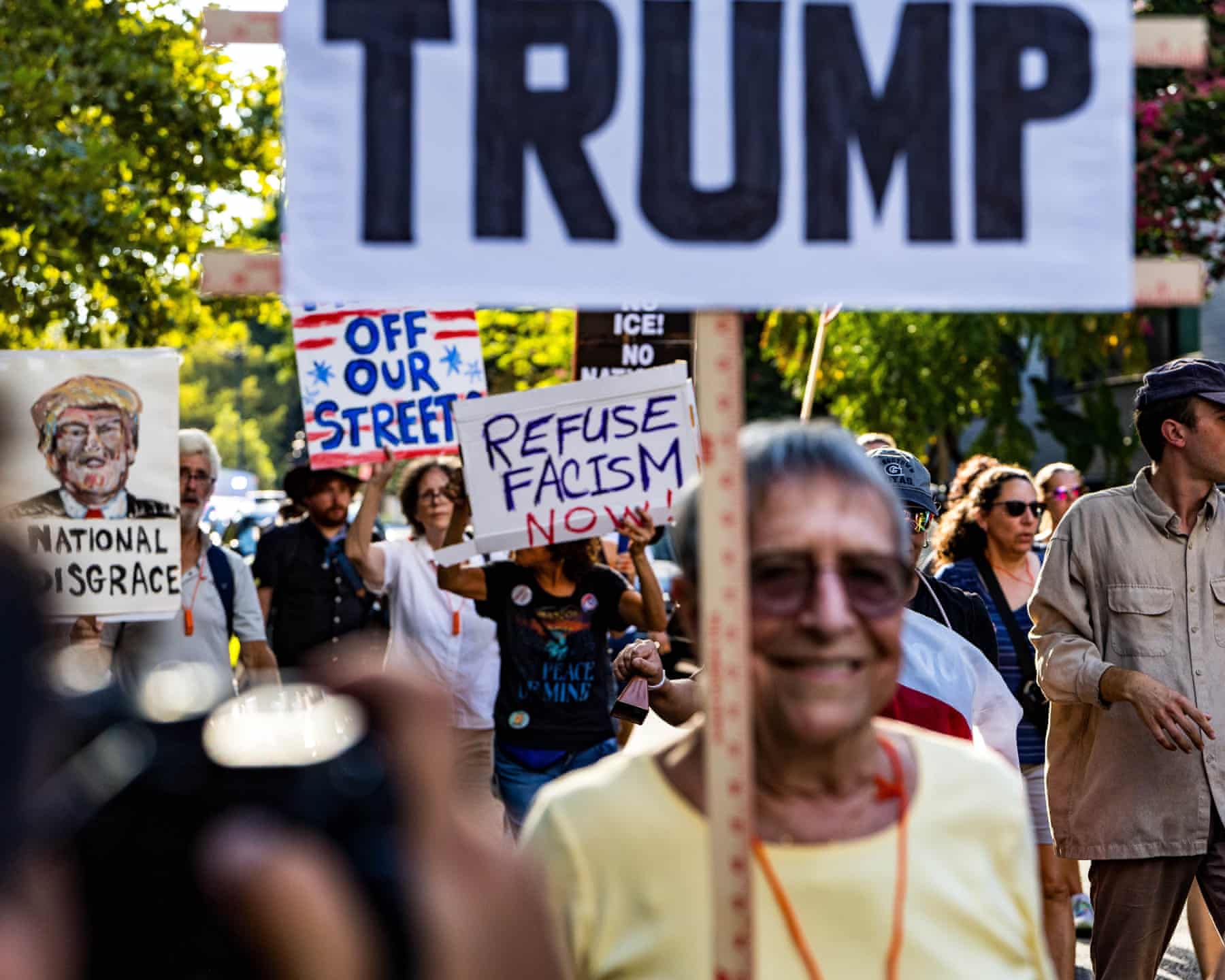
As news of the decree spread, thousands of residents and activists gathered outside the White House and federal buildings to protest what they view as an assault on local democracy and racial justice. Signs reading “National Disgrace” and “Off Our Streets” underscored broad concerns about federal overreach, especially in a majority-minority city with a long history of fighting for self-governance and representation in Congress.
Legal scholars quickly raised constitutional questions about federal authority over the District. DC, unlike any state, occupies a unique position: Congress holds ultimate authority, but for decades, the city has exercised broad home-rule powers. The latest move, critics argue, threatens to undo years of incremental local empowerment and set a dangerous precedent for federal interference elsewhere.
In a morning interview, Georgetown Law professor Sheryll Cashin warned, “If this intervention stands, it provides a roadmap for suspending local authority—potentially targeting other Democratic-led cities.”
Broader Policy Shifts: China Tariffs, Ukraine Talks, and Labor Shake-ups
While federal troops mobilized in DC, the Trump administration made several additional high-impact policy moves:
- China Tariffs Paused: Hours before a major US-China trade agreement was set to lapse, President Trump announced a new 90-day delay in implementing tariffs on Chinese imports. This reprieve comes amid continued uncertainty over the global supply chain, with US business leaders and farmers urging the administration to settle disputes and end “tariff whiplash.” US-China trade in 2024 exceeded $650 billion, but US agricultural exports dropped 18% due to earlier tariff escalations.
- Ukraine War Summit with Putin: President Trump confirmed he will meet Russia’s Vladimir Putin in Alaska Friday to discuss possible “land-swapping” deals regarding Russia’s ongoing war in Ukraine. The announcement drew both alarm and hope from international observers. European leaders, especially President Macron of France and Chancellor Scholz of Germany, pressed for transparency and Ukrainian President Volodymyr Zelenskyy insisted no accord be struck without Ukrainian consent.
- Bureau of Labor Statistics (BLS) Shake-up: Trump nominated Dr. EJ Antoni, chief economist at the conservative Heritage Foundation, to head the Bureau of Labor Statistics after abruptly firing his predecessor over a July jobs report he dismissed as “rigged.” Labor market analysts warn this politicization could undermine trust in economic data as the US posts sluggish but steady job growth (unemployment holding at 4.1% as of July 2025 according to BLS).
Redistricting Battles and Immigration Policies
Redistricting controversies roiled Texas again, as state Democrats—supported by California Governor Gavin Newsom—staged a walkout preventing Republican quorum on Trump-backed map changes. Newsom called on the administration to “end this redistricting arms race,” highlighting the national stakes as states compete to lock in partisan advantages before the 2026 midterms.
Meanwhile, Trump’s harsh immigration policies continue reverberating through sectors far from the southern border. In Nevada, hospitality and casino worker unions blame the administration’s tactics for a sharp decline in Las Vegas tourism, with total visitors down 9% year-on-year and foreign travel especially impacted.
Challenges at the Department of Veterans Affairs
Federal records leaked last week reveal the Department of Veterans Affairs has lost thousands of core healthcare professionals since Trump took office, straining medical services for veterans nationwide. Union leaders and VA patient advocates warn that ongoing staff attrition could lead to longer wait times and reduce quality of care for the nation’s nearly 19 million veterans.
Looking Ahead: Polarized Nation, High-Stakes Diplomacy
The controversial measures taken by the Trump administration in August 2025 illustrate the country’s deepening political polarization. With the capital in turmoil, tariff deadlines looming, US-Russia-Ukraine diplomacy at a critical juncture, and vital government agencies in flux, the US faces a complex test of its institutions and norms.
Analysts warn that regardless of short-term policy outcomes, these events could have a lasting impact on governance, civil rights, economic stability, and America’s global standing as the world watches closely.


