
Supreme Court Backs Trump Administration’s Cuts to NIH DEI-Related Grants in Landmark Ruling
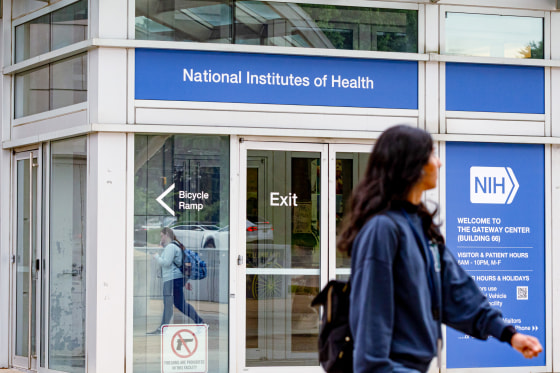
Workers walk to the Metro station in front of the National Institutes of Health headquarters, Bethesda, Md. Wesley Lapointe / The Washington Post via Getty Images
In a sharply divided 5-4 decision, the United States Supreme Court on August 21, 2025, allowed the Trump administration to proceed with sweeping cuts to National Institutes of Health (NIH) grants associated with diversity, equity, and inclusion (DEI) policies. This pivotal ruling both affirms a central tenet of the administration’s agenda and raises significant uncertainty about the legal future of similar federal policies.
Background: Federal Pushback Against DEI Initiatives
Since returning to office in January 2025, President Donald Trump has renewed his administration’s high-profile campaign against DEI practices, arguing they constitute a form of reverse discrimination
and insisting on a rollback across all federal agencies and funding streams. The new policy, issued via administrative guidance to the NIH, mandated a review of all existing research grants to ensure compliance with the administration’s anti-DEI stance.
The NIH, a premier federal funder of medical research, responded by terminating more than 1,700 grants it found noncompliant. Projects affected included studies on HIV prevention amongst marginalized groups and research into gender identity, among others.
The Legal Challenge and Nationwide Backlash
Sixteen states, led by Massachusetts, and prominent health advocacy organizations like the American Public Health Association, mounted a legal challenge against the NIH terminations. They argued that the abrupt move jeopardized critical medical and public health research, disrupted scientific progress, and disproportionately harmed communities already facing health disparities.
U.S. District Judge William Young in Massachusetts found the administration at fault for failing to follow established legal protocols under the Administrative Procedure Act. In his ruling, Young cited pervasive racial discrimination
and extensive discrimination against gay, lesbian and transgender people
in how grant cuts were administered. He also pointed to a pattern of discrimination against women’s health issues
in the terminated projects. As a result, Young ordered a halt to the policy, which was upheld by the 1st U.S. Circuit Court of Appeals.
The Supreme Court’s Mixed Decision
The case ultimately reached the Supreme Court, which delivered a split judgment. The majority opinion, with conservative Justice Amy Coney Barrett as the swing vote, determined that while district courts did not have jurisdiction to rule on the grant terminations per se (which should be heard by the U.S. Court of Federal Claims), the lower court’s decision to vacate the administrative guidance documents was not fully stayed. This nuanced outcome left grant recipients and research institutions in legal limbo, uncertain whether terminated grants could be revived or if similar future policies would be permissible.
Justice Barrett, writing separately, emphasized,the District Court likely lacked jurisdiction to hear challenges to the grant terminations, which belong in the Court of Federal Claims,
but noted that the government was not entitled to a stay of the judgments vacating the guidance documents. Chief Justice John Roberts, along with the court’s three liberal justices, dissented in part, warning that the court’s intervention would inflict unnecessary hardship on medical research institutions and the populations they serve.
Broader Implications for U.S. Research Funding
The Supreme Court’s decision is likely to have profound impacts on federal grant programs nationwide. The NIH, which received $49 billion from Congress in fiscal year 2024, is the primary funder for thousands of medical research initiatives at universities, hospitals, and research centers across the United States. The administration’s cuts echo similar efforts to reduce funding for teacher training programs and other federally supported initiatives associated with DEI, a strategy that has found increasing traction among conservative policymakers and activists.
Stakeholder Responses
Massachusetts Attorney General Andrea Joy Campbell called the Supreme Court’s ruling wrong and deeply disappointing,
noting the added obstacles for grant recipients seeking to restore lifeline funding for critical research. Health groups and academic institutions warn that allowing such terminations could deter future innovation, harm the competitiveness of U.S. science, and set back decades of work to address health inequalities.
DEI and the Future of Medical Research
The debate over DEI in federally funded research is not just a matter of legal or administrative procedure but one with real-world consequences. According to a recent JAMA study published in early 2025, research teams that prioritize diversity in recruitment and study design produce more robust and generalizable findings, especially in fields such as cancer, infectious diseases, and mental health.
Federal agencies including the NIH and CDC have historically invested in programs to address disparities in health outcomes for racial and ethnic minorities, LGBTQ+ populations, and women. The rollback of this funding threatens to widen those gaps. The American Association for the Advancement of Science expressed grave concerns
about the chilling effect on young scientists and early-career investigators, especially those from underrepresented backgrounds, now questioning the stability of federal support.
Continuing Political and Legal Tensions
The Supreme Court’s decision comes amid an election year marked by fierce debate over the reach of presidential authority, agency discretion, and the future of affirmative action-style policies. Conservative Justice Neil Gorsuch scolded lower courts for, in his view, defying the Supreme Court’s earlier direction regarding teacher training grant cuts, underscoring broader tensions within the federal judiciary over how much latitude the executive branch should exercise.
For now, the path forward remains uncertain. Legal experts predict that new claims will be filed in the U.S. Court of Federal Claims, while advocates explore legislative and administrative pathways to restore and strengthen DEI protections.
Meanwhile, research institutions continue to grapple with the fallout. As institutions prepare grant applications for fiscal year 2026, many are reevaluating whether to include DEI components, fearing future federal scrutiny or political backlash.


