
Chinese Scientists to Launch World’s First ‘Pregnancy Robot’ Capable of Giving Birth by 2026
By ET AI Desk | June 2024
The Next Frontier in Reproductive Science
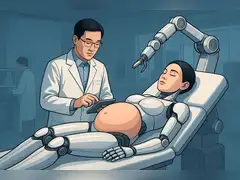
Shanghai-based biotechnology firm Kaiwa Technology has set the scientific world abuzz with the announcement of its breakthrough project: the development of the world’s first AI-powered ‘pregnancy robot,’ designed to give birth by 2026. The initiative, led by renowned researcher Dr. Zhang Qifeng, marks a pioneering step in artificial womb technology, a field long considered the domain of science fiction.
The prototype is expected to mimic the natural environment of the human uterus, potentially carrying a fertilized human embryo to term in a fully monitored, sterile environment. While animal artificial wombs have been developed in recent years—most notably by researchers in the U.S., Japan, and Australia—this project represents the first attempt to incubate and deliver a human baby via a machine.
How Artificial Womb Technology Works
An artificial womb, sometimes called an ‘ectogenesis system’, is a device designed to support the growth and development of an embryo or fetus outside the human body. According to Kaiwa Technology, their pregnancy robot will use advanced sensor arrays, nutrient delivery modules, and sophisticated environmental controls to replicate the uterine conditions essential for healthy gestation.
AI algorithms will monitor fetal development minute-by-minute, regulating temperature, gas exchanges, and nutrient composition with a precision unattainable through traditional medical means. This real-time data, paired with machine learning, could not only minimize developmental risks but also signal early warnings of complications.
The Motivation: Addressing Global Fertility Concerns
Infertility rates are rising worldwide, with the World Health Organization estimating that 1 in 6 people globally experience infertility during their lifetime. Factors such as delayed parenthood, lifestyle diseases, and environmental pollution are contributing to the challenge. Artificial womb technology could offer new options to individuals and couples unable to conceive or sustain natural pregnancies, including those with uterine factor infertility, advanced maternal age, or certain genetic conditions.
China in particular faces an acute fertility crisis, with its population recording a historic decline in 2023—the first in over six decades. The country’s need for innovative reproductive solutions has grown more urgent as demographic trends threaten long-term economic stability. The government has stepped up support for reproductive technologies, seeing them as vital to both public health and future economic resilience.
Breakthroughs and Roadblocks: Technical and Ethical Complexities
Artificial wombs have already enabled successful births of premature lambs, goats, and mice in controlled settings, suggesting the technology’s viability. A landmark 2017 study published in Nature Communications described the use of a ‘biobag’ to successfully nurture premature lamb fetuses for weeks outside their mother’s body.
However, growing a human embryo to term poses profound challenges, not only in biology but also in law, philosophy, and society. Human reproduction involves complex biofeedback mechanisms between fetus and mother—hormonal signaling, immune tolerance, and subtle physiological shifts—that are only partially understood and difficult to replicate.
Bioethics experts have swiftly raised questions:
- What legal rights would a human gestated in a machine possess at birth?
- Who would bear responsibility for potential complications—manufacturers, medical staff, or parents?
- Could the technology lead to a commercial surrogacy market or ‘designer babies’?
- How will society address the psychological and emotional impact of machine-based gestation for both infants and parents?
“While the prospect of ending infertility is exciting, there are enormous ethical and societal risks. We must carefully consider implications for family structures, child welfare, and human identity itself,” said Dr. Lin Wei, a biomedical ethicist at Peking University.
Regulatory and Global Reactions
Regulators in China and worldwide have yet to provide clear guidelines governing the artificial gestation of humans. The Chinese Bioethics Committee is expected to scrutinize Kaiwa’s prototype and any future clinical testing plans. Internationally, experts in the EU and US suggest that any attempt to gestate a human being in a machine will be subject to exhaustive medical and legal review, with potential moratoriums on clinical use until robust ethical frameworks are enacted.
UNESCO and WHO commissions have emphasized the necessity for global standards, citing concerns about cross-border ‘fertility tourism’, equity of access, and exploitation risks.
The Road Ahead: Opportunities and Cautions
If successful, Kaiwa Technology’s project will radically expand reproductive choices, particularly for those unable to carry pregnancies, LGBTQ+ families, and individuals with rare medical conditions. It also offers potential lifesaving benefits for extremely premature infants unable to survive in conventional neonatal intensive care units.
At the same time, the technology’s deployment will require extraordinary caution—extensive safety testing, informed consent processes, and alignment with evolving societal values. Major hospitals and biotech investors are closely monitoring developments, while Chinese officials are weighing regulatory policy to balance innovation with social stability and public trust.
As artificial intelligence continues to push the frontiers of medicine and bioengineering, the world will confront unprecedented questions about the boundaries of life, technology, and the fundamental meaning of human birth. The next two years promise dramatic developments—and, likely, ongoing global debate—about the future of artificial wombs and their place in society.


