
Why Did Crypto Drop? Analyzing the August 2025 Market Crash, Liquidity Hunting, and What’s Next for Bitcoin & Altcoins
The Event: A Rapid Crash in Crypto Markets
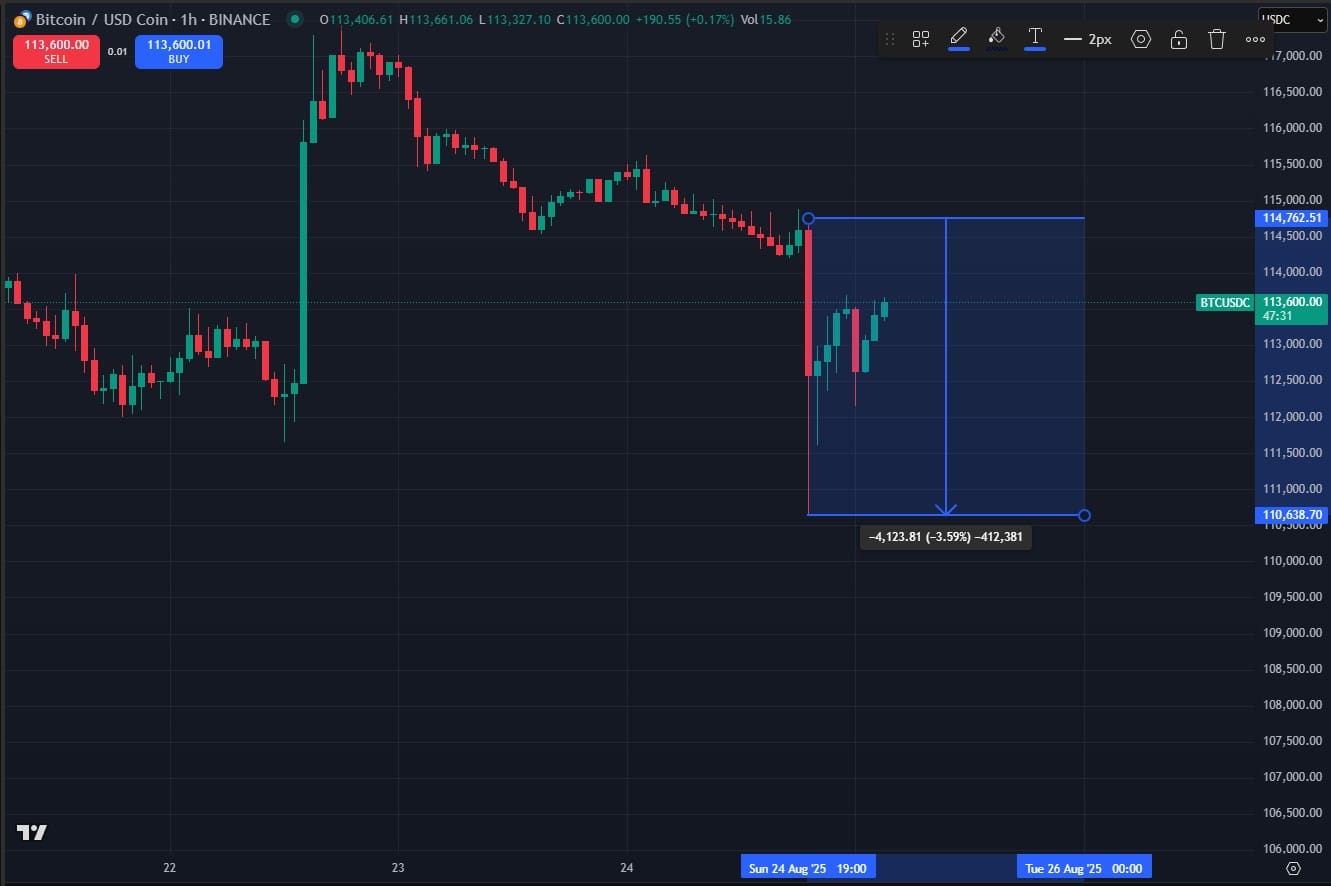
On Sunday, August 24, 2025, the cryptocurrency market faced a shocking and rapid sell-off. Bitcoin (BTC), which had been riding high above $114,000, plummeted by more than $4,000 within minutes, momentarily dipping to $110,600. The sudden drop triggered a cascade of liquidations exceeding $500 million, impacting not only Bitcoin but also leading altcoins such as Ethereum (ETH) and Solana (SOL). The collapse led to widespread margin calls and forced liquidations as leveraged traders—especially those betting on continued upside—were swept away in the turbulence.
Decoding the Sell-Off: Macroeconomics, Profit-Taking, and ETF Slowdowns
Several interlinking themes contributed to the breakdown in crypto prices:
- Macroeconomic Uncertainty: Recent U.S. inflation and Producer Price Index (PPI) data exceeded expectations, reigniting fears that the Federal Reserve may reconsider its anticipated rate cuts. Fed Chair Jerome Powell’s remarks at the Jackson Hole Economic Symposium introduced fresh doubts about the monetary easing timeline, shaking risk markets globally. With Bitcoin perceived as a risk asset, the risk-off sentiment radiated sharply through crypto.
- Profit-Taking After Fresh Highs: Earlier in August, Bitcoin surged past $124,000—an all-time high for 2025—prompting long-term holders and short-term traders alike to take profits. As prices broke below key support levels like $113,000, a series of stop-losses and cascading liquidations further accelerated the downward momentum.
- ETF Momentum Cools: After an explosive early-year run driven by the approval and launch of several Bitcoin and Ethereum spot ETFs, inflows noticeably slowed in mid to late August. According to industry trackers, both BlackRock and Fidelity’s top Bitcoin ETFs reported mild outflows as macro jitters deepened. This stunted demand at a delicate market moment—removing a crucial buffer against sell pressure.
- Thin Weekend Liquidity: Sundays and weekends generally see lower institutional activity, leading to shallower order books and thinner market depth. This structural weakness makes it easier for large whales or aggressive traders to push prices toward liquidation targets, compounding volatility.
- Historical Seasonality: August has traditionally been a weak month for cryptocurrency, experiencing negative returns in 8 out of the last 12 years, as per CoinMarketCap research. Many traders entered the month cautious and ready to exit risk on signs of macro deterioration or technical weakness.
The convergence of these factors formed a perfect storm, resulting in sharp losses and high emotional intensity among crypto investors.
Why Sundays Become the Danger Zone: The Mechanics of Liquidity Hunting
Veteran crypto traders know Sundays can be especially turbulent, and August 24 was a textbook example. With fewer participants active, market makers and large holders (“whales”) face less resistance in pushing prices. Their goal: exploit clusters of stop-losses and leveraged liquidation points, allowing them to capture cheap coins that get forcibly sold by overleveraged traders. This phenomenon, known as liquidity hunting, has repeated for years, especially during bull market cycles.
As industry analyst Patric H. (@CryptelligenceX) explained on X (formerly Twitter): “It might be a forced liquidation event on a low-volume Sunday. Recent longs have been flushed completely.” The mechanics are simple: as leveraged traders chase upward momentum late in the week, large players build positions and then drive prices downward over the weekend, triggering a domino effect. Once weak hands are cleared out, the market often rebounds as spot demand resumes the following Monday.
Crypto derivatives data backs this up—open interest in Bitcoin and Ethereum futures was near all-time highs just before the drop, while Binance, Bybit, and OKX all reported over $2 billion in liquidations within the preceding 24 hours. These sudden resets help “clear the table” heading into a new trading week.
Regulatory and External Influences: The Broader Context
Beyond internal crypto dynamics, external news and speculation played a role. U.S. regulatory noise continues to reverberate following ongoing SEC reviews of both spot and futures ETF applications. Meanwhile, rumors of potential government Bitcoin sales or large-scale asset movements (such as the FBI’s liquidation of seized assets) stoked further volatility, though none were confirmed as direct causes of the crash.
Internationally, shifting stances on crypto regulation in the UK, EU, and certain Asian markets have created a patchwork risk environment. Notably, June and July 2025 saw renewed interest in crypto from Asia’s wealth management sector per UBS, offset by tougher compliance frameworks in Western markets.
Resilience or Reversal? What’s Next for Bitcoin and Major Altcoins
Even amid the chaos, market fundamentals remain constructive for digital assets. Post-dip, Bitcoin closed its weekly candle above $113,000—leaving a long lower wick, which historically has signaled a reversal and fresh momentum for buyers. On-chain analytics from Glassnode show that long-term holder supply remains at record highs, suggesting most investors stayed firm despite the short-term sell-off. Furthermore, derivatives market data from Coinglass reported a nearly 10% decline in open interest—easing the leverage that had accumulated in the weeks prior.
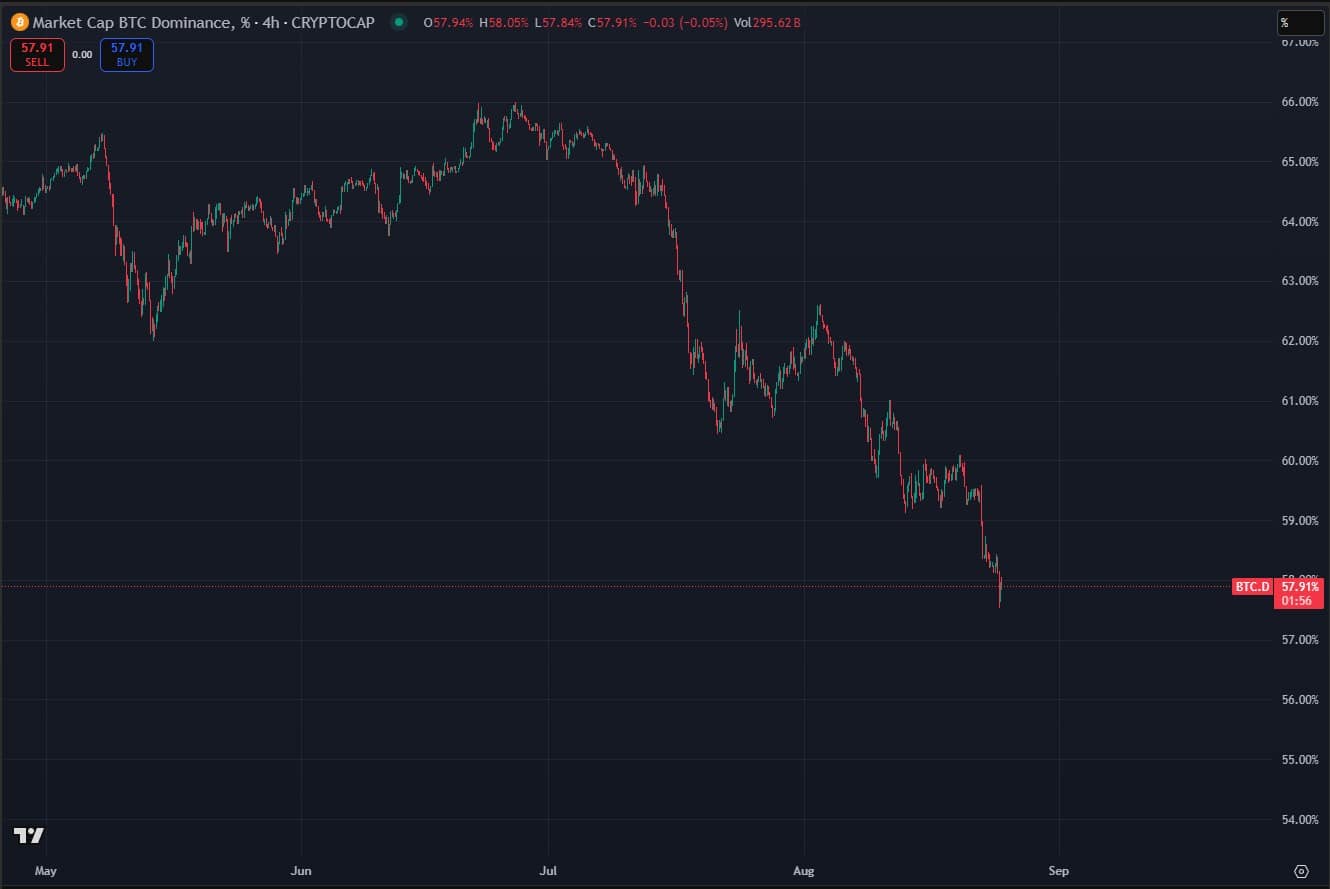
Ethereum’s correlated dip remained shallow compared to Bitcoin’s, and Solana demonstrated similar resilience, hinting that capital may be rotating from majors into altcoins as investors seek new growth narratives. Bitcoin dominance briefly slipped to around 57.9%, reinforcing this trend of a more diversified crypto market in 2025.
ETF inflows are expected to rebound as macro conditions stabilize. According to Bloomberg analysts, spot ETFs for Bitcoin and Ethereum continue to attract significant institutional attention, even with temporary outflows. Their view aligns with data from Farside Investors, which notes the “cooling period” in ETF demand may precede fresh inflows as high-net-worth and institutional portfolios rebalance in September’s new fiscal quarter.
Investor Perspective: Caution and Opportunity
For retail and institutional investors alike, sudden drawdowns offer both a warning and an opportunity. The August 2025 events highlight the risks of high leverage, thin order books, and macro-driven volatility. However, many seasoned participants see these flushes as prerequisites for renewed uptrends, allowing markets to establish a healthier base before the next leg higher.
Looking ahead, traders are closely watching the Fed’s next moves, ongoing ETF performance, and the potential regulatory developments in the US and abroad. Should ETF inflows resume and macro fears abate, Bitcoin and leading altcoins appear poised to continue their long-term adoption curve, especially as 2025’s high-stakes US election and global economic uncertainty increase the appeal of decentralized assets.


