
Korean Air to Buy 103 Boeing Jets as US-South Korea Trade Relations Deepen
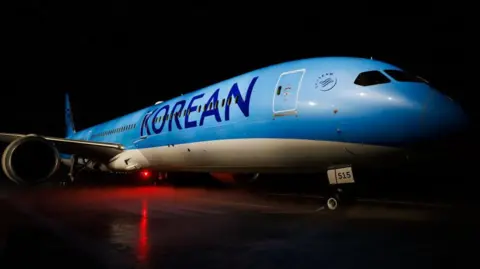
Korean Air has solidified its position as a global aviation leader by unveiling a major order to acquire 103 Boeing aircraft, a move that underscores the deepening trade partnership between South Korea and the United States. The deal, announced just hours after high-level meetings between US President Joe Biden and South Korean President Yoon Suk-yeol in Washington, reflects the strategic importance of aerospace cooperation amid global economic uncertainties and competitive pressures from other players such as Airbus and China’s COMAC.
Deal Details: Korean Air’s Fleet Expansion
The multi-billion-dollar agreement includes a mix of Boeing 787 Dreamliners and 737 MAX family jets. Korean Air, South Korea’s flagship carrier, described the deal as a pivotal part of its long-term growth strategy, focusing on fleet modernization, enhanced fuel efficiency, and environmental sustainability. Industry analysts estimate the contract’s value at approximately $13 billion, making it one of the largest single-order deals in the airline’s history.
The breakdown of the order reportedly consists of over 50 Boeing 787s—both 787-9 and newer, larger 787-10 models—and the remainder as 737 MAX aircraft, aligning with global airline trends to prioritize next-generation, lower-emission jets.
Strategic Timing and Geopolitical Significance
The timing is significant, coinciding closely with the US-South Korea presidential summit where economic ties, technology exchange, and defense cooperation featured prominently. The purchase is widely seen as a gesture of goodwill toward Washington amid ongoing discussions on trade policy, semiconductor manufacturing, and shared security interests in the region.
International observers note that President Biden has made revitalizing American manufacturing—and particularly the aerospace sector—a pillar of his economic agenda. Securing such a high-profile deal with a key Asian ally like South Korea bolsters confidence both in Boeing’s production pipeline and the broader US-South Korea trade relationship, especially as global aerospace continues to recover from pandemic-induced downturns.
Boeing’s Comeback and Global Competition
For Boeing, the order provides a critical boost. The company has been mired in challenges, including technical setbacks with the 737 MAX series and supply chain disruptions. In recent quarters, Boeing has redoubled its efforts to restore confidence and ramp up production, responding to surging international demand for air travel and replacement of older, less efficient aircraft fleets.
This Korean Air deal signals renewed momentum for Boeing, particularly as arch-rival Airbus remains strong and Chinese manufacturers ramp up their aspirations in commercial aviation. Globally, airlines are racing to secure delivery slots for new aircraft, pressed by capacity squeezes, stricter emissions regulations, and explosive post-pandemic travel growth. In 2023, global passenger numbers reached nearly 95% of pre-pandemic levels, according to the International Air Transport Association (IATA), and strong double-digit growth is forecast for 2024.
Korean Air: Ambitions and Sustainability
Korean Air’s decision reflects both market opportunity and the imperative to achieve sustainability targets. The incoming fleet will enable not only increased international connectivity but also a steep reduction in per-flight carbon emissions. The 787 Dreamliner is touted as one of the world’s most efficient long-haul aircraft, consuming up to 25% less fuel compared to previous-generation planes.
The new jets will replace some of Korean Air’s oldest aircraft and position the carrier to capture future demand, particularly between Asia and North America—routes which remain among the world’s most lucrative. Additionally, Korean Air is currently in the midst of a planned merger with Asiana Airlines, a move that would further propel it among the world’s ten largest airlines by capacity.
Implications for the Wider Industry
The order is expected to stimulate further aerospace investment and job creation on both sides of the Pacific. Boeing employs more than 140,000 people worldwide and supports tens of thousands of supplier jobs in the US and abroad. For South Korea, the purchase complements ongoing investments in technology transfer, aviation maintenance hubs, and potential collaborative ventures in advanced aerospace engineering.
Analysts also see spillover benefits for regional airports and tourism sectors. Enhanced fleet capacity is likely to open new international routes, draw more visitors, and strengthen South Korea’s status as a Northeast Asian travel hub. In 2023, South Korea’s Incheon International Airport was ranked among the world’s top ten according to Skytrax, with expectations of record passenger volumes in 2024.
Future Outlook: Challenges and Opportunities
While the order marks a vote of confidence in recovery and partnership, both airlines and manufacturers face headwinds. Supply chain disruptions, skilled labor shortages, and stringent regulatory scrutiny all remain. Boeing’s ability to meet delivery timelines will be in focus, especially as global aviation authorities reinforce oversight following past incidents.
Nonetheless, the Korean Air acquisition of 103 new Boeing aircraft stands as a hallmark of post-pandemic resurgence, Asia-Pacific market ambition, and global trade connectivity. Industry stakeholders and travelers alike will be watching as these new jets take to the skies—cementing a new chapter for both Korean Air and the international aviation community.


