
Trump Administration Appeals to Supreme Court to Halt Billions in Foreign Aid Payments
Published: August 27, 2025 • Source: Reuters
The Trump administration has petitioned the United States Supreme Court to lift a standing injunction that mandates the continued disbursement of billions of dollars in U.S. foreign aid. The Justice Department’s emergency filing comes at a time of heightened debate over the appropriate scope of presidential power in guiding America’s foreign policy and aid initiatives, and with a looming September 30 deadline for disbursing appropriated aid funds.
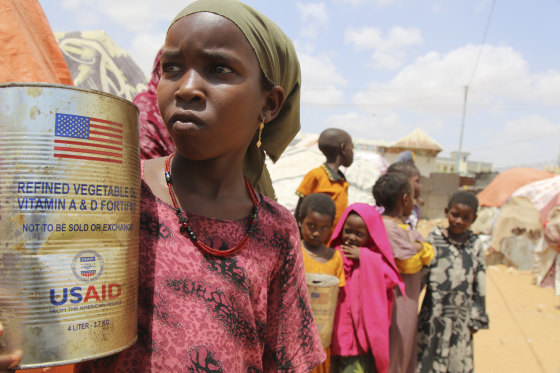
The move follows months of legal turmoil as the administration, newly re-elected in January 2025, began executing a sweeping, controversial 90-day freeze on all foreign aid spending. The White House also initiated efforts to scale back USAID’s influence, placing large portions of its workforce on leave and reconsidering the agency’s autonomy vis-à-vis the State Department, sparking alarm in global development circles.
Legal Battle: Injunction vs. Executive Authority
The underlying legal dispute began when two nonprofit groups, the AIDS Vaccine Advocacy Coalition and the Journalism Development Network, challenged the Trump administration’s executive order, arguing that the aid freeze violated existing appropriation laws and undermined critical international programs. The Washington, D.C.-based U.S. District Court responded by issuing an injunction that mandated the government to resume aid payments—an order that the Supreme Court narrowly declined to overturn last March by a 5-4 vote.
However, debate continued as a D.C. Circuit Court panel ruled earlier this month against the nonprofits, asserting that only the U.S. Government Accountability Office, not private organizations, had standing to challenge the administration’s action. Despite the panel’s 2-1 decision, Judge Amir Ali’s injunction remains in force after the appeals court, sitting en banc, refused to lift it, and Judge Ali reaffirmed his position as recently as Monday.
The latest Supreme Court appeal, filed by the Justice Department, underscores the urgency: approximately $12 billion in aid must be spent before September 30 or risk being retracted. The administration warns that if compelled to continue payments, its ability to direct foreign policy would be usurped by judicial intervention, potentially disrupting strategic efforts to reassess U.S. global commitments.
Foreign Aid: A Critical U.S. Policy Tool Under Scrutiny
U.S. foreign aid is a cornerstone of diplomatic strategy, humanitarian relief, and global stability. In fiscal year 2024, the United States spent over $50 billion on international development, health initiatives, and disaster response—making it the world’s largest provider of foreign aid. USAID alone accounted for $28.5 billion of this amount, channeling funds to critical programs addressing poverty, hunger, disease prevention, democratic governance, and crisis response in over 100 countries.
The Trump administration’s aggressive approach to revisiting aid disbursement has rekindled deep divides in Washington. Proponents of the freeze contend that foreign aid expenditures often lack accountability, can be misallocated, or might not directly serve U.S. national interests. Critics, citing the abruptness and scope of the pause, warn of cascading humanitarian consequences and damage to America’s credibility as a global leader.
Humanitarian organizations, development practitioners, and bipartisan coalitions in Congress have voiced grave concerns about the impact on health programs (such as those combating HIV/AIDS and malaria), food security initiatives, and support for global press freedom—many of which are directly implicated in the pending lawsuit.
Judicial Precedent and Political Ramifications
Judge Ali’s injunction ordered the administration to immediately distribute nearly $2 billion in overdue aid. This legal battle has generated broader questions about the ability of presidents to unilaterally override Congressional appropriations, especially when national security or diplomatic priorities are invoked. In its court filings, the Justice Department argues that only Congress is empowered to restrict or rescind such funding—and judicial intervention risks setting a precedent where courts routinely insert themselves into sensitive matters of diplomacy.
The decision is further complicated by the rapidly approaching end of the fiscal year, after which unspent funds may expire under existing federal rules. The administration asserts that lifting the injunction would not only reflect the executive branch’s constitutional authorities but would also enable “interbranch dialogue” on future foreign aid priorities.
Meanwhile, leading House and Senate Democrats have called for continued aid flow, underscoring that America’s commitment to global engagement is a matter of both moral obligation and strategic interest. Republicans remain divided, with some supporting a more restrained foreign assistance posture and others warning of unintended geopolitical consequences, such as ceding international influence to adversaries like China and Russia, both of whom have dramatically increased development financing in Africa, Latin America, and Southeast Asia.
Global Impact if Aid Payments Stall
According to the United Nations and the World Bank, U.S. foreign aid is critical in supporting crisis-hit nations and global challenges. Cutbacks could jeopardize initiatives including maternal and child health, emergency food distribution, clean water programs, press freedom protections, and economic recovery efforts in countries such as South Sudan, Haiti, Ukraine, and Afghanistan.
In recent statements, international leaders and major NGOs have urged the U.S. to fulfill its commitments, emphasizing that funding lapses may threaten years of progress on global health and democratic development. Domestically, the outcome of this legal skirmish may set the stage for future disputes regarding not only foreign aid but also the ability of presidents to pause or redirect congressionally mandated federal spending.
The Supreme Court is expected to act on the emergency application in the coming weeks as stakeholders around the world await word on whether billions in foreign aid will ultimately flow or freeze.


