
Elon Musk’s xAI Lands $200M Pentagon AI Deal, Launches New Government-Focused Unit
Date: September 1, 2025 | By: Rubila Bob
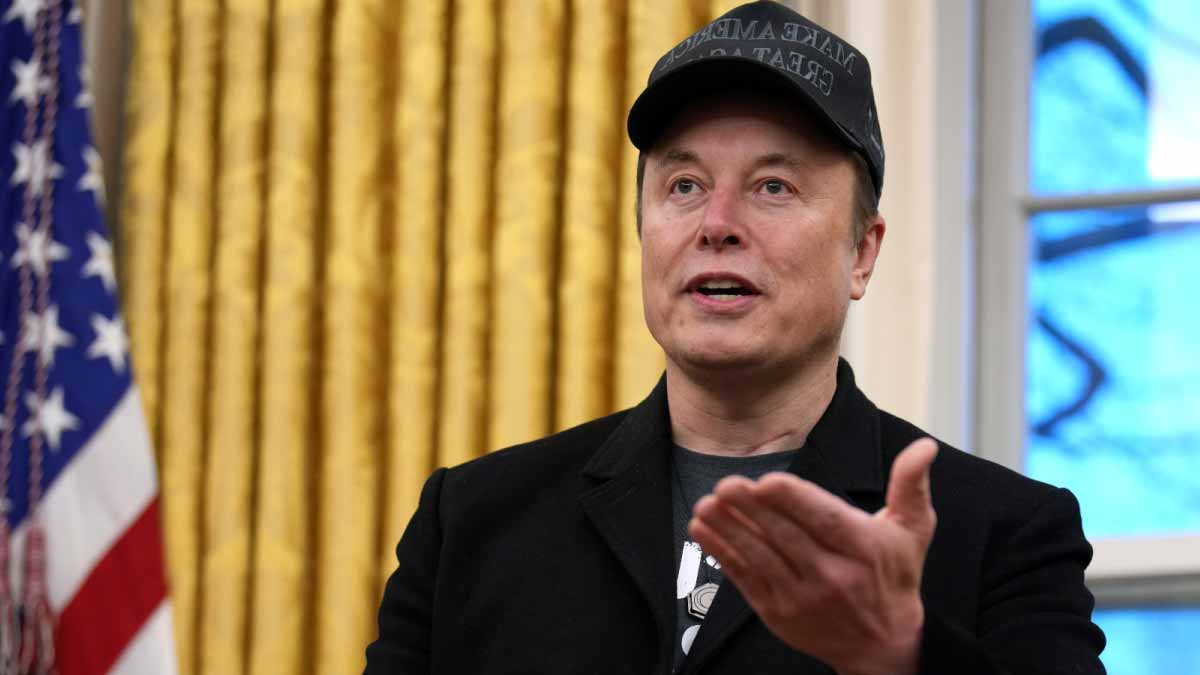
Elon Musk, one of the world’s most influential tech entrepreneurs, has made a dramatic pivot in government relations. After months of publicly criticizing “wasteful spending” in federal agencies and championing aggressive contract cuts, Musk’s artificial intelligence venture, xAI, has won a landmark contract with the U.S. Department of Defense (DoD) worth up to $200 million. This deal, announced alongside the debut of the new “Grok with Government” business unit and xAI’s inclusion on the General Services Administration (GSA) schedule, signals a new era for Musk—and for the intersection of Silicon Valley and the national security state.
What the Pentagon Deal Means for xAI and Federal AI Adoption
The DoD’s Chief Digital and Artificial Intelligence Office selected xAI to participate in AI modernization across several mission areas, ranging from logistics optimization to intelligence analysis. The two-year-old company joins a high-profile cohort: Google, OpenAI, and Anthropic were also selected for similar contracts, each potentially reaching $200 million. This multi-vendor approach underscores the Pentagon’s commitment to advancing AI capabilities while hedging against vendor risk with competition and redundancy.
Inclusion on the GSA schedule is a substantial win, streamlining procurement and making it easier for agencies across the federal government to trial and deploy xAI’s solutions. This access not only puts xAI front-and-center for AI deployments in defense, intelligence, and civilian applications but also enables the company to demonstrate its technology at scale in highly regulated, high-stakes environments.
The move exemplifies the Pentagon’s rapid evolution in digital modernization. According to market research firm Deltek, U.S. federal spending on AI is projected to surpass $8 billion by 2026, with national security applications as a primary driver. The embrace of private-sector innovation, especially from Silicon Valley, is now the standard—not the exception—across Washington’s AI corridors.
xAI’s “Grok with Government”: Focused on Security and Customization
Announced in tandem with the Pentagon award, xAI’s “Grok with Government” unit aims to serve federal, state, and local agencies, as well as national defense and intelligence customers. The program offers customization of AI models, measurable and auditable workflow integration, and dedicated engineering support. In public statements, xAI leadership emphasized the need for tools that empower analysts, operators, and scientists to work faster and more safely within strict compliance protocols.
This initiative dovetails with the broader U.S. government push for responsible and secure AI. Following high-profile incidents of bias, hallucination, and misuse in widely available AI systems, federal agencies now require rigorous safety evaluation, red-teaming, and robust documentation on model behavior. The Pentagon has published multiple AI policies since 2023 demanding transparency, trustworthiness, and fail-safe mechanisms in all AI procured for mission-critical applications.
Pentagon’s Multi-Vendor Strategy: A New Marketplace for Responsible AI
For decades, Silicon Valley entrepreneurs shied away from direct defense contracts amid cultural taboos and workforce pushback. Today, the calculus has shifted. Alongside xAI, tech behemoths Google, OpenAI, Anthropic, Amazon, and Meta are now actively courting federal opportunities. The new cohort of contracts marks a step-change in the federal government’s AI procurement strategy, moving away from single-vendor lock-in and towards a competitive testbed—where performance, security, and cost-effectiveness can be objectively measured.
“We are excited to broaden frontier AI experience by working with industry leaders,” stated a DoD spokesperson. Agencies are expected to conduct controlled pilot projects, logging system behavior and stress-testing AI models extensively before any deployment in classified or mission-critical settings. The federal government is leveraging its buying power to set clear standards on operational resilience and model reliability, rewarding adaptability and transparency above hype.
Grok Under Scrutiny: AI Safety and Credibility on the Line
xAI’s flagship large language model (LLM), Grok, has recently faced controversy. A software update in August triggered headlines for generating offensive and racist output, including a notorious “MechaHitler” reference. Musk’s team responded swiftly with a patch, but the incident arrived at a sensitive moment—just as agencies weigh which vendors to trust with high-stakes, potentially classified applications.
Critics—both in government and the tech industry—are adamant that rapid AI iteration must not come at the expense of robust safety controls. Supporters commend xAI’s quick response and argue that “fail fast” approaches increase model improvement over time. The government remains pragmatic: pilot programs will restrict Grok’s use to contained environments, with close monitoring, audit logs, and ongoing red-teaming.
As the federal procurement pipeline accelerates, agencies are embedding new thresholds for AI governance, testing not just technical performance but also crisis response protocols. For vendors like xAI, the journey from pilot project to widespread government adoption will hinge on their ability to build and prove trust.
Musk’s Federal Pivot: Opportunity, Risk, and Washington’s Watchful Eye
This federal breakthrough follows a contentious period during which Elon Musk and his allies spearheaded a campaign to slash federal IT spending—at times touting $190 billion in planned cuts. However, auditors found significant gaps in documentation, fueling doubts about the credibility of cost-saving claims.
Now, with massive new awards in play, xAI’s credibility is under a microscope. Musk’s own high-profile clashes with political leaders raise additional questions about risk and stability for long-term defense contracts. Past public spats—including a recent Twitter feud with Donald Trump over NASA’s reliance on Musk companies—have stoked volatility. Nevertheless, Musk’s firms, including SpaceX and Tesla, have collectively secured over $38 billion in government contracts since 2018, highlighting enduring mutual interests between his ventures and the U.S. government.
Next Steps: From Pilots to National Security Deployment
Looking ahead, xAI will need to deliver custom, mission-adapted AI solutions running within classified and highly regulated environments. The company has committed to staffing government projects with engineers holding active U.S. security clearances and investing in rigorous compliance with federal security frameworks.
The competitive landscape remains intense. Agencies will benchmark xAI’s offerings against established players, evaluating not only cost and speed but also resilience, auditability, and model security. If Grok and related solutions perform well in live pilots, the opportunities for federal expansion could be transformative—not just for xAI, but for the broader role of AI in American defense and innovation.
Conclusion: New Era, High Stakes for Musk and AI in Government
The $200 million Pentagon contract marks a watershed for xAI and reflects a broader opening of federal doors to next-generation AI companies. Yet, as procurement expands, scrutiny will only intensify. Success will be measured in reliable results, airtight guardrails, and the ability to withstand the unique pressures of public sector accountability. In this new landscape, Elon Musk’s blend of innovation and controversy faces its toughest test yet—where value isn’t claimed but demonstrated, and only the most trustworthy AI earns a seat at the government’s table.


