
‘Remarkable’ Ancient Sun Hat, Possibly Worn by Roman Soldier, Unveiled for First Time
Date: August 23, 2025
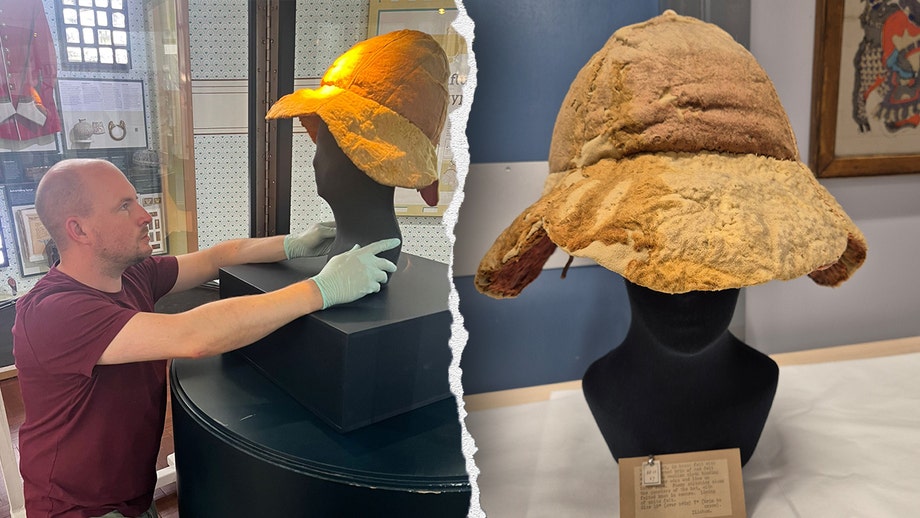
The Bolton Museum in Greater Manchester, England, has unveiled an extraordinary archaeological artifact: an exquisitely preserved ancient Egyptian sun hat that experts suggest may have once belonged to a Roman soldier stationed in Egypt during the Roman Empire’s occupation. The artifact is already being hailed as the best-preserved example of its kind anywhere in the world, drawing international attention and sparking fresh academic discussions about daily life in Roman Egypt.
The Discovery and Preservation
The woven sun hat was discovered in the early 20th century at the ancient Egyptian city of Karanis (modern Kom Aushim in the Fayum region), a region which was a bustling center of agriculture and trade during the Roman period. For decades, the artifact remained little known to the public, stored in Bolton Museum’s extensive Egyptology collection. Recent conservation work and renewed scholarly interest has finally brought the unique headgear into the limelight.
“This hat is arguably the best example of an ancient Egyptian sun hat in existence,” said Dr. Margaret Maitland, a leading Egyptologist. “Its preservation is simply remarkable—with intricate weaving techniques and materials rarely surviving from such a remote period.” Experts believe the hat dates to between the 1st and 4th centuries AD, coinciding with the peak of Roman rule in the region.
Roman Soldiers & Life in Egypt
The Roman conquest of Egypt in 30 BC heralded a period of administrative and cultural blending. Roman soldiers stationed across Egypt had to contend with the intense heat and sun, especially those manning outposts in the Fayum Oasis and other arid regions. The sun hat, expertly woven from plant fibers, was likely a practical adaptation—merging the local Egyptian tradition of light, protective headgear with Roman military needs.
“Artifacts like these not only highlight the day-to-day realities faced by Roman soldiers, but they also reflect a blending of Roman and Egyptian material culture,” explained Dr. Alexander Collins of the British Museum’s Egypt and Sudan Department. “Such finds bridge the gap between military history and social anthropology.”
According to historical sources, Roman soldiers stationed in Egypt were often recruited from across the Empire, including Italy, Syria, and North Africa. These men formed the backbone of Rome’s administrative system in Egypt, helping to secure grain shipments, control local populations, and supervise agricultural production—all while adapting to a climate very different from that of their homeland.
The Hat’s Unique Features
The hat on display at Bolton Museum bears a broad brim and shallow crown, constructed with local reed and grass products. What makes this sun hat exceptional is not only its state of preservation, but also clues pointing to its use by someone of status, possibly an officer or a legionary with a specialized role. Analysis of wear patterns and material sourcing supports its use in outdoor, sunny environments typical of the Nile Valley and the Fayum.
Comparative artifacts found in the Fayum, Dakhla Oasis, and along the Nile Delta illustrate the popularity of such hats among military and civilian populations alike. However, most surviving examples are fragmentary, making the Bolton Museum’s complete piece an archaeological rarity. Recent fiber analysis and CT scanning suggest that this sun hat underwent careful mending in antiquity, hinting at its value to the wearer.
Impact and International Interest
The exhibition of the hat has not only delighted local visitors, but also drawn the attention of academics and museum curators around the world. It features prominently in Bolton Museum’s newly refreshed Egypt Gallery, contextualized with Roman armor fragments, everyday utensils, and other artifacts illuminating the multicultural world of Roman Egypt.
The discovery has sparked collaborations with leading museums, including the British Museum and international research teams conducting ongoing excavations at key Roman-Egyptian sites. Plans are underway to 3D-scan the hat and create digital models for wider research and educational outreach, enabling scholars to study ancient weaving techniques and materials more closely.
The hat’s unveiling comes at a time of renewed interest in the Roman presence in Egypt, with tourism slowly recovering post-pandemic and a global push for heritage preservation. In 2024 and 2025, major exhibitions highlighting Roman-era finds from Egypt have drawn record visitors to institutions in London, New York, Berlin, and Cairo.
Broader Archaeological Context
Roman Egypt remains a fertile field for archaeological discovery. Recent finds include military diplomas, papyri, and other textiles—each shedding incremental light on how Roman and Egyptian customs merged under imperial rule. According to UNESCO, more than 5,000 new Roman-Egyptian artifacts have been catalogued in the past decade alone, with several museums racing to digitize and conserve their collections for future generations.
This remarkable sun hat sits at the intersection of this research, serving as both a compelling museum display and a starting point for new scholarship on ancient adaptation to climate and cultural exchange. The Bolton Museum has announced educational programs, workshops, and lectures surrounding the exhibition, aiming to inspire both the public and the next generation of archaeologists.
Visiting the Exhibition
The sun hat is now on permanent display at the Bolton Museum’s Egypt Gallery, alongside other rare textiles, pottery, and everyday objects from Karanis and other key Roman sites. Museum officials report record attendance since the debut, with visitors eager to experience this extraordinary relic first-hand.
As museums and researchers continue to uncover the secrets held by artifacts such as this, the ancient sun hat stands as a powerful reminder of the ingenuity, resilience, and cross-cultural connections that characterized life at the frontiers of the Roman Empire.
For travel and archaeology enthusiasts, a visit to Bolton Museum offers a unique opportunity to engage with some of the most compelling evidence of the ancient world’s interconnected communities.


