
Figure AI Secures $1 Billion as Humanoid Robots Near Real-World Impact
| By Jared Perlo
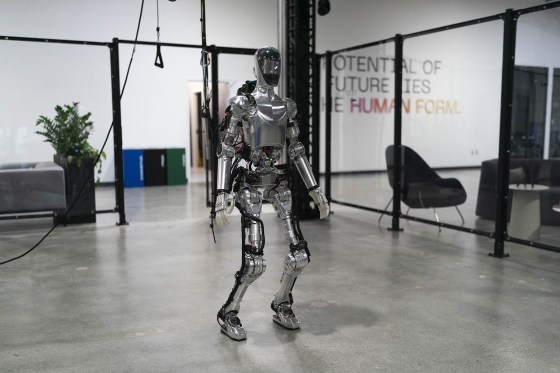
Figure AI, a rapidly growing robotics startup headquartered in San Jose, California, has captured global attention with its innovative humanoid robots performing domestic and industrial tasks. In a resounding validation of the company’s vision, Figure AI announced it has raised over $1 billion in a new round of funding, valuing the company at a remarkable $39 billion. This unprecedented valuation eclipses corporate giants such as Delta Air Lines and Adidas, signaling a pivotal shift in the perception of robotics as an integral component of tomorrow’s economy.
This landmark funding round was led by a coalition of influential investors, including semiconductor powerhouse NVIDIA, tech investment arm Intel Capital, Salesforce Ventures, Qualcomm Ventures, and LG Technology Ventures. Their participation underscored the faith of the global tech and venture capital community in the future of humanoid robotics, both as an economic engine and as an agent of profound workforce transformation.
The Race for Humanoid Robot Supremacy
Figure AI’s announcement arrives amid a surge of activity in the humanoid robotics sector. U.S.-based competitors such as Boston Dynamics, Agility Robotics, Apptronik, and even Tesla—with its much-publicized Optimus bot—have each staked their claims in developing adaptable, humanlike robots. The landscape is further animated by international competition, notably from China. Chinese robotics firms made headlines earlier this year when humanoid robots participated in a half-marathon and showcased their skills at the World Humanoid Robot Games in Beijing.
Recognizing the magnitude of this technological race, leading U.S. robotics firms have jointly called for a comprehensive national robotics strategy, hoping to position the U.S. as a global leader and to stave off growing Chinese influence in the field. Analysts predict that breakthroughs in robotics will not just impact manufacturing, but broader domains including logistics, retail, healthcare, and domestic assistance.
From Laundry to Logistics: A Glimpse into Figure AI’s Vision
Demonstrations of Figure AI’s robots folding laundry and restocking groceries have captivated audiences on social media and at industry events, highlighting advances in dexterity, autonomy, and safe machine-person interactions. According to Brett Adcock, Figure AI’s founder and CEO, the company aims to develop versatile ‘general purpose’ humanoids that can offset labor shortages and perform jobs that are hazardous or undesirable for humans.

Initially, these robots will likely be deployed in sectors with acute labor shortages—such as manufacturing, shipping and logistics, warehousing, and retail. As the technology matures, the company envisions expanding applications into healthcare, defense, hospitality, and personal use, transforming the nature of work and daily life for millions worldwide.
Explosive Market Growth on the Horizon
This surge of activity is bearing fruit not just in terms of spectacle, but substantial expectations for economic impact. According to a Goldman Sachs report from February 2024, the global market for humanoid robots is projected to reach $38 billion by 2035. The firm notes accelerating parallels to the rapid, disruptive rise of generative AI models like ChatGPT, raising the prospect of a transformative “ChatGPT moment” for robotics that could reshape industries much as conversational AI has done since 2022.
With global labor shortages mounting and an aging workforce driving demand for automation, businesses and policymakers are eyeing robots not simply as tools, but as partners in sustaining economic growth and quality of life.
Technical Hurdles and Security Concerns Remain
Despite the excitement, several formidable challenges stand in the way of seamless humanoid robot adoption. Unlike software-based AIs trained on textual data, robots must interpret and interact with the physical world, relying on complex visual and sensory data. This requirement for real-world data has created bottlenecks in both training and safety validation.
Power consumption and battery advancement remain serious constraints for untethered, operational robots. Meanwhile, replicating human dexterity—especially in tasks involving delicate grasping and nuanced manipulation—has proven a persistent engineering puzzle, though experts like University of Texas professor Luis Sentis assert that 2025 may usher in major breakthroughs in robotic manipulation and ‘the year of the hand.’ Sentis, co-founder of rival Apptronik, emphasizes, “This is not a one-day thing for one company. The whole humanoid industry is really excited.”
Security is also a growing concern. Recent research has demonstrated that even advanced, AI-powered robots can be exploited or manipulated to perform unsafe actions if not robustly safeguarded—prompting urgent calls within the industry for enhanced cybersecurity frameworks as robots move toward widespread deployment.
Toward a Robotic Workforce: What’s Next?
With Figure AI’s record-setting funding and escalating investments across the sector, the humanoid robotics revolution has clearly entered a new phase. The technology’s potential to transform entire industries—from filling gaps in physically demanding jobs to supporting elderly care and beyond—has only just begun to be realized.
As technological and regulatory hurdles are gradually overcome, and as costs decrease with scale, observers anticipate the public will see humanoid robots not as curiosities, but as practical helpers, colleagues, and, perhaps, household staples. The coming decade, say many industry leaders, may redefine how human labor, machine intelligence, and daily life intersect—just as smartphones, the internet, and artificial intelligence have in the past.
“Humanoids hold immense promise, and today’s announcement marks another exciting step,” Sentis concludes, reflecting the industry’s optimism and the anticipation surrounding the next generation of human-robot collaboration.


