
Nvidia to Invest $5 Billion in Intel, Forging Unprecedented Partnership in Chip Development
Date: September 18, 2025
By Steve Kopack
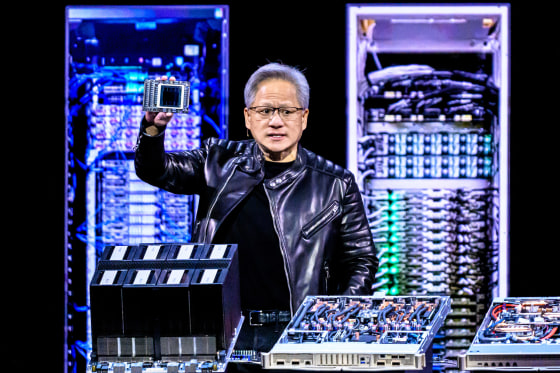
Nvidia, the world’s most valuable semiconductor company and a key driver of the artificial intelligence (AI) revolution, has announced a $5 billion strategic investment in its longtime competitor, Intel. The landmark deal will be accompanied by a partnership to co-develop new chip technology encompassing personal computers and data centers—a move that marks a turning point for both U.S. chipmaking and global technological competition.
Historic Deal Reshapes Silicon Industry
The announcement sent Intel’s shares surging by 23%, boosting its market capitalization to $143 billion, while Nvidia’s valuation climbed to $4.2 trillion, with shares advancing another 3.5%. This collaboration comes at a pivotal time: just weeks after the U.S. government acquired a 10% stake in Intel, valued at nearly $9 billion, further shoring up the ailing company’s financial position. Japan’s SoftBank recently joined in with a $2 billion strategic infusion.
Industry analysts and investors immediately recognized the potential impact. “This is a game-changer deal for Intel as it now brings them front and center into the AI game,” wrote Dan Ives, noted Wedbush Securities tech analyst. “Combined with the U.S. Government’s bold move, this has been a golden few weeks for Intel after years of pain and frustration for investors.”
Rescuing an Icon: Intel’s Turnaround
Founded in 1968, Intel was once synonymous with semiconductor innovation, dominating global supply of CPUs for PCs, servers, and a host of consumer electronics. However, the last decade has been challenging. A series of CEO changes, engineering missteps, and costly strategic detours left Intel trailing rivals such as Nvidia, AMD, and TSMC, especially in the lucrative markets for mobile chips and AI accelerators.
These setbacks contributed to disappointing sales and razor-thin profit margins, sending investor confidence plummeting. In contrast, Nvidia rode the AI hardware wave to new heights, with its graphics processing units (GPUs) now powering everything from advanced data centers to training massive language models and generative AI systems.
The stakes have only grown. As global competition for semiconductor supremacy has intensified—particularly between the U.S. and China—Washington has designated AI and chip manufacturing as critical national security priorities. President Biden’s CHIPS and Science Act has unlocked more than $280 billion in public and private sector investments to invigorate the domestic chip industry, with Intel as a central beneficiary.
Political and Geopolitical Backdrop
This investment arrives amid an unprecedented era of direct government and international intervention in U.S. tech. The U.S. Treasury’s stake in Intel, rare outside of financial or wartime crises, signals the lengths to which the American government is willing to go to maintain supremacy in semiconductor manufacturing and AI.
The saga has also unfolded in the political sphere. Intel’s newly appointed CEO, Lip-Bu Tan—who faced calls to resign from former President Donald Trump amid scrutiny of his China ties—has since met directly with Trump, resulting in a remarkable turnaround in their relationship. Trump, alongside Prime Minister Kier Starmer during a recent U.K. visit, lauded Nvidia’s CEO Jensen Huang, highlighting the alliance’s international dimension as Nvidia simultaneously announced a $14 billion investment in British AI infrastructure.
Nvidia and Intel: From Competitors to Catalysts
The new partnership sees two of the industry’s giants transition from fierce competitors to collaborators at a time when the industry itself is undergoing seismic transformations. While Nvidia’s GPUs are now central to AI training and inference in the world’s leading tech firms, Intel brings a legacy portfolio of x86 CPUs and a robust manufacturing ecosystem—including plans to build multiple advanced fabrication plants (“fabs”) in the United States and Europe.
Sources familiar with the deal anticipate that the companies’ joint work will include hybrid chips combining Nvidia’s AI accelerators with Intel’s CPU architectures. Such chips are expected to power next-generation PCs, edge devices, and cloud data centers—addressing exploding demand for AI compute and intensifying competition with global contenders such as AMD, Taiwan Semiconductor Manufacturing Company (TSMC), and China’s SMIC.
Market Impact and Global Ramifications
This unprecedented collaboration is already rippling through global financial markets and the broader tech ecosystem. Intel’s revitalized prospects could help re-balance the semiconductor landscape, challenging outsize Asian influence and helping secure American supply chains against uncertainties such as geopolitical tensions or economic decoupling.
Nvidia, for its part, tightens its grip on the most advanced corners of the chip market while gaining access to Intel’s manufacturing scale and intellectual property. The resulting synergy may allow both firms to break new ground in AI, autonomous vehicles, cloud computing, and high-performance computing.
At the same time, the partnership sends a clear message: U.S. technology firms and policymakers are prepared to act boldly—across strategic investment, mergers, alliances, and research—to cement the nation’s role at the forefront of the digital and AI-driven future.
The Road Ahead
With earnings season approaching, Wall Street will be watching closely as details of the Nvidia-Intel collaboration emerge. Both companies are expected to disclose more technical and financial details in upcoming investor briefings. Industry observers anticipate a wave of hiring, R&D investment, and even regulatory scrutiny as the once-unthinkable partnership accelerates the pace of semiconductor innovation.
For the broader world, the deal not only marks a new chapter for Intel—offering redemption after a period of decline—but also signals an era in which cooperation between rivals may define the future of American technology leadership.


