
Trump Petitions Supreme Court to Remove Fed Governor Lisa Cook, Stirring Debate on Central Bank Independence
Date: September 19, 2025
By: India Today World Desk
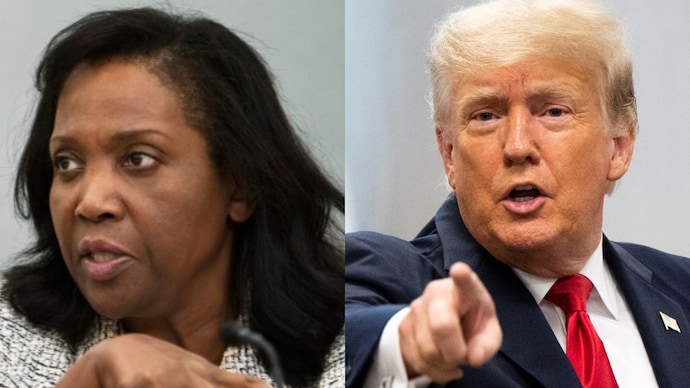
Trump Pushes Court to Remove Fed Official
The administration of former President Donald Trump has formally asked the United States Supreme Court to remove Lisa Cook from her role as a governor on the Federal Reserve Board. This extraordinary move follows setbacks in lower courts and coincides with intensifying partisan efforts to influence the direction and independence of the country’s central bank. The implications are profound, both legally and economically, with the outcome likely to set precedents for executive authority over independent institutions.
The Backstory: Allegations and Legal Grounds
The request to the Supreme Court comes after Trump-aligned officials alleged that Cook, who was appointed to the Federal Reserve Board by President Joe Biden in 2022, misrepresented information about her primary residence on mortgage and security clearance documents prior to her appointment. The administration contends that this alleged misrepresentation calls into question her “trustworthiness” and suitability for a role that impacts monetary policy for hundreds of millions of Americans.
US Solicitor General D. John Sauer argued in court filings: “The President may reasonably determine that interest rates paid by the American people should not be set by a Governor who appears to have lied about facts material to the interest rates she secured for herself — and refuses to explain the apparent misrepresentations.”
Cook’s Rebuttal and Judicial Response
Lisa Cook has vigorously denied any wrongdoing. Through her attorney, Abbe Lowell, Cook stated that she will not resign, maintaining that she “will continue to carry out her sworn duties as a Senate-confirmed Board Governor.” Documents reviewed by the press indicate that Cook described an Atlanta property as a “vacation home” on a mortgage application, later characterizing it as a “2nd home” in federal disclosure paperwork. Her legal team argues that any inconsistencies predate her tenure as governor and do not amount to “for cause” behavior required for removal under the Federal Reserve Act.
Both a federal judge and an appeals court in Washington DC agreed with Cook’s position, citing the legal tradition that protects the independence of the Federal Reserve and its Board members. According to US District Judge Jia Cobb, “the government’s case failed to satisfy the statutory requirement for removal,” emphasizing that the alleged events occurred before Cook assumed office.
Trump’s Supreme Court Move: Historic and Controversial
The Trump team’s appeal to the Supreme Court is highly unusual and without clear precedent in the Federal Reserve’s 112-year history. Traditionally, the Fed is considered a pillar of independence, purposely insulated from day-to-day political pressure to ensure stability in monetary policymaking. Since its establishment in 1913, no president has succeeded in removing a sitting Fed governor outside resignation or expiration of term.
This case comes as the Supreme Court is increasingly being asked to decide fundamental questions about the separation of powers between the executive branch and independent agencies. Legal scholars note that a decision to forcibly remove Cook could have ramifications for the future relationship between presidents and independent regulators, possibly eroding the principle that undergirds the Fed’s authority and credibility worldwide.
Political Stakes and Fed Policy Dynamics
The push to remove Lisa Cook is occurring in the context of heated debates over US economic policy and the future course of interest rates. The Federal Reserve Board, comprised of seven governors, plays a critical role in setting interest rates and steering the broader economy. As of September 2025, the Board is navigating persistent inflation and faces political scrutiny on both the left and the right for its monetary policy decisions.
Recently, the Senate confirmed Trump-nominated economist Stephen Miran to the Board, further politicizing the institution. Both Cook and Miran participated in the latest decision to lower the federal funds rate in response to softening inflation, showing continued diversity of viewpoints within the Board. The next crucial vote, which will shape monetary policy heading into the final quarter of 2025, is scheduled for October 28–29 at the Federal Open Market Committee meeting.
Central Bank Independence at a Crossroads
Central bank independence is viewed by international financial markets as essential for macroeconomic stability, inflation control, and avoiding politically motivated booms and busts. The US Federal Reserve’s status is watched closely: any sign that presidents could remove governors for political reasons risks undermining market confidence and raising borrowing costs for the US government.
According to a recent report by the Brookings Institution, central banks that lack credible independence typically face higher inflation and more volatile economies. In the US, the legal standard for removing a Fed governor is high: “inefficiency, neglect of duty, or malfeasance in office.” The Supreme Court has previously ruled in Morrison v. Olson (1988) and Seila Law v. CFPB (2020) that the president’s ability to remove certain officers can be limited by law, preserving agency independence.
Broader Implications and What’s Next
The Supreme Court’s decision, expected in the coming months, has the potential to redefine both the legal and operational boundaries of independent regulatory agencies. If the court sides with the administration, it could open the door to greater presidential sway over institutions that have, until now, operated with significant autonomy. Conversely, a decision affirming Cook’s position would reinforce longstanding norms—but could also fuel further political battles over high-profile appointments in years to come.
For now, Lisa Cook remains in her role, continuing to influence US monetary policy during one of the most tumultuous economic periods in decades. The case serves as a vivid reminder of the tensions at the intersection of law, politics, and the global economy—and of the delicate balance required to keep America’s central bank credible and effective.


