
Trump Administration Faces Backlash Over Media Threats and Policy Moves During UK Visit
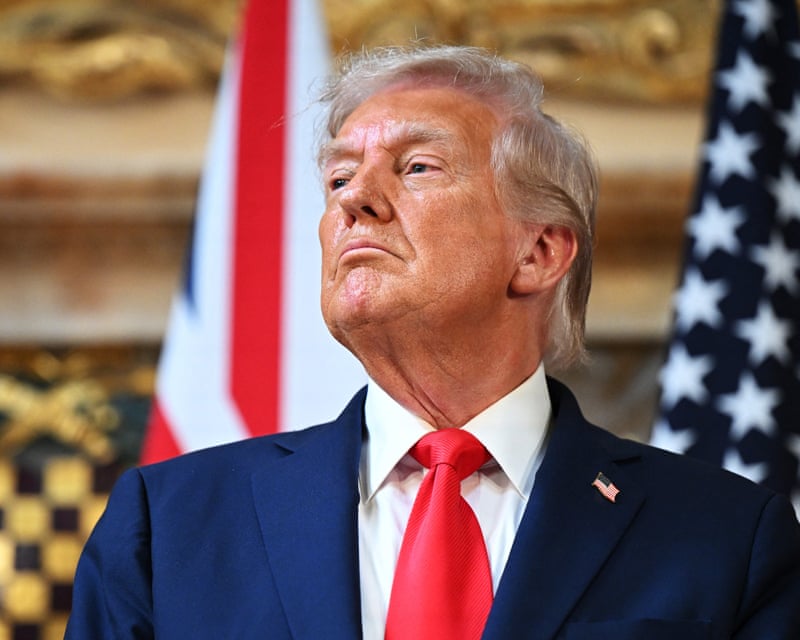
In a tumultuous week for US politics, President Donald Trump has ignited fierce debate at home and abroad, following controversial remarks about major media networks and a series of consequential administrative moves. Fresh from a high-profile state visit to the United Kingdom, Trump’s administration is under intense scrutiny for both domestic and international actions that highlight the complex landscape of American governance in 2025.
President Threatens TV Networks Over Critical Coverage
President Trump stoked outrage among media watchdogs, political opponents, and even international observers on Thursday after suggesting that television networks broadcasting what he described as “negative coverage” of his administration could face the loss of their broadcast licenses. “They give me only bad press. I mean they’re getting a license. I would think maybe their licenses should be taken away,” Trump declared, referencing broadly the perceived hostile stance of major US networks.
The president’s remarks came amid mounting tensions with the media and followed the indefinite suspension of late-night talk show host Jimmy Kimmel by television network ABC. ABC, owned by Disney, took the step after a contentious monologue by Kimmel was deemed a violation of internal policy, prompting calls for consumer boycotts against Disney from both conservative and liberal groups.
Fact-Check: Contrary to the president’s assertions, US television networks such as ABC, CBS, NBC, and Fox do not require direct federal licenses to operate. Local stations are licensed through the Federal Communications Commission (FCC), but networks themselves are not regulated in this way, a policy designed to ensure editorial freedom and limit government overreach.
Political and Industry Response to Media Threats
The president’s rhetoric was swiftly condemned across the political spectrum. Former President Barack Obama called Trump’s language a “dangerous escalation,” warning that attempts to use government authority to punish critics undermine fundamental First Amendment protections. Obama wrote on X (formerly Twitter): “After years of complaining about cancel culture, the current administration has taken it to a new and dangerous level by routinely threatening regulatory action against media companies unless they muzzle or fire reporters and commentators it doesn’t like.”
Within the FCC, Democratic commissioner Anna Gomez accused ABC of “shameful” capitulation and warned that the network’s actions, paired with Trump’s threats, posed grave risks to press freedom. She publicly condemned any suggestion that broadcast licenses could be used punitively against networks for critical coverage.
The calls for a boycott against Disney and its properties, including theme parks and film studios, trended on social media in the wake of the Kimmel controversy, highlighting the volatile intersection of politics, media, and consumer activism in the United States.
Key Administration Moves: Fed Nominee, Supreme Court Battles
Beyond the media firestorm, the Trump administration has also escalated its legal efforts to reshape American financial policy. The Justice Department filed a request with the Supreme Court to permit the dismissal of Federal Reserve Governor Lisa Cook, continuing an unprecedented campaign to assert executive influence over the independent central bank. The move prompted deep concern among economists and lawmakers who argue that central bank autonomy is vital to the health of the US and global economies.
The Supreme Court is also set to hear oral arguments on the legality of Trump’s sweeping global tariffs on November 5, potentially reshaping US trade relations as American businesses and trading partners anxiously await the outcome. The tariffs have been a point of sustained international debate, with critics warning of damaging effects on supply chains and global economic stability.
Diplomatic Maneuvers: UK State Visit and Remarks on Russia
President Trump’s recent visit to the United Kingdom was closely scrutinized, coming just months after the election of British Prime Minister Keir Starmer. During a high-stakes joint press conference, Trump sharply criticized Russian President Vladimir Putin, signaling a tougher approach toward Moscow. Trump claimed he had hoped to usher in a peace agreement between Russia and Ukraine but alleged that Putin has “let him down,” fueling speculation about the possibility of future sanctions or diplomatic pressure.
Throughout the two-day state visit, observers noted a calculated effort to avoid major points of tension between the US and UK governments. However, Trump’s comments about border security—suggesting Britain should “call out the military” to control its borders—sparked debate about sovereign policy and the role of military force in domestic affairs.
Leadership Shakeups and Memoir Revelations
On the domestic political front, the leadership vacuum at conservative activist group Turning Point USA was quickly filled as Erika Kirk, widow of slain co-founder Charlie Kirk, was named the new CEO and chair of the board. Her appointment comes at a time of heightened polarization within American political advocacy organizations following a string of high-profile incidents.
Meanwhile, former Vice President and Democratic presidential nominee Kamala Harris, in her upcoming memoir “107 Days,” reveals she originally preferred Pete Buttigieg as her running mate over Tim Walz. The book, set for release next week, reportedly details her frustration with Walz after a pivotal debate moment that is widely considered to have impacted the party’s electoral fortunes.
American Politics at an Inflection Point
This wave of developments arrives as US political institutions face unprecedented challenges from misinformation, political division, and global uncertainty. Major questions loom over the state of press freedom, executive authority, and America’s ongoing role on the world stage.
As the November elections approach, analysts forecast that media freedom, central bank independence, and diplomatic integrity will dominate national discourse—issues that could shape public sentiment and policy for years to come.
For deeper analysis of these evolving stories, continue following our ongoing updates on US politics, global diplomacy, and the intersection of media and governance.


