
Bitcoin Stumbles Below $116,000 Amid Broader Crypto Market Drop; Altcoins Face Heavy Losses
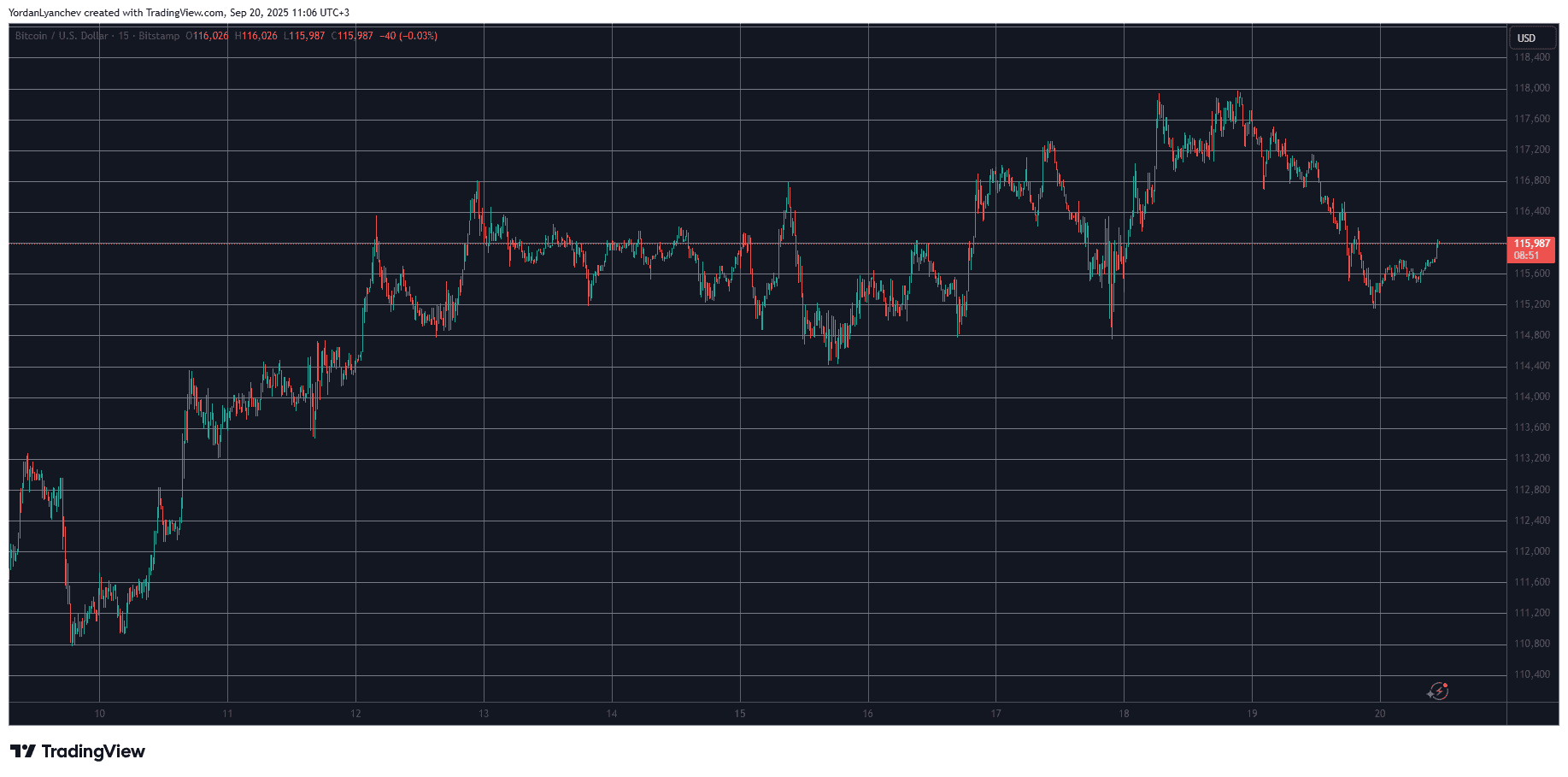
After a period of upward momentum, Bitcoin’s (BTC) price encountered significant resistance at $118,000 late this week, triggering a swift pullback that saw the world’s largest cryptocurrency by market capitalization tumble below $116,000. The price movement follows a mix of macroeconomic events and evolving investor sentiment, notably the U.S. Federal Reserve’s recent reduction of its key interest rate—a highly anticipated move that initially bolstered market confidence across risk assets before the market digested its full implications.
Market Reaction to Federal Reserve Interest Rate Cut
This week’s Federal Open Market Committee (FOMC) meeting concluded with the Federal Reserve delivering its first interest rate cut of 2025, reducing its benchmark rate by 25 basis points. The decision came after months of mostly stable rates intended to combat inflation, but softer signals in labor and inflation data provided justification for the move. Upon the announcement, risk assets—particularly cryptocurrencies—reacted with short-lived optimism. Bitcoin surged to a multi-week high of $118,000 during early Thursday trading, signaling investor appetite for high-growth assets in a lower-rate environment.
However, this enthusiasm quickly waned. While lower rates typically boost cryptocurrency and tech sector valuations by making borrowing cheaper and diversifying institutional investment, the market appeared to realize continued uncertainties in global monetary policy, broad economic growth, and ongoing regulatory scrutiny of the sector. As a result, Bitcoin faced swift selling pressure, dipping to $115,200 by Saturday morning before a minor recovery to approximately $116,000. As of press time, Bitcoin remains above the critical $2.3 trillion mark in market capitalization, maintaining dominance of just under 56% according to CoinGecko.
Major Altcoins See Deeper Losses
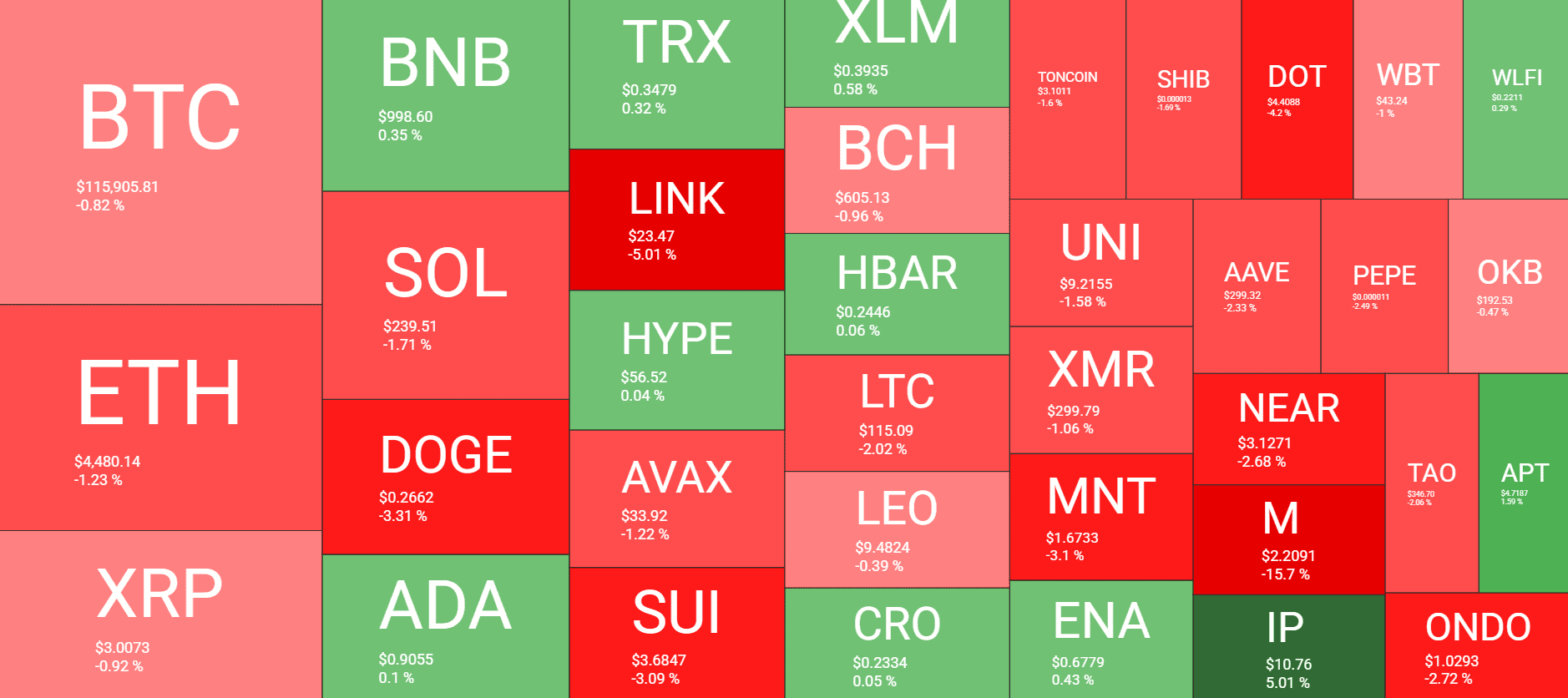
The Bitcoin slump was echoed across the broader cryptocurrency market, with leading altcoins enduring even larger percentage losses. Ethereum (ETH) dropped below $4,500, reflecting a more than 2% daily decline. Dogecoin (DOGE) lost over 3%, and Chainlink (LINK) fell by 5%. Other major tokens such as XRP struggled to maintain support above the $3 level, while Solana (SOL), Avalanche (AVAX), and Sui (SUI) also traded in the red.
Some altcoins suffered particularly severe crashes: “M” plummeted by a staggering 16% to $2.20, “MYX” lost 12%, and the once trending “PENGU” token is down 7%. As risk-off sentiment dominated, the total crypto market capitalization erased over $50 billion from its most recent peak to settle at $4.14 trillion at the time of writing, underlining the volatility and interconnectedness of the digital asset ecosystem.
Macro Factors: Inflation, Rate Policy & Institutional Sentiment
The state of play in the crypto markets remains closely intertwined with macroeconomic forces. The Federal Reserve’s rate cut, while seen as supportive for risk assets, also signals concerns about the pace of economic growth and lingering inflation risks in the U.S. and globally. The CME FedWatch Tool now forecasts a probability of at least one more U.S. rate cut by year’s end, a variable that could fuel further volatility in digital asset pricing.
Institutional adoption remains robust, as evidenced by spot Bitcoin ETFs—approved by U.S. regulators in January 2024—continuing to attract inflows. However, overall investor caution is reflected in outflows from high-beta altcoins and high volatility tokens, suggesting a prioritization of market capitalization and liquidity over smaller speculative assets during risk-off periods.
What Lies Ahead for Bitcoin and the Crypto Market?
Looking ahead, analysts remain split. Some forecast a period of continued consolidation and sideways trading for Bitcoin, with potential support zones near $113,000–$115,000 based on historical trading ranges and liquidity clusters. Technical traders will watch for resistance at $118,000 and, if surpassed, the psychological $120,000 mark as key breakout levels. The upcoming months will also bring several macro and sector-specific catalysts: U.S. economic data, Fed communications, global inflation figures, and regulatory moves in the EU and Asia regarding digital assets.
On the altcoin front, much will depend on the pace of real-world blockchain adoption and the launch of high-visibility projects on networks like Ethereum, Solana, and newly-emerging rollup and layer-2 ecosystems. Further, the recent volatility has sparked renewed interest in robust stablecoins and digital asset diversification as risk management tools. For retail and institutional investors alike, a cautious approach continues to characterize the start of the summer trading season.
Conclusion
Bitcoin’s stumble below $116,000—paired with steeper losses for altcoins—underscores the sensitivity of the cryptocurrency market to macroeconomic news and global monetary policy. While the Fed’s rate cut injected short-term optimism, uncertainty remains high heading into the second half of 2025. Investors should closely monitor macro developments, maintain diligence in portfolio diversification, and stay abreast of regulatory trends as the crypto landscape continues to evolve.


