
Nvidia CEO Jensen Huang Praises xAI’s ’Superhuman’ 19-Day AI Supercluster Build, Announces $100 Billion Partnership with OpenAI
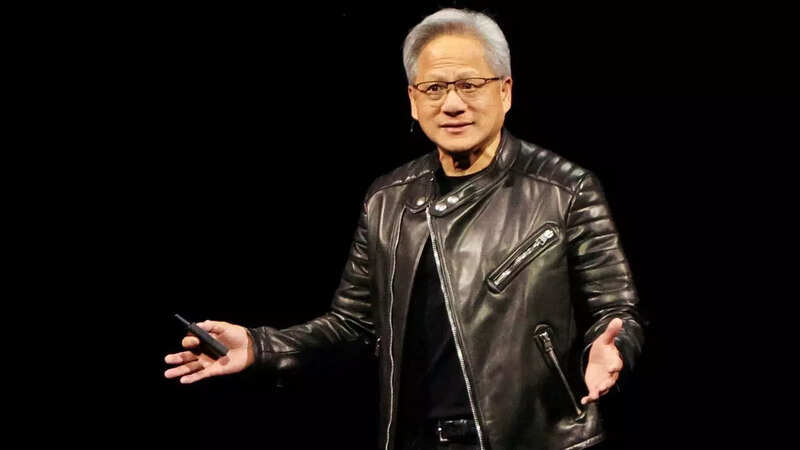
Nvidia CEO Jensen Huang has hailed Elon Musk and his AI startup xAI for achieving what he termed a “superhuman” feat: the construction of one of the world’s largest AI supercomputers—the Memphis Supercluster—in just 19 days. The accomplishment signals not just xAI’s rapid rise in the artificial intelligence arms race but also underscores Memphis as a serious new hub in the AI infrastructure ecosystem.
xAI’s Lightning-Fast Memphis Supercluster Build
Announced by Elon Musk in July 2024, the Memphis Supercluster comprises an astonishing 100,000 Nvidia H100 GPUs and represents a multi-billion-dollar investment. The project faced major logistical challenges, including initial power supply constraints of just 8MW (with a roadmap to scale up to 50MW), yet the xAI engineering and data center teams overcame these hurdles.
In an interview, Huang remarked, “Elon Musk is singular in his understanding of engineering. xAI did in 19 days what everyone else needs a year to accomplish. That’s superhuman.” Huang went on to call the xAI team “extraordinary,” underscoring the specialized talent and coordination required to execute a project of this size with such speed. The Memphis-based AI supercomputer is now among the world’s most powerful AI compute clusters, rivaling cloud infrastructures of Google, Amazon Web Services, and Microsoft Azure.
- Scale: 100,000 Nvidia GPUs dedicated to AI tasks
- Investment: Multi-billion dollars, the largest tech investment in Memphis history
- Timeline: 19 days from start to operational readiness
- Purpose: Advance AI research in natural language models, robotics, science, and more
Strategic Significance for xAI and the US AI Ecosystem
The rapid deployment of the Memphis Supercluster establishes xAI as a formidable AI company on a global scale. It also marks a pivotal point for US leadership in artificial intelligence at a time when countries such as China are fiercely competing to build next-generation AI infrastructure. Industry analysts note that the speed and efficiency of xAI’s project could set new standards for future AI data center builds, where hardware deployments have traditionally taken months.
For Memphis and the greater Tennessee region, the supercluster means thousands of new jobs—ranging from high-skill data center techs to supporting roles—and a significant rise in AI-driven research partnerships with local universities. According to the Greater Memphis Chamber, the Supercluster is attracting satellite companies in chips, cloud storage, and cybersecurity, potentially turning the city into a major AI economic corridor.
Nvidia and OpenAI: $100 Billion to Fuel the Next AI Revolution
In a parallel move underscoring Nvidia’s dominance in the AI hardware and infrastructure market, Jensen Huang also announced a landmark $100 billion partnership between Nvidia and OpenAI. OpenAI, best known for its ChatGPT language model, will receive an initial $10 billion investment from Nvidia once agreements are finalized. The deal includes a letter of intent for OpenAI to deploy at least 10 gigawatts of Nvidia compute systems in its next phase of growth.

According to OpenAI CEO Sam Altman, “Everything starts with compute. Compute infrastructure will be the basis for the economy of the future, and we will utilize what we’re building with Nvidia to create new AI breakthroughs and empower people and businesses at scale.”
- Deal size: $100 billion, one of the largest AI infrastructure deals in history
- OpenAI strategy: Expand beyond ChatGPT to more advanced generative models and cloud-based AI services
- Nvidia products involved: Latest H100/H200 GPUs and AI-optimized data center hardware
- Timeline: Final partnership terms and hardware installations expected by late 2025
AI Arms Race—Global Perspective
This acceleration in AI supercomputer infrastructure comes as US tech rivals like Google, Microsoft, and Amazon continue to make multi-billion dollar investments in similar datacenter builds, while China’s Baidu and Alibaba race to close the gap. According to research by Statista and Gartner, global spending on AI infrastructure is expected to exceed $1.2 trillion by 2028, up from $360 billion in 2023.
Nvidia remains the critical supplier powering most of these systems—its AI GPU products now account for over 80% of the global AI compute market share. The importance of such massive clusters is growing as new AI models demand exponentially more computing power: for context, OpenAI’s GPT-4 required tens of thousands of GPUs and consumed more than 20 megawatts during training.
Industry Implications and What’s Next
The marriage between massive hardware investments and next-gen AI model research signals a new phase for artificial intelligence. The trend toward ever-larger superclusters not only enables more complex, capable AI but also raises questions about energy usage, data sovereignty, and competition—both domestic and international. Government incentives and collaborative university research programs in AI infrastructure are expected to proliferate over the next five years.
For Nvidia, xAI, and OpenAI, these moves signal a commitment to keep the United States at the forefront of AI development. Industry analysts note that both announcements are likely to accelerate breakthroughs in areas such as multi-modal AI (text, image, and voice), robotics, scientific research, and enterprise applications ranging from finance to healthcare.
As AI’s compute demands hit historic highs, the implications for hiring, regional development, and even the global digital economy grow ever more profound. For now, however, Jensen Huang’s praise for the xAI team, and Nvidia’s far-reaching investment in OpenAI, reflect not just technical prowess but an entirely new scale in the AI innovation race.


