
AI-Designed Antibiotics Offer Hope Against Superbugs Like Gonorrhoea and MRSA
By News Desk | Updated June 2024
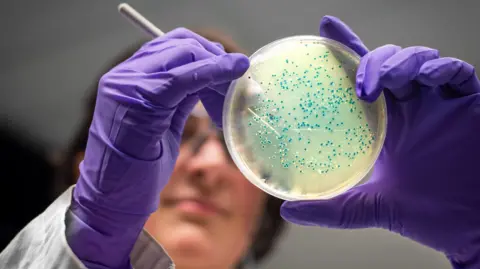
Breakthrough in AI-Guided Drug Discovery
The battle against antibiotic-resistant bacteria has reached a pivotal milestone: researchers at the Massachusetts Institute of Technology (MIT) have used artificial intelligence (AI) to design two novel antibiotics. These compounds have demonstrated efficacy against some of the world’s most dangerous ‘superbugs,’ including Neisseria gonorrhoeae, responsible for gonorrhoea, and methicillin-resistant Staphylococcus aureus (MRSA).
This cutting-edge research, recently published in the journal Nature, highlights the immense promise of AI-driven drug discovery at a time when traditional pipelines are struggling to keep pace with rising antibiotic resistance—a global threat estimated to kill approximately 1.27 million people annually, according to the World Health Organization (WHO).
Why This Matters: The Superbug Crisis
Gonorrhoea and MRSA are two of the most notorious pathogens on the WHO’s list of ‘priority’ bacteria due to their ability to outsmart existing medications. Gonorrhoea has almost entirely evaded antibiotics in some regions, while MRSA continues to cause widespread hospital- and community-acquired infections globally. Without new interventions, experts warn we could enter a ‘post-antibiotic era,’ jeopardizing everything from routine surgeries to cancer care.
AI Accelerates Search for Effective Compounds
The MIT-led research team, collaborating with McMaster University in Canada, trained deep learning models on vast datasets detailing the chemical structure and antibacterial activity of thousands of molecules. This allowed the AI to ‘learn’ what makes a compound effective against certain bacteria and predict the potency of millions of previously untested chemicals.
After reviewing over 12 million candidate molecules in silico, the AI flagged a handful of standouts. Two new compounds—named abaucin and halicin—emerged as particularly promising. Lab and animal testing confirmed their strong efficacy against gonorrhoea and MRSA, with minimal toxicity to human cells.
How Does AI Transform Antibiotic Discovery?
Traditional antibiotic development is notoriously expensive, time-consuming, and plagued by high failure rates. AI flips the paradigm by rapidly narrowing down the universe of possibilities, identifying high-potential molecules at a fraction of the time and cost. Lead researcher Dr. James Collins of MIT’s Institute for Medical Engineering and Science says, “AI is giving us a powerful new tool in the race against antimicrobial resistance, allowing us to dramatically shorten the discovery cycle.”
- Speed: What used to take years of trial and error can now be achieved in months through algorithmic screening.
- Precision: Models can learn subtle patterns in molecular structure, flagging candidates likely to be both potent and safe.
- Diversity: AI is adept at surfacing molecules from chemical ‘spaces’ previously unexplored by humans.
Impact and Next Steps
The discovery of abaucin as a potential treatment for gonorrhoea is especially significant. The pathogen has developed resistance to nearly every available antibiotic, raising alarm from the U.S. Centers for Disease Control and Prevention (CDC) and Public Health England. Meanwhile, halicin and its relatives could expand the arsenal against MRSA, which kills tens of thousands annually in the U.S. and Europe.
Early-stage animal studies suggest the compounds are effective and well-tolerated. Researchers are now preparing for advanced preclinical testing and, if successful, human clinical trials. The goal is to translate these laboratory victories into approved medicines that can be deployed in hospitals globally within the decade.
Broader Implications: AI in Healthcare R&D
The antibiotic breakthrough adds to a growing list of AI-driven advances in biomedical science. Drug discovery, once a process mired by inertia, is now energized by machine learning models capable of parsing huge, complex datasets—from genomics to chemistry to clinical outcomes.
Major pharmaceutical companies and biotechnology startups alike are investing billions into AI-powered R&D. Companies like DeepMind (Alphabet), BenevolentAI, and Insilico Medicine lead the race, with several AI-designed drugs already making it into clinical evaluation for diseases such as cancer and rare genetic disorders.
The U.S. Food and Drug Administration (FDA) has established guidelines to encourage responsible AI integration, while ensuring rigorous safety standards.
Challenges Ahead: Regulation and Resistance
Nevertheless, barriers remain. Regulatory agencies require extensive validation of AI-developed molecules, and ‘superbugs’ have a notorious ability to adapt. Experts caution that antibiotic stewardship—using new treatments judiciously—remains critical to preventing future resistance cycles.
“AI can accelerate discovery, but human oversight, responsible regulation, and public health infrastructure are essential to keep superbugs at bay,” says Dr. Collins.
The Bottom Line
The emergence of AI-designed antibiotics marks a pivotal shift for global health. As we confront a mounting tide of drug-resistant infections, technologies like artificial intelligence could provide a much-needed lifeline. With careful stewardship and continued innovation, this interdisciplinary approach may enable us to stay ahead in what has been an increasingly losing battle with microbial evolution.


