
AST SpaceMobile Acquires Global S-Band Spectrum Rights from ITU: Paving the Way for Direct-to-Smartphone Satellite Broadband
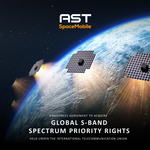
MIDLAND, Texas – August 6, 2025 – AST SpaceMobile, Inc. (NASDAQ: ASTS), the innovative developer of the world’s first space-based cellular broadband network designed to be accessible directly by everyday smartphones, announced a landmark agreement to acquire global S-Band spectrum priority rights held under the International Telecommunication Union (ITU). This deal positions AST SpaceMobile to expand its capacity to deliver both commercial and government-grade ultra-fast mobile connectivity across continents, directly from orbit to standard mobile devices.
What Is the S-Band and Why Does It Matter?
Spectrum rights—especially in highly desirable bands such as S-Band (2–4 GHz)—are the foundation of the world’s wireless communications. S-Band is prized for its favorable radio propagation, balancing range and bandwidth to deliver reliable connections even in challenging environments and through physical obstructions. Already used extensively for weather radar, amateur radio, and certain satellite communications, S-Band offers a flexible framework for the next evolution: direct-to-device satellite broadband and voice services.
The global nature of these ITU-held frequency rights means AST SpaceMobile is not just expanding its U.S. reach, but gaining tools to operate on a truly worldwide scale. The S-Band enhances spectrum diversity for AST’s planned constellation, reducing regulatory barriers and facilitating secure partnerships with national carriers looking to extend coverage to rural and underserved zones with minimal infrastructure.
Accelerating the Satellite-to-Cellular Revolution
AST SpaceMobile’s acquisition comes as demand for universal, seamless mobile connectivity is surging globally. Nearly 2.6 billion people worldwide—about a third of humanity—remain unconnected or under-connected due to high costs and infrastructure limitations, according to the International Telecommunication Union’s 2023 Facts and Figures Report. Direct-to-device satellite communications aim to bridge this divide by enabling ordinary smartphones to connect via orbital networks, bypassing the need for costly and often impractical ground-based towers.
The company’s “BlueBird” satellite constellation is engineered to enable 4G/5G broadband at land, sea, and in the air—supporting everything from emergency response and disaster recovery to IoT, streaming, and traditional voice services. The newly secured S-Band priority rights unlock broader international coverage and flexibility in how the satellites interoperate with mobile networks from multiple countries and partners, both commercial and governmental.
Industry Context: M&A Heats Up in the Satellite Broadband Sector
The satellite communications landscape is experiencing rapid consolidation and aggressive technology development. Major telecom and satellite operators (including SpaceX, Amazon with Project Kuiper, OneWeb, Globalstar, and Lynk Global) are fiercely competing to serve the direct-to-handset and IoT markets. Recent spectrum auctions, regulatory shifts, and joint ventures underscore the strategic value of holding priority spectrum as companies race to monetize orbital infrastructure and tap new user bases.
This acquisition strengthens AST SpaceMobile’s position against rivals also seeking ITU authorizations for similar frequencies. By controlling global rights, AST can enter new regions quickly, partner with local telecoms, and accelerate commercial rollout even in markets with stringent regulatory environments. The move could also preempt competitors from acquiring crucial S-Band allocations in high-demand geographies.
Financial and Strategic Details
While the financial terms of the spectrum rights acquisition remain undisclosed, the agreement represents a strategic investment in both the long-term growth of AST SpaceMobile and the resilience of its business model. The company’s proprietary application-specific integrated circuits (ASICs) and BlueBird satellites have been designed with S-Band support in mind, suggesting a rapid integration pathway.
The transaction arrives as AST SpaceMobile continues to secure and expand its carrier relationships. Recently, the company announced commercial partnerships and MOUs with leading operators such as AT&T, Vodafone, Rakuten, and others, covering over 2 billion potential subscribers. The addition of global S-Band rights opens the door for new agreements in markets across Asia, Africa, South America, and Europe.
Regulatory and Business Implications
Obtaining ITU-recognized spectrum is notoriously complex, involving coordination with dozens of national regulators and industry bodies worldwide. The newly acquired rights give AST SpaceMobile preferred status for S-Band usage, allowing expedited licensing in many jurisdictions. This move aligns with global policy shifts to encourage universal service and digital inclusion, particularly in emerging economies where terrestrial rollouts remain uneconomical.
Industry analysts predict that as spectrum scarcity intensifies, companies holding broad and defensible rights like these may see their enterprise value surge. The transaction is expected to increase the attractiveness of AST SpaceMobile’s technology for both equity investors and strategic partners, as evidenced by the positive Nasdaq response to the news.
Future Outlook
The direct-to-smartphone space race is moving quickly, with multiple launches and commercial pilots expected in 2025–2026. AST SpaceMobile, leveraging its expanded S-Band access, is well-positioned to secure first-mover advantages and establish deep relationships with government agencies (for defense and disaster recovery) as well as telecom operators seeking 100% connectivity for their customers.
For consumers, the implications are profound: truly global, always-available mobile broadband using the devices they already own, promising a new chapter for digital inclusion. For investors and industry players, the M&A activity highlighted by this deal signals that satellite spectrum is the next gold rush in global communications.


