
Blue Sky Ahead for United and JetBlue After DOT Partnership Go-Ahead
By Robert Silk | July 29, 2025
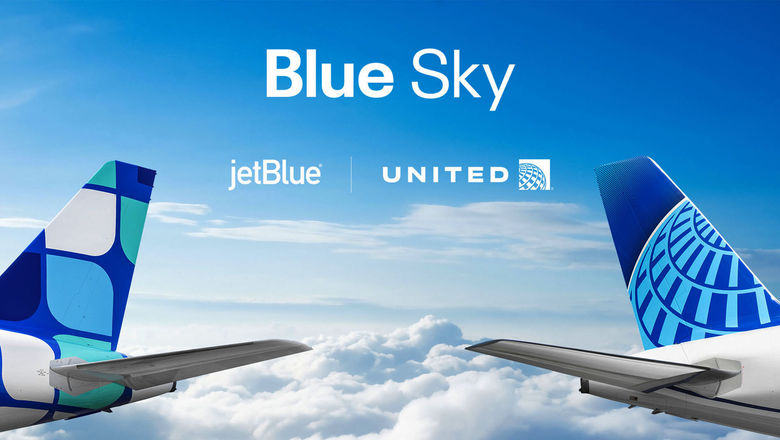
DOT Greenlights Landmark Airline Partnership
The U.S. Department of Transportation (DOT) has granted approval for United Airlines and JetBlue Airways to move forward with their landmark ‘Blue Sky’ codeshare and interline partnership, marking a significant shift in the U.S. airline industry. The approval, announced on July 29, 2025, clears the way for the two carriers to expand network connectivity, enhance customer loyalty benefits, and reshape travel options—particularly in the highly competitive New York metropolitan region.
The Blue Sky partnership, first unveiled in late May 2025, aims to combat longstanding slot and space constraints at major New York airports. Under the agreement, United and JetBlue will coordinate closely on network planning, enabling seamless connections between their respective routes while maintaining competitive distance on pricing and operational decisions in compliance with antitrust regulations.
What Blue Sky Means for Travelers
The partnership unlocks a spectrum of new benefits for air travelers nationwide. Most notably, customers of both airlines will be able to:
- Book connecting flights across United and JetBlue’s networks in a single transaction, broadening travel options across more than 200 destinations.
- Earn and redeem loyalty points reciprocally through United MileagePlus and JetBlue TrueBlue programs, including access to status perks such as priority boarding, complimentary checked bags, and preferred seating.
- Access expanded airport options in the New York metroplex—United will return to operating up to seven daily round trips from John F. Kennedy International Airport (JFK) starting in 2027, after a hiatus that began in 2015, while JetBlue will secure eight additional daily departures at Newark Liberty International Airport (EWR).
For business and leisure travelers alike, the partnership means more convenience and flexibility accessing the world’s busiest air market.
Strategic Benefits for United and JetBlue
For United, regaining a foothold at JFK reopens the door to lucrative transcontinental and international markets from New York’s flagship airport. Since consolidating most operations at Newark in 2015, United has struggled to compete directly with carriers operating at JFK, including Delta Air Lines and American Airlines. The new partnership allows United to return to JFK with competitive flight schedules and connections powered by JetBlue’s established JFK infrastructure.
JetBlue secures a stronger presence at Newark, the fastest-growing hub in the New York area. By gaining control over eight additional daily slots, JetBlue can ramp up its own east-west and short-haul operations, further challenging legacy carriers.
JetBlue projects the Blue Sky agreement will deliver between $850 million and $950 million in additional earnings before interest and taxes (EBIT) by the end of 2027—a critical infusion as the airline pursues post-pandemic recovery and long-term growth plans. United, for its part, is expected to drive higher yields through premium JFK flights and capture a larger share of corporate and upscale leisure travel.
Industry and Regulatory Context
The approval comes against a complex backdrop of heightened government scrutiny on airline cooperation in recent years. Notably, JetBlue’s previous Northeast Alliance with American Airlines was ordered dissolved by a federal judge in 2023, who found it to be uncompetitive. This time, both United and JetBlue emphasized to regulators their intent to remain independent rivals on fares, schedules, and frequent flyer programs, ensuring no illegal collusion or anti-competitive outcomes.
Spirit Airlines objected to the partnership during the review process, warning it could reduce competition and raise fares on overlapping routes. However, the DOT determined that as long as both airlines remain legally separate and the partnership is limited to codesharing, interlining, and loyalty reciprocity—rather than deep revenue sharing or full joint venture—the risk to competition remains manageable. The department has reportedly placed some conditions on the agreement, aimed at monitoring pricing behavior and slot utilization at New York airports.
This regulatory stance mirrors ongoing trends in the global airline sector, where authorities balance integration benefits against consumer protection and competition concerns.
Implications for the New York Air Market
New York is the nation’s largest and most congested aviation market, with over 140 million combined annual passengers prior to the pandemic, and demand steadily climbing once again in 2025. Slot restrictions at JFK and Newark have long limited airlines’ ability to launch new routes, often freezing out growth-focused carriers and consolidating control among legacy giants.
The Blue Sky partnership marks a rare instance of major slot trades—United regains muscle at JFK and JetBlue becomes stronger at Newark. Both airlines have pledged to use the newly acquired slots for “incremental flying,” promising more options and seats for travelers rather than reducing overall service or consolidating routes.
Industry analysts note this arrangement may serve as a template for future partnerships at other capacity-constrained hubs such as Chicago O’Hare, Los Angeles International, and London Heathrow. By leveraging collaboration without full-scale mergers, airlines can navigate bureaucracy and antitrust constraints while maximizing fleet and network efficiency.
What Comes Next?
United and JetBlue have pledged to announce additional details of the Blue Sky partnership—including schedules, loyalty integration specifics, and route expansions—within the coming weeks. Travelers can expect co-branded booking portals to roll out in the fall, with loyalty program reciprocity tentatively launching by early 2026.
The partnership arrives as both airlines continue positioning themselves for long-term profitability in the post-pandemic landscape. United, a member of the Star Alliance, is investing heavily in new aircraft and global expansion, while JetBlue is differentiating itself through enhanced service, new transatlantic routes, and innovation in the low-cost segment.
Ultimately, the Blue Sky alliance could raise the bar for airline cooperation in the world’s most vital air corridor, providing travelers with more choice, value, and seamless experiences.


