
China Hosts World’s First Humanoid Robot Sports Games as AI Rivalry Intensifies
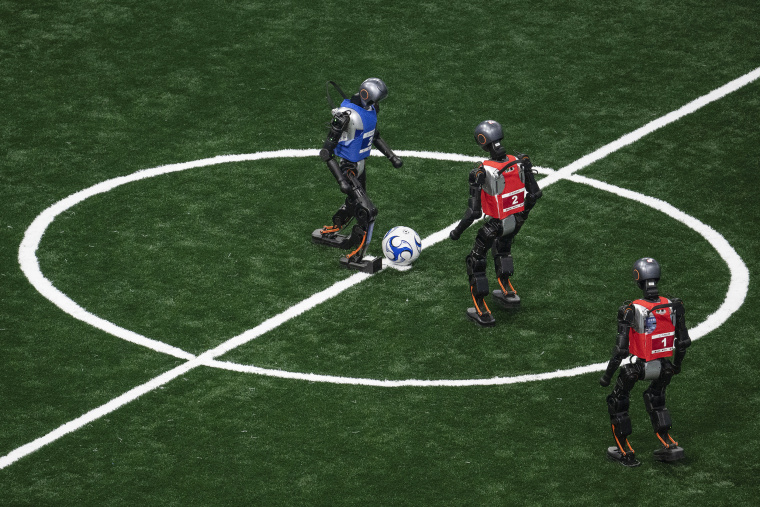
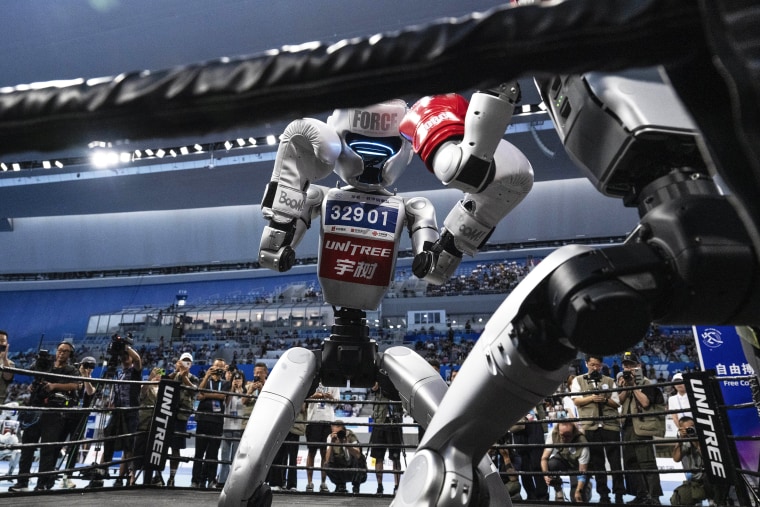
In August 2025, Beijing’s iconic National Speed Skating Oval was transformed from an Olympic ice venue into a futuristic arena, hosting the world’s first World Humanoid Robot Games. Over three days, teams from 16 different countries fielded approximately 500 bipedal robots, each designed to stretch the limits of embodied artificial intelligence by competing in a suite of 26 diverse events—from sprint races to taekwondo to soccer and intricate job-skill challenges.
The spectacle, which captivated both in-person audiences and global observers online, marked a pivotal statement by China about its place in the global race for technological leadership. While the robots themselves are still in the early stages of agility and reliability—often stumbling, veering off track, or breaking down mid-competition—the event was less about perfect performance and more about demonstrating real-world progress in AI-driven robotics, their potential applications, and the state of global innovation.
Testing the Frontiers of Applied AI
The robotic athletes came in a variety of shapes and sizes, pushing the envelope in both sports and practical demonstrations. Events ranged from classic sprints and soccer matches to tasks simulating service jobs like medicine sorting and concierge duties. One viral moment emerged when a running robot careened off course, colliding with a person on the track—a story emblematic of the current developmental stage, where real-world unpredictability often outpaces reliability.
Despite these growing pains, industry participants see tremendous value in such real-world stress testing. Gregorio Velasco, a representative from California-based robotics company StarBot, which showcased their customer-service bots in Beijing, put it succinctly: “We’re already seeing robots that can thrive in restaurants, hotels, and more. These games are a proving ground for the tech we hope will soon be part of everyday life.”
During the games’ Tai Chi competition, judges praised the fluidity and grace of several robots’ programmed motions, considering their limited training window. Martial arts judge Zhang Jidong explained to The Beijing News, “A single movement must be repeated countless times before robots can achieve stability.” His sentiment underscored just how steep the learning curve remains, even as progress accelerates.
State Backing and Global Ambitions
This unique tournament is emblematic of China’s strategy: to rapidly develop, showcase, and commercialize AI and robotics on a global stage. In July 2025, China unveiled its Global AI Action Plan, a move seen as a direct response to the U.S. government’s concurrent advances in AI policy. Experts at the Atlantic Council suggest these dueling strategies are “no coincidence,” as both countries seek to influence international norms and governance for artificial intelligence.
China’s model emphasizes mass accessibility and state-backed deployment, promising support to developing nations and heightening state control over critical technology. This vision contrasts sharply with the U.S. market-driven innovation ecosystem, which leans on Silicon Valley’s private sector ingenuity and open AI frameworks but is increasingly wary of exporting advanced semiconductor technologies critical to state-of-the-art AI.
The Chinese government has heavily invested in robotics infrastructure, research, and state subsidies—mirroring its playbook for the electric vehicle (EV) industry, another sector where China is now a global leader. The nation’s efforts are visible not just in funding but in highly publicized events, including April’s Beijing half-marathon, where robots and humans competed side by side.
Innovation, Affordability, and the Numbers Game
While American companies like Boston Dynamics dominate the high-end spectrum of robotics—emphasizing breakthroughs in mobility, autonomy, and AI algorithms—China’s industrial approach has been to rapidly scale up production, increase affordability, and deploy humanoid robots in practical settings. According to a Morgan Stanley report, China is projected to have over 300 million humanoid robots in use by 2050, far outpacing the estimated 77 million in the U.S. For perspective, robots are already being rolled out in China for logistics, manufacturing, patient care, and service industries at a scale unmatched elsewhere.
Yet, analysts suggest this production advantage doesn’t automatically guarantee supremacy. The U.S. retains a substantial lead in total compute capacity—a key resource for developing, training, and deploying complex AI systems. Experts at the RAND Corporation observe that while China is “closing the gap” in model sophistication, access to world-leading data-center infrastructure and chip technology leaves the U.S. with strategic advantages, especially as compute-intensive generative AI becomes mainstream.
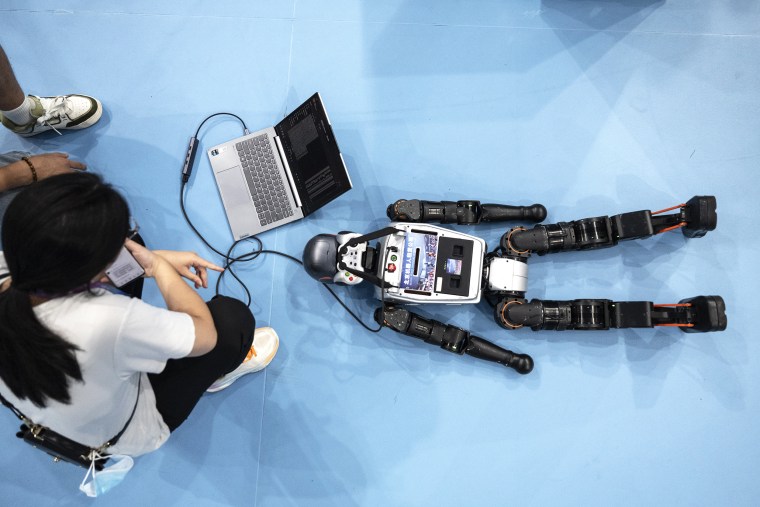
Wang Xiaoyin, from Chinese developer NexAurora, summed up the current state succinctly: “Today’s humanoid robots still lack a robust AI brain.” He stressed that the “real AI age” will arrive only when robots can independently reason and adapt on the fly, post-training—a milestone that remains years away, even as incremental progress accelerates.
Global Implications and the Road Ahead
The World Humanoid Robot Games, broadcast widely on social media and Chinese state TV, were more than just a technological exhibition. They were a signal of intent by Beijing: to lead, not just participate, in a future where autonomous machines play integral roles in economies and societies worldwide. As nations grapple with questions of ethics, standards, workforce impact, and regulation, the race to shape global AI continues to accelerate.
For now, the robot games in Beijing serve as a snapshot of both rapid progress and extant challenges, reminding the world that while a future rich with intelligent machines is fast approaching, mastering the human–robot partnership will require continued investment, careful policy, and a willingness to learn through competition on—and sometimes off—the field.


