
Crypto Market Plunges: Altcoins Suffer Sharp Losses with Over $600 Million in Liquidations
By CryptoPotato Staff
September 22, 2025
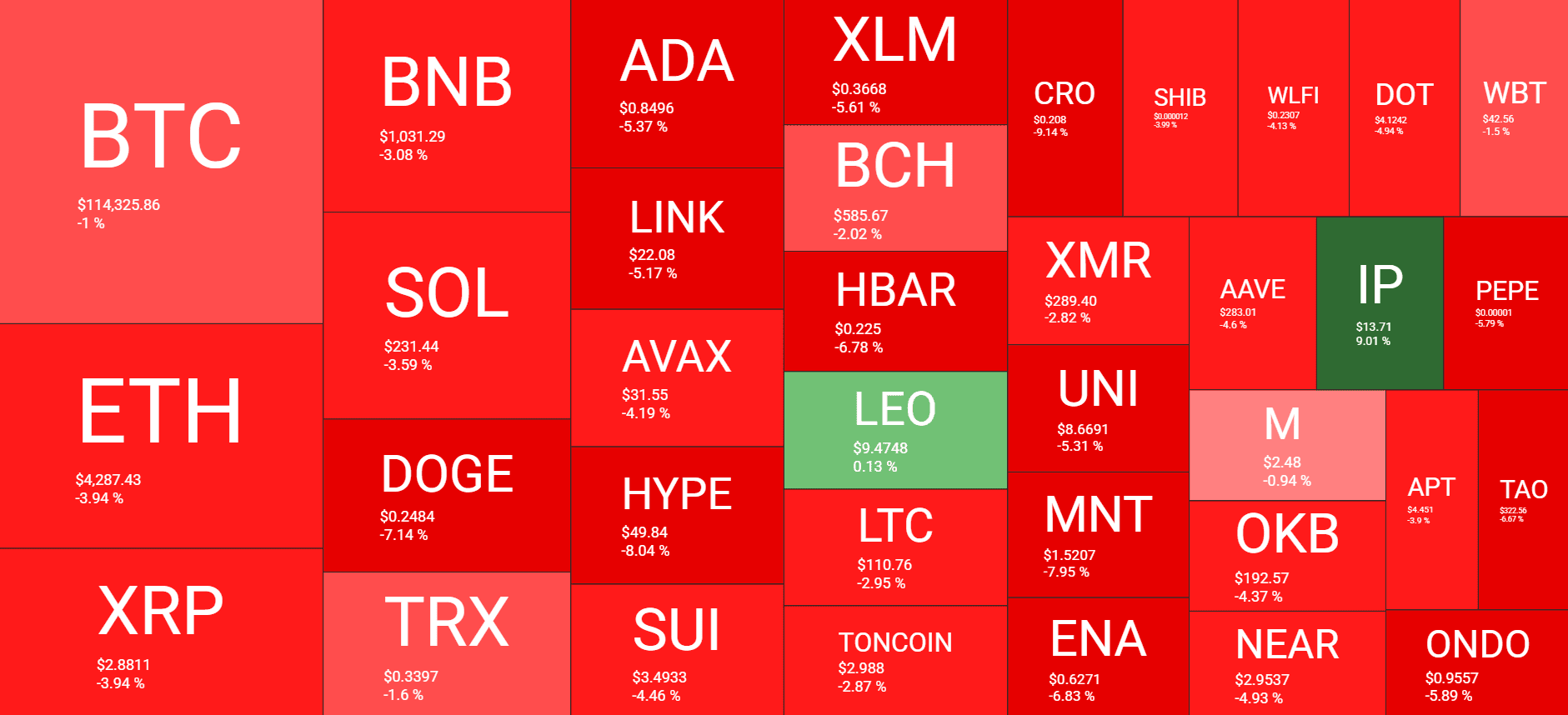
The cryptocurrency market experienced a major sell-off on Monday, wiping out nearly $60 billion in market value within 24 hours. The downturn was primarily driven by sharp declines across leading altcoins, which outpaced the more moderate losses posted by Bitcoin (BTC). The broad sell-off resulted in over $600 million worth of trader liquidations, underscoring the persistent volatility inherent in digital asset markets.
Altcoins Lead the Market Downturn
Altcoins bore the brunt of the market rout this week. Ethereum (ETH), the second-largest cryptocurrency by market cap, saw a steep 4% decline, dropping to a weekly low below $4,300. This follows repeated rejections at the $4,700 resistance mark throughout September, signaling a loss of momentum for what had previously been one of 2025’s top performers.
Ripple’s XRP also experienced heightened volatility, falling below the crucial $3 support level over the weekend and dipping further to under $2.90 as of Monday. Despite bullish predictions for a rally to its all-time high near $3.65, XRP’s trajectory in the short term appears bearish, with the asset posting about a 4% daily decline.
Other major altcoins such as Cardano (ADA), Chainlink (LINK), Dogecoin (DOGE), Hype (HYPE), and Cronos (CRO) fared even worse. HYPE slumped by 8% to trade under $50 after prominent investor Arthur Hayes reportedly sold off his holdings. CRO was hit even harder, losing 9% in value following news of a security breach at the backing exchange, further dampening investor confidence.
Aside from rare exceptions like IP, which managed gains amid the downturn, the majority of mid- and small-cap altcoins also registered double-digit percentage losses. Overall, the aggregate cryptocurrency market capitalization fell to nearly $4.06 trillion, according to data from CoinGecko.
Bitcoin’s Relative Resilience Boosts Market Dominance
In contrast to the deep losses recorded by altcoins, Bitcoin’s move to the downside was more contained. The benchmark cryptocurrency slipped around 1% on the day, outperforming most major tokens and raising its dominance to above 56%. This represents a notable shift in market sentiment, as investors retreat to the relative safety and liquidity of Bitcoin during turbulent periods.
Year-to-date, Bitcoin remains one of the sector’s best performers, buoyed by growing institutional interest, the recent approval of several spot Bitcoin ETFs in major jurisdictions, and increased adoption as a hedge against macroeconomic uncertainty and inflation. According to Glassnode, Bitcoin’s market dominance is now at its highest since early 2021, highlighting the asset’s ongoing role as a market bellwether.
Massive Liquidations: Over $600 Million Wiped Out
CoinGlass and other market analytics platforms reported over $630 million in liquidated positions across various exchanges within a single day. Nearly 220,000 traders were forced to exit their positions, with leveraged positions in Ethereum leading the pack at $184 million of the total liquidations.
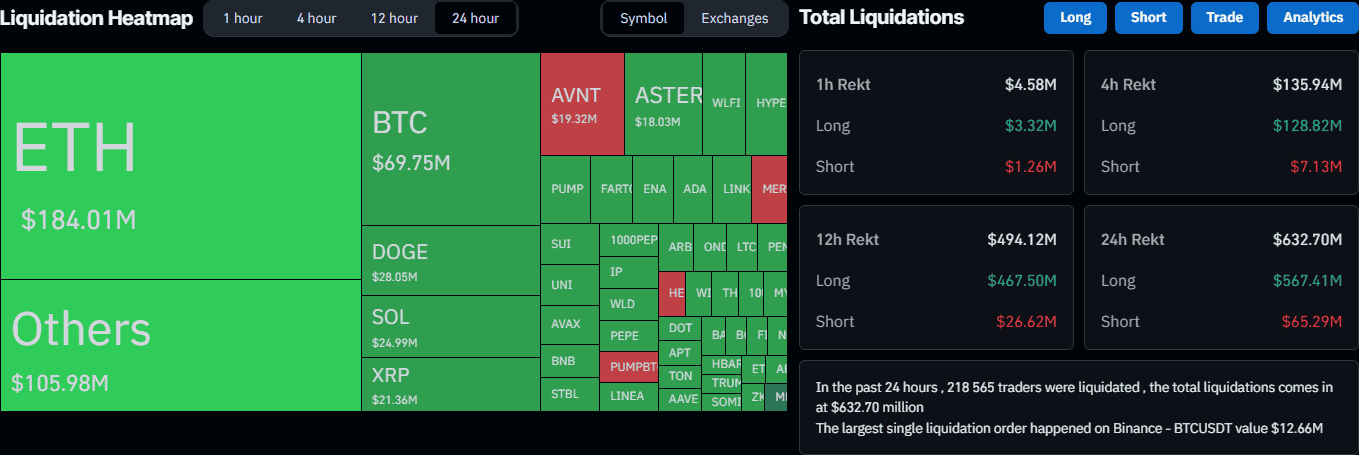
These substantial liquidations reflect aggressive leverage usage among retail and institutional traders, which continues to contribute to market whipsaws. The prevalence of automated liquidations has intensified as centralized and decentralized derivative platforms extend higher leverage products, amplifying the risk of widespread position clearance during sharp price movements. This volatility is a reminder of the risks facing those who trade on margin in the cryptocurrency sector.
Broader Market Context and Future Outlook
The current correction follows months of significant gains for the crypto market, as several major developments—including institutional adoption and regulatory advances—contributed to bullish sentiment. However, macroeconomic risk factors have re-emerged. Global equity markets have wobbled in recent sessions amid renewed concern over persistent inflation, monetary policy tightening by the U.S. Federal Reserve, and subdued economic data from China and the Eurozone. These macro factors continue to influence crypto volatility.
Additionally, the recent spate of security incidents, including high-profile exchange data breaches and DeFi protocol exploits, has renewed calls for enhanced cybersecurity in digital asset markets and greater accountability from trading platforms. Market participants are urged to remain vigilant as Wintermute, Curve Finance, and others have reported hundreds of millions of dollars in losses to attackers in 2025 alone.
Industry Reactions: What Comes Next?
Market strategists and analysts are closely watching for technical reversal signals, with attention focused on critical support levels for Bitcoin, Ethereum, and other major assets. Some experts argue that the correction is a healthy reset following exuberant rallies, while others caution that more pain could be in store if global risk aversion deepens.
“Periods of heightened volatility and broad-based liquidations typically present both risks and opportunities for disciplined market participants,” commented AvaTrade Chief Market Analyst Naeem Aslam. “As Bitcoin consolidates its dominance, rotational flows between assets and renewed institutional entry could shape the next leg higher.”
Looking forward, expectations remain mixed. While long-term supporters highlight positive trends in blockchain development, tokenization, and regulatory clarity—especially in the U.S. and Europe—short-term price action remains beholden to market sentiment, liquidity conditions, and macroeconomic triggers.
Takeaways for Market Participants
- The latest correction demonstrates the persistent volatility of cryptocurrencies and the outsized effect of leverage on market movements.
- Altcoins remain especially sensitive to capital flows, with sector dominance consolidating into Bitcoin during risk-off episodes.
- Investors are urged to adopt robust risk management and remain up-to-date on both technical and macroeconomic developments when trading in this high-beta sector.
- Continued institutional interest and adoption of advanced risk controls may help temper volatility but are unlikely to eliminate it altogether.
For those seeking to build or maintain a crypto portfolio, experts advise dollar-cost averaging, portfolio diversification, and limiting leverage exposure as prudent strategies in turbulent times.


