
Former Football Coach Derek Dooley Enters Georgia Senate Race, Shaking Up Political Landscape
By ABC News – August 3, 2025
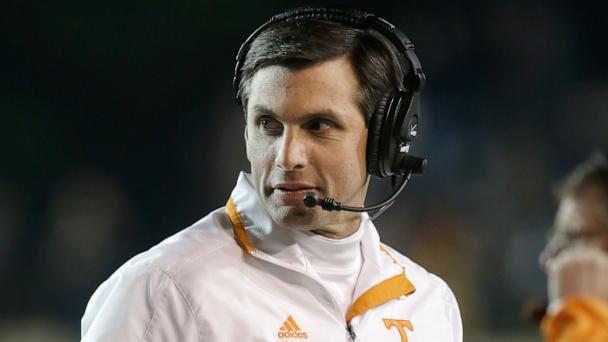
In an unexpected move that could reshape Georgia’s political landscape, Derek Dooley, the former head coach of the University of Tennessee football team and former Dallas Cowboys assistant, has officially entered the Georgia Senate race. Dooley, who has never before run for public office, joins a growing trend of sports figures seeking political office as outsiders with a message of new leadership and reform.
A High-Profile Candidacy
Dooley, 57, is widely recognized for his storied career in collegiate and professional football, including stints as head coach at Louisiana Tech and Tennessee, and as an assistant with the Dallas Cowboys and Missouri. Now, he is aiming to translate his high-profile leadership experience from the football field to the halls of Congress. Dooley made his announcement before a crowd of supporters in Atlanta, framing his lack of political experience as an asset. “Georgians are tired of the same old politicians,” he said. “They want someone who knows how to build a winning team, foster accountability, and deliver results under pressure.”
Georgia: At the Heart of National Politics
The Peach State remains at the center of national political attention heading into the 2026 midterms. Georgia has found itself sharply divided in recent electoral cycles, with high-profile gubernatorial and Senate contests capturing national headlines, and the state swinging narrowly between the two major parties. Recent redistricting battles and shifting demographics have intensified the competition in Senate and House races.
Political analysts say that Dooley, who is running as a Republican, may benefit from his outsider status at a time when anti-establishment energy fuels voters across the political spectrum. Polls consistently show that voters in Georgia are looking for candidates with real-world experience outside of politics, particularly as Congress faces critical issues such as healthcare, education, inflation, and economic recovery.
An Outsider’s Message
In his campaign launch, Dooley decried what he described as gridlock in Washington. He pledged to bring the “discipline, teamwork, and tough decision-making” he honed as a football coach to the Senate. Dooley is likely to focus his campaign on education reform, workforce development, infrastructure, and strengthening Georgia’s role as a driver of economic innovation in the Southeast. Early statements emphasized bipartisan problem-solving—an approach that could appeal to independent and moderate voters in Georgia, a state known for its razor-thin margins.
“It takes more than slogans or career politicians to get things done,” Dooley declared. “I know how to galvanize a group, set goals, and execute a vision—skills sorely needed in Washington right now.”
Crowded Field and Uncertain Path
Dooley is expected to face a competitive Republican primary, likely including seasoned state lawmakers, political operatives, and potentially a Trump-endorsed candidate given the former president’s ongoing influence in Georgia’s GOP. The Democratic field will also be closely watched; Georgia’s last two Senate elections resulted in runoff showdowns that drew intense national scrutiny and historic fundraising.
Political scientists note that candidates such as Dooley can both revitalize and disrupt Republican coalitions. While his sports celebrity can provide high name recognition and media coverage, he will need to quickly demonstrate policy fluency and the ability to tackle complex legislative issues. With the rise of unconventional candidates nationwide—including former athletes like Herschel Walker—Dooley’s campaign will be seen as a test of whether sports leadership can credibly translate into lasting political influence.
Key Issues for Georgia Voters
This Senate campaign unfolds amid pressing state and national concerns. Georgia voters consistently cite the economy—including jobs and inflation—as top motivations at the ballot box. The state also faces issues such as school funding, agriculture challenges, metro infrastructure, and the impact of new federal policies on immigration and gun rights.
According to the most recent U.S. Census and political polling, Georgia’s population has grown more diverse, with notable increases in suburban, Latino, and Black voters. These dynamics have pressured candidates to broaden their appeal beyond traditional partisan bases.
Campaign Finance and Path Forward
Observers will closely track how effectively Dooley leverages his outsider appeal into sustained fundraising and grassroots momentum. Previous Georgia races have shattered campaign finance records: In the 2022 and 2024 Senate cycles, candidates and outside groups spent nearly $500 million in the state, signaling that this cycle could see similar levels of financial engagement.
Dooley’s campaign will need to attract support from both football fans and political novices, as well as build coalitions with influential conservative organizations, faith-based networks, and business leaders in Georgia’s robust economic sectors.
Reactions and National Context
National political figures were quick to react. Senator Lindsey Graham (R-SC) welcomed Dooley to the race, highlighting his “proven leadership under high expectations,” while Democratic strategists dismissed the move as a “publicity stunt.” Social media platforms saw a surge in debates over whether nonpoliticians can—or should—hold key legislative positions.
The trend of sports figures entering politics is not new, but its recent resurgence—exemplified by names like Herschel Walker, Tommy Tuberville (Alabama), and Jack Kemp—reflects a broader skepticism toward career politicians and growing appetite for unconventional voices in government.
What’s Next?
Dooley’s campaign is ramping up for a tour of Georgia’s major cities and rural communities. He will participate in local forums, meet-and-greets, and fundraising events over the coming months, aiming to convert his high name recognition into reliable voter support. Early fundraising reports and polling numbers will offer clues as to whether he can transcend novelty status and become a serious contender.
With Georgia’s control of the Senate potentially on the line—and national policy priorities hanging in the balance—Dooley’s campaign launch introduces new fluidity into a race already watched by both parties’ top strategists. As the field shapes up, all eyes will be on whether Derek Dooley will remain an underdog or become a central player in Georgia’s latest high-stakes political showdown.


