
Healthcare AI Today: Pittsburgh’s Investment Boom Reshapes National AI Landscape
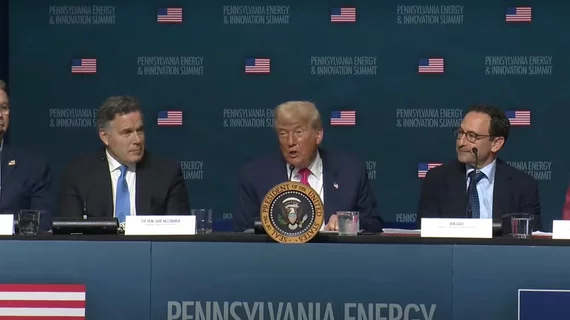
Artificial intelligence continues to redefine America’s healthcare sector, with Western Pennsylvania at the epicenter of an unprecedented investment surge. At the inaugural Pennsylvania Energy and Innovation Summit, held July 15 at Carnegie Mellon University, more than $92 billion in combined AI and energy investments were pledged—positioning Pittsburgh as a future global AI powerhouse and energizing the national conversation about American AI leadership and industrial transformation.
Pittsburgh’s $92 Billion AI & Energy Commitment: Investment Breakdown
Fueling much of this investment boom, tech giants and major private equity firms announced historic commitments: Google and Blackstone each pledged $25 billion, with at least 15 tech and energy companies together accounting for sums in the tens of billions, and several others bringing millions to the table. These investments aim to strengthen both AI infrastructure and advanced energy production capabilities in Pennsylvania.
Senator Dave McCormick (R-PA), who organized the event, underscored the bipartisan nature of this landmark development. Standing alongside Democratic Governor Josh Shapiro, McCormick stated, “We need to be at the crossroads of the energy and AI revolution.” He summarized the investment surge as “putting Pennsylvania—and the United States—on the global AI map.” Senator McCormick published the full list of investment commitments here.
President Trump, serving as the event’s headline speaker, emphasized the impact on American manufacturing and global competitiveness: “Today’s commitments are ensuring that the future is going to be designed, built and made right here in Pennsylvania—and right here in the United States of America.”
Environmental Debate: Fossil Fuels or Renewables?
Despite the economic optimism, the summit’s focus on fossil-fuel-driven energy investments drew sharp criticism from environmental advocates. Dr. Sandy Field, chair of the Climate Reality Project’s Susquehanna Valley chapter, labeled the initiative a step backward, calling for a strategic shift toward renewables. She argued, “Pennsylvania has a chance to pivot right now and lead on the renewable energy transition that we need to fight the climate crisis. This meeting is just about planning more fracking projects and asking Pennsylvanians to sacrifice our health and the environment yet again.” Other organizations echoed concerns about the potential for increased carbon emissions and public health risks.
In response, Interior Secretary Doug Burgum framed the issue within the context of national security. Speaking at the summit, he stated, “This administration identified early that there are two existential threats, and neither one of them is climate change. One is Iran getting a nuclear weapon. And then two is losing the AI arms race.” His remarks reflect a growing policy focus on AI as a critical field of global competition.
Silicon Valley Dominance and Emerging AI Metros
While Pittsburgh is gaining headlines for its investment haul, the San Francisco Bay Area remains the national nucleus of AI achievement. According to a July 2025 Brookings Institution report, San Francisco and San Jose are the only U.S. metros excelling in the “three AI pillars”: talent, innovation, and adoption. Brookings designated 28 additional metro regions as “star hubs,” highlighting a trend toward broader geographic dispersal of AI excellence fueled by the generative AI boom.
The same report noted that Pittsburgh, supported by the recent wave of investment, is rapidly ascending as a formidable AI hub. The authors suggest that harnessing AI’s economic potential requires a blend of regional innovation and supportive national strategies, arguing that “the recent boom in generative AI and agentic systems is beginning to widen the geography of AI activity.”
Consumers Trust (and Use) AI for Health Information
The intersection of AI and consumer healthcare is increasingly pronounced: nearly 80% of U.S. adults report turning to Google or other online resources when experiencing symptoms of illness, according to an April 2025 survey by the University of Pennsylvania’s Annenberg Public Policy Center. Of these users, three-quarters find AI-generated answers at least somewhat helpful, and almost a third view them as often reliable. However, researchers warn that AI summaries can be outdated or inaccurate, urging consumers to use critical judgment and consult medical professionals.
These patterns highlight both the rapid normalization of AI-assisted health inquiries and enduring concerns over accuracy and data stewardship. The full Annenberg findings are available here.
AI Adoption Patterns: Urban Hospitals Lead the Way
A recent analysis from the Federal Reserve Bank of St. Louis observes that hospitals situated in urban areas are far more likely to implement AI across a range of functions—from clinical decision support and workflow automation to scheduling and operational forecasting. This trend is attributed to better resources and stronger institutional support in city centers, particularly at academic medical centers. In contrast, rural and metro-adjacent hospitals face barriers in both staff capacity and technological infrastructure, raising concerns about the widening digital divide in U.S. healthcare. More details and data visualizations can be found via the St. Louis Fed blog.
Healthcare Marketing and AI: Precision or Perception?
The adoption of AI tools is not limited to clinical and operational domains. Healthcare marketing is experiencing a transformation, with AI algorithms enabling hyper-targeted advertising, reputation management, and patient engagement strategies. While these advancements offer new ways for organizations to reach patients, they also blur the line between genuine clinical quality and expertly crafted promotional messaging. As Forbes contributor Lauren Parr points out, AI-driven marketing analyzes user behavior and intent to deliver messages “at the right moment,” reshaping public perceptions of healthcare brands. Read more on Forbes.
Cybersecurity Concerns in the Federal AI Ecosystem
As AI becomes embedded in public-sector technologies, cybersecurity challenges are mounting. At a July 10 summit, Jennifer Franks of the Government Accountability Office (GAO) warned that many federal agencies lack the tools and expertise to properly secure sensitive data as AI deployments accelerate. “With AI being embedded in so many of our tools and technologies, we are already finding that [federal] agencies are not able to really provide the additional protections for their data and our personally identifiable information,” she cautioned. Calls for robust cybersecurity and data governance are expected to intensify in parallel with AI adoption across both healthcare and government sectors.
Recent Highlights: Regulatory Progress & Clinical Innovation
- Experts have developed an AI system that accurately diagnoses osteoporosis from routine X-rays (Health Imaging).
- AI-enabled coronary plaque evaluation tools are now included in new Radiology Benefit Management (RBM) guidelines (Cardiovascular Business).
- The FDA recently cleared AI-powered software for real-time TAVR (transcatheter aortic valve replacement) guidance (Cardiovascular Business).
- Medicare Physician Fee Schedule has introduced a new CPT code and $1,000 payment for imaging AI software, further incentivizing clinical AI integration (Radiology Business).
- An AI algorithm designed to diagnose depression from MRI scans received key regulatory approvals (Health Imaging).


