
How Artificial Intelligence is Revolutionizing Breast Cancer Detection and Risk Assessment
Medically reviewed by Faith Selchick, DNP, AOCNP, Nursing, Oncology — Written by Caitlin Geng | July 11, 2025
Artificial intelligence (AI) is reshaping the field of oncology, particularly in breast cancer detection and risk prediction. With breast cancer continuing to be the most common cancer among women worldwide—accounting for nearly 12% of all new annual cancer cases globally and 7% of cancer deaths—early, accurate diagnosis is crucial. Recent breakthroughs suggest that AI models not only assist radiologists in identifying cancer more efficiently but may also help in predicting an individual’s future cancer risk with greater precision.
The Role of AI in Breast Cancer Detection
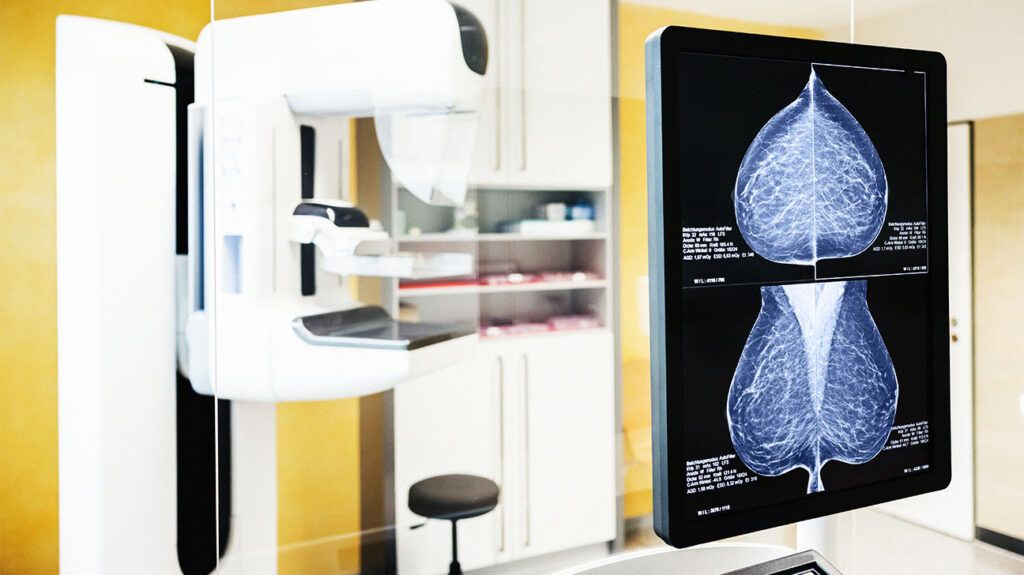
AI in breast cancer screening typically involves machine learning and deep learning algorithms trained on vast datasets of mammogram and ultrasound images. These algorithms learn to detect subtle patterns associated with cancer, often identifying abnormalities that may elude the human eye.
In practice, AI systems are deployed as decision support tools—flagging suspicious regions in images so that radiologists can investigate further. Developers aim to ensure that algorithms recognize not just obvious tumors but also more ambiguous signs presented during the early stages of cancer.
Accuracy: Comparing AI and Human Radiologists
Recent high-profile studies underscore AI’s growing reliability in cancer detection. A notable Swedish trial in 2023 analyzed almost 80,000 mammograms, comparing traditional double-reading by radiologists against AI-supported screening. The study found that AI identified cancer in 244 women, compared to 203 detected by human radiologists—a statistically significant improvement. Notably, the false positive rate remained consistent at 1.5% for both groups, indicating the technology is not more prone to overdiagnosis.
Meta-analyses published in 2025 suggest that AI-driven tools offer equal or better accuracy than radiologists alone, particularly when used collaboratively. One review found that combining AI with human expertise improved detection rates by 2.6%. The pairing also reduces radiologists’ screen-reading workload by up to 44%, helping address healthcare staffing shortages.
However, current limitations include occasional misses on subtle lesions and ambiguous results that require expert human interpretation. Researchers overwhelmingly recommend that AI augment, not replace, radiologists for optimal diagnostic outcomes.
Advances in Early Detection and Risk Prediction
Early diagnosis remains the linchpin for improving breast cancer survival rates. For instance, the five-year survival rate exceeds 99% for women diagnosed at stage 0 or 1, but drops dramatically to 22% at stage IV. Despite its value, traditional mammogram screening misses around 20% of breast cancers (NCI data), largely due to dense breast tissue or cancer subtypes with subtle presentation.
AI has shown promise in
reducing false negatives and detecting cancers earlier by analyzing complex imaging features overlooked by radiologists. A 2024 study identified subclinical (non-palpable) tumors using AI, which could be life-saving. Ongoing clinical trials seek to further establish the reliability and generalizability of these systems across diverse populations.
Individual Risk Assessment with AI
Beyond detection, AI algorithms can now analyze mammogram images to estimate a patient’s risk of developing breast cancer over 5–10 years. Traditional risk calculators—like the Breast Cancer Risk Assessment Tool (BCRAT) or the BCSC model—consider factors such as age, genetics, and personal and family medical histories. However, a 2023 study suggested that AI could achieve more accurate predictions by incorporating nuanced imaging data, and that combining AI with standard tools yields the best predictive results.
Challenges in Implementation: Bias, Privacy, and Regulation
Despite its promise, AI in breast cancer screening faces significant obstacles:
- Standardization and Validation: Algorithms often use heterogeneous data and lack broad generalizability, raising concerns about reliability in diverse clinical settings.
- The “Black Box” Problem: AI systems can reach conclusions in ways not always explainable to clinicians or patients, limiting transparency and trust.
- Ethical and Social Bias: As AI learns from historical datasets, it risks replicating and possibly aggravating existing healthcare disparities. Black women, for example, have a 38% higher mortality rate from breast cancer than white women, partly due to systemic inequities in access and representation in clinical data.
- Economic Barriers: Building, validating, and maintaining robust AI solutions demands major investments in infrastructure and ongoing technical support.
- Regulatory and Data Security Issues: Current legal frameworks such as HIPAA offer a baseline for privacy, but as AI enables new modes of data collection and processing, the risk of re-identification and breaches increases.
To ensure equitable benefit, experts emphasize diversifying AI training datasets, endorsing ethical AI standards, and fostering close collaboration between developers, clinicians, and regulatory agencies.
Looking Ahead: Integrating AI into Precision Oncology
With the global market for AI in healthcare projected to reach over $100 billion by 2030 (Fortune Business Insights), the pace of innovation continues to accelerate. Major healthcare systems and imaging device manufacturers are piloting AI tools for real-world breast cancer screening, while regulatory agencies such as the U.S. FDA increasingly approve AI-enabled technologies for clinical use.
Still, for AI to reach its potential, rigorous multi-site trials must further prove its safety, cost-effectiveness, and ability to address—not worsen—existing inequities.
Ultimately, researchers and clinicians agree that integrating AI as a supportive tool for radiologists offers the clearest path forward. This partnership can enhance diagnostic accuracy, reduce unnecessary biopsies, and optimize treatment plans—advancing the era of personalized and precision medicine for breast cancer patients worldwide.
Conclusion
Artificial intelligence offers a powerful new approach to breast cancer screening and individualized risk assessment. By harnessing sophisticated algorithms alongside human expertise, the field moves closer to earlier, more accurate detection—and potentially, better outcomes for millions of women each year. Continued investment in research, ethical oversight, and education will be critical to realizing these benefits while safeguarding patient privacy and health equity.


