
How Media Coverage of the Supreme Court Became Overtly Political After 2016
Once regarded as an impartial arbiter above the political fray, the U.S. Supreme Court is now routinely discussed in the media through a distinctly political lens. For decades, major news outlets such as The New York Times, The Washington Post, and the Wall Street Journal approached the Court’s actions with a focus on legal principles and the technical merits of cases. However, recent years have witnessed a pronounced shift, with political factors—such as justices’ ideological leanings and the party affiliations of the presidents who appoint them—featuring front and center in coverage.
A History of Deference—and Its Collapse
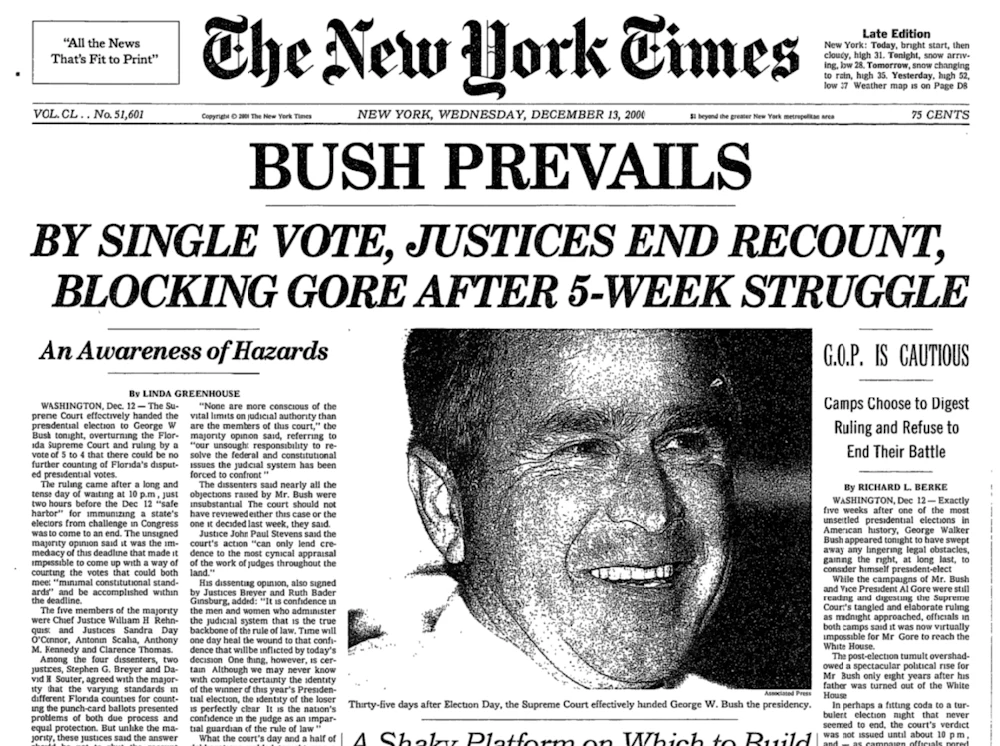
The Supreme Court has always ruled on contentious issues—elections, civil rights, abortion, and free speech among them. Yet for much of modern history, news articles avoided directly referencing political motivations or the broader ideological context for the court’s decisions. For example, in the landmark and controversial Bush v. Gore decision of December 2000, national newspapers focused primarily on the legal rationale and tally of the justices’ votes, making little to no mention of their political affiliations or philosophies.
This approach reflected—and reinforced—a prevailing belief among the American public: that the Supreme Court was driven by legal reasoning rather than partisanship. Scholarly analysis reveals that during the 1980s, 1990s, and early 2000s, political terminology such as “Democrat,” “Republican,” “liberal,” or “conservative” appeared very rarely in coverage of the Court. According to research from Bowling Green State University and Brigham Young University, newspapers of that era perpetuated the idea that politics played little to no role in judicial decision-making. The result: consistently high public trust and institutional legitimacy for the Supreme Court, even after divisive decisions.
The Turning Point: Scalia’s Death and the Garland Nomination
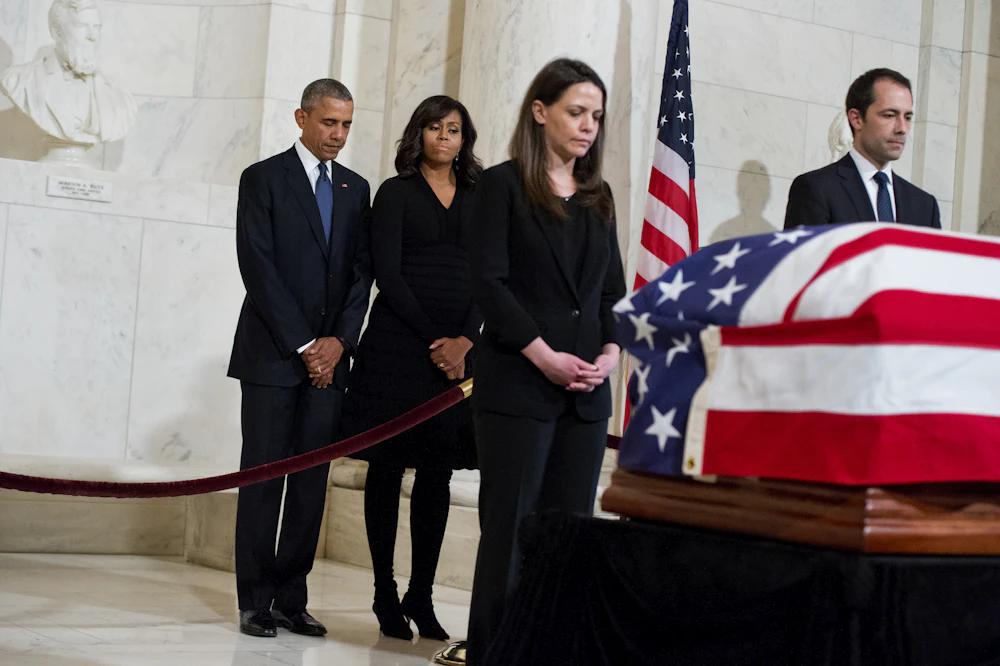
That era of media reserve ended abruptly in February 2016. Justice Antonin Scalia—an influential conservative jurist—died unexpectedly, immediately raising the stakes for the ideological future of the Court. What followed was unprecedented in recent American history: Senate Majority Leader Mitch McConnell refused to consider President Barack Obama’s nominee, Judge Merrick Garland, arguing the next president should appoint Scalia’s successor, despite there being nearly nine months before the election.
This high-profile standoff, coupled with Donald Trump’s campaign promise to fill the seat with a conservative justice committed to overturning Roe v. Wade, pushed Supreme Court politics to the forefront of the 2016 presidential race. News coverage of the institution transformed almost overnight. Before Scalia’s passing, the average Supreme Court article in the sampled newspapers contained just over three political references; immediately afterward, that figure rose to more than 10 per article.
Annual data confirm this dramatic shift. In 2015, Supreme Court articles averaged 3.5 political frames each. In 2016, the number spiked to 5.3. This more overtly political framing has persisted in subsequent years, as confirmed by new research analyzing coverage up to 2023.
Polarized Coverage Mirrors a Polarized Nation
The shift in journalistic framing has not occurred in isolation. It aligns with broader trends of political polarization in American society and government since the 1980s. As Congress and the presidency became more ideologically divided and as partisan loyalties hardened, media treatment of ostensibly neutral institutions like the Supreme Court followed suit.
Just as critically, Supreme Court decisions themselves have grown more predictably ideological. Historically, the Court had a reputation for a degree of ideological balance; majorities could coalesce across political lines, and neither party dominated outcomes for extended periods. However, after Donald Trump’s appointment of three justices—Neil Gorsuch, Brett Kavanaugh, and Amy Coney Barrett—the Court now consists of a solid 6-3 conservative majority. Recent decisions on abortion (Dobbs v. Jackson Women’s Health Organization, 2022), gun rights, and environmental regulation have resulted in a series of rulings aligning with the Republican Party’s agenda.
As the Court’s voting record becomes more closely linked to the politics of the appointing presidents, media outlets increasingly reflect this reality in their coverage. Articles now regularly reference justices as ‘conservative’ or ‘liberal’, discuss the political calculations behind appointments, and highlight the stakes for partisan interests.
Consequences: Public Perception and Institutional Trust
How an institution is covered in the media shapes how the public understands—and trusts—that institution. Studies indicate that when Supreme Court decisions are presented with political frames, public approval of the Court declines. Americans historically want their highest court to function as a nonpartisan, legal body rather than a political actor. The transformation in coverage is therefore both a reflection of, and a catalyst for, declining confidence in the Court as an impartial institution.
Gallup polling shows public confidence in the Supreme Court falling to historic lows, with the aftermath of the Dobbs decision and ethical controversies involving some justices further eroding trust. Only around 40% of Americans said they had confidence in the institution by late 2023, compared to nearly 60% as recently as 2016.
The Media’s Role: Mirror, Participant, or Both?
It remains an open question whether the media’s political framing is a driver of public distrust, simply a reflection of political realities within the Court, or both. Many legal scholars argue that persistent, ideologically driven decisions make it difficult for journalists to maintain the fiction of a purely legal institution. When confirmation battles are explicitly partisan, and major rulings align with party platforms, reporting these dynamics serves the public interest.
Yet, the consequences are profound. As more Americans come to see the Supreme Court as just another political branch, its unique legitimacy and role as a stabilizing force in government could be at risk. Calls for institutional reforms, including ethics rules for justices, term limits, or even Court expansion, have gained new traction—fueled by these changing patterns of both real politics and media narrative.
Looking Ahead: Is There a Way Back?
With the Court expected to issue more landmark rulings in the 2024 term, particularly on regulatory authority, gun laws, and presidential immunity, the intensity of political coverage is unlikely to subside. Journalists, echoing both the reality of the Court’s polarization and public hunger for transparency, are poised to continue highlighting the institution’s political underpinnings. Whether this coverage ultimately pressures the Court to restore a measure of balance—or only deepens its legitimacy crisis—remains to be seen.
For now, one of America’s oldest institutions is viewed through an increasingly partisan lens. Recognizing and understanding how the media came to cover the Supreme Court as a political battleground is essential for policymakers, journalists, and citizens alike grappling with the future of democracy and the rule of law.


