
Inside President Trump’s ‘High IQ’ Dinner: Tech Titans Weigh U.S. Investment & the Future of AI
By Sherin Shibu | September 5, 2025
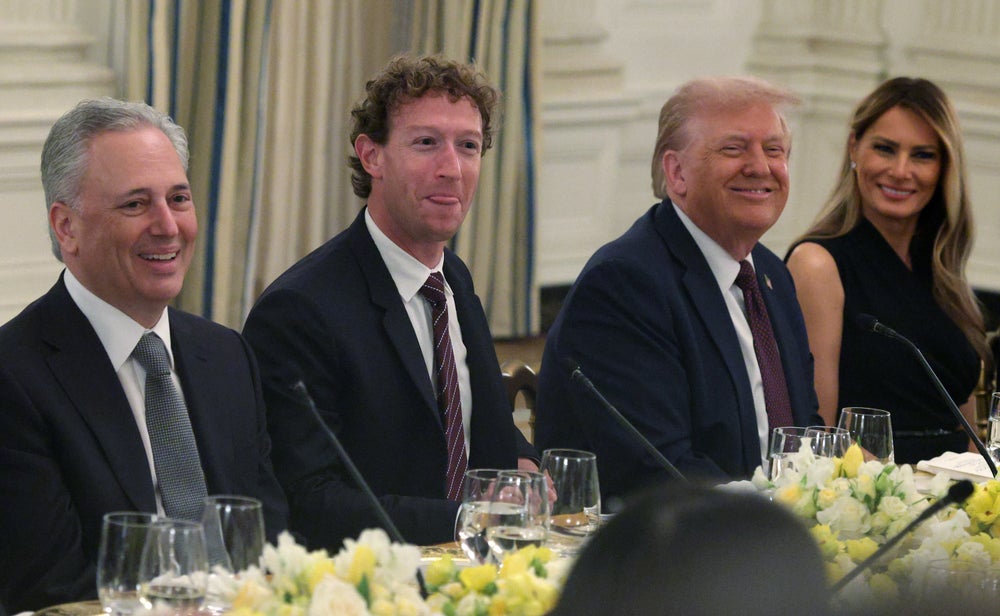
In a high-profile demonstration of government–technology cooperation, President Donald Trump convened an elite gathering at the White House on Thursday evening, bringing together some of the most influential figures in Silicon Valley and the broader tech industry. The private dinner drew luminaries such as Meta CEO Mark Zuckerberg, Google CEO Sundar Pichai, Apple CEO Tim Cook, Microsoft CEO Satya Nadella, and other leading executives. The event’s overarching theme: strengthening the technological and economic backbone of the United States through innovation, regulatory clarity, and record-setting capital pledges.
Commitments to Invest in America’s Future
At the heart of the dinner, President Trump queried each CEO about their corporation’s plans for investing inside the U.S. over the coming years. According to White House sources and confirmed by the Associated Press, the ensuing discussion produced a string of eye-popping figures:
- Meta’s Mark Zuckerberg: “At least $600 billion by 2028 in the U.S.”
- Apple’s Tim Cook: Echoed the $600 billion domestic investment target.
- Google’s Sundar Pichai: Committed $250 billion, pointing to Google’s ongoing U.S. infrastructure and AI research.
- Microsoft’s Satya Nadella: Projected up to $80 billion per year, citing cloud infrastructure and AI initiatives.
“This is taking our country to a new level,” President Trump said, lauding the assembled executives as a “high IQ group.” The dinner placed special emphasis on domestic tech expansion, reflecting an urgent national conversation about supply chain security, job creation, and tech rivalry with China and Europe.
The dinner’s guest list further included prominent names such as Google cofounder Sergey Brin, Oracle CEO Safra Catz, “AI and Crypto Czar” David Sacks, Scale AI founder Alexandr Wang, and Microsoft cofounder Bill Gates. Tesla’s Elon Musk was notably absent but reportedly sent a representative.
Regulatory Landscape and Market Reaction
The context for the gathering came at a crucial moment for the tech sector, as many companies grapple with new federal strategies on AI, data privacy, antitrust enforcement, and the cross-currents of global regulation. Google CEO Sundar Pichai received personal congratulations from President Trump for the outcome of the recent antitrust case against Google. The Department of Justice had sought intense restrictions on Google’s advertising and search business, but the finalized penalties were considerably lighter. The company is now required primarily to end exclusive distribution deals for key products rather than divesting major business units.
Markets responded swiftly: Alphabet’s market cap soared by $230 billion in a matter of days following the resolution, reflecting investor optimism and newfound regulatory certainty. “I’m glad it’s over,” Pichai commented wryly during the dinner, a sentiment that drew laughter from attendees who have faced similar regulatory scrutiny in recent years.
The New Age of AI: Educational Initiatives
Before the evening’s high-powered dinner, First Lady Melania Trump hosted a daytime event focused on the transformative impact of artificial intelligence in American education. Addressing educators, policymakers, and select students, she underscored the need for national AI literacy programs starting at a young age to preserve U.S. competitiveness in the coming era.
As part of the White House’s ongoing “Age of AI” challenge, the First Lady invited students to create AI-powered projects addressing community challenges, with submissions due by December. “The robots are here,” she said. “Our future is no longer science fiction.” The competition has reportedly attracted entries from thousands of students across the country, suggesting a growing grassroots engagement with AI technologies.
These educational efforts align with global trends. In a recent Pew Research study, over 72% of U.S. educators agreed that AI will significantly alter both teaching methods and workforce skills by 2030. Public–private partnerships, such as those encouraged by the White House event, may become linchpins in ensuring equitable access to high-tech resources across diverse communities.
Tensions, Absences, and Industry Focus
While the guest list showcased a rare moment of consensus, a few absences and subtleties revealed industry tensions. Tesla and SpaceX CEO Elon Musk, a frequent vocal critic of both mainstream media and government tech policy, chose not to attend in person, citing prior commitments. He later commented on X (formerly Twitter) that he supports the focus on innovation but encourages further open debate on regulations, digital currency, and intellectual property.
Also notable was the increasing presence of crypto leaders at such summits, reflecting the Biden and Trump administrations’ parallel but divergent approaches to digital assets, stablecoins, and Web3 regulation. “Crypto is now firmly in the national discussion, right alongside cloud, AI, and quantum,” noted David Sacks, who has played an expanding advisory role in federal policy.
Industry-Wide Impact and Forward Outlook
Industry analysts view the dinner as a sign that the U.S. is entering a new phase of public–private alignment on critical technology issues. Lawmakers and CEOs alike emphasized the need for coordinated investment in infrastructure, research, and workforce development to maintain a competitive edge. With the latest World Economic Forum data projecting $15.7 trillion in AI-driven GDP growth by 2030, the stakes for sustained American leadership are higher than ever.
As the dust settles on regulatory battles and campaign rhetoric, the consensus emerging from the White House dinner is that American tech innovation will be a keystone of both economic prosperity and geopolitical strategy in the decade ahead. The eyes of the global business and technology community remain fixed on Washington and Silicon Valley as the next acts unfold.


