
Mark Zuckerberg Bets Big on AI-Powered Smart Glasses at Meta Connect 2025
By Lisa Eadicicco | Published September 15, 2025

A Vision for Ubiquitous Wearable AI
Meta CEO Mark Zuckerberg made headlines at the latest Meta Connect conference, doubling down on his company’s bet that AI-powered smart glasses are the next transformative platform in consumer technology. Zuckerberg emphasized that people not adopting this new form of wearable computing could, in his words, face a “significant cognitive disadvantage” in the years to come. This bold assertion underscores a strategic push by Meta into a sector where competition is heating up — and the stakes for both the company and industry couldn’t be higher.
From Ray-Ban Stories to Next-Gen AI Eyewear
Meta first entered the smart glasses market in 2021 through a partnership with iconic eyewear brand Ray-Ban. Their initial product, Ray-Ban Stories, allowed users to capture photos and videos hands-free and discreetly. But the company’s recent focus has shifted toward fully AI-integrated experiences. According to industry reports leading up to this year’s Connect conference, Meta is poised to announce a new generation of AI-powered glasses capable of analyzing the wearer’s environment, answering queries about the surroundings, translating languages, and even offering contextual assistance powered by advanced generative AI models.
The Ray-Ban partnership has shown commercial promise. In July 2025, EssilorLuxottica, Ray-Ban’s parent company, reported that revenue from Meta-powered glasses more than tripled year-over-year, signaling burgeoning interest in smart eyewear. Independent market research from Counterpoint also places Meta as the leading smart glasses brand globally, well ahead of rivals Snap and Amazon in unit sales and consumer adoption.
The State of the Smart Glasses Market: Competition Intensifies
The last 12 months have seen nearly every major tech company expedite efforts to secure a foothold in this emerging category. Google, still reeling from its failed Google Glass experiment in 2013, is developing a new pair of augmented reality (AR) spectacles with a built-in heads-up display for notifications and applications, alongside strong integration with its AI suite. Samsung is reportedly investing heavily in its Galaxy Glasses initiative, looking to leverage its mobile ecosystem. Amazon too, as reported by The Information, is developing an AR product that could potentially disrupt both e-commerce and social experiences.
Distinct from past attempts, the current generation of smart glasses leverage miniaturized yet powerful processors, advanced sensors, and, most consequentially, generative AI assistants that provide instantaneous feedback. For example, Meta’s AI glasses are rumored to recognize objects, answer questions about them, and understand contextual language, with user interaction possible via voice commands, touch gestures, or even wristband-based motion sensors.
Will Smart Glasses Eclipse the Smartphone?
Despite brisk innovation, smart glasses remain a niche product compared to the omnipresent smartphone. Shipments are growing, however. According to ABI Research, about 3.3 million units of smart glasses shipped globally in 2024, but that figure is expected to rise to 13 million by 2026, boosted by new product launches, consumer curiosity, and improvements in user experience. Still, this lags far behind smartphone shipment volumes, which routinely exceed 300 million units per quarter worldwide.
What gives tech giants confidence that smart glasses could become more mainstream? Apple’s runaway success with AirPods — which seamlessly integrate AI and voice control with everyday fashion — may provide a blueprint. Melissa Otto, head of research at S&P Global Visible Alpha, suggests, “As we look forward, maybe smart glasses are going to evolve into the AirPods of the future, serving as constant, inconspicuous computing companions.” Market analysts also note that as AI models become more personalized — what Zuckerberg terms “personal superintelligence” — the consumer value proposition for smart glasses strengthens.
The Meta Advantage and Strategic Stakes

For Meta, success in smart glasses is about more than just revenue. The company’s hardware division, Reality Labs — which also oversees the Quest VR headset series — posted a $4.5 billion operating loss in Q2 2025, compared to Meta’s total app revenue of $583 million for the quarter. But the long-term strategic value is profound: by distributing its own AI-powered devices, Meta reduces dependence on rival platforms like Apple’s App Store or Google Play, gaining more control over how users experience core Meta products — Facebook, Instagram, WhatsApp, and the new Threads platform.
Historically, Meta has clashed with Apple over app store policies, data privacy requirements, and user experience regulations. Should smart glasses eventually become the dominant personal interface, Meta aims to ensure its ecosystem is front and center—just as social media consumption migrated from desktops to smartphones in the last decade.
“If glasses become the primary device for social connection, Meta stands to reshape how and where people interact online,” Otto commented. Unlike smartphones, which rely on user-initiated engagement, always-on smart glasses could usher in a new era of context-aware AI, proactive suggestions, and real-time translation layered over everyday life.
Challenges Ahead: Consumer Skepticism & the Road to Adoption
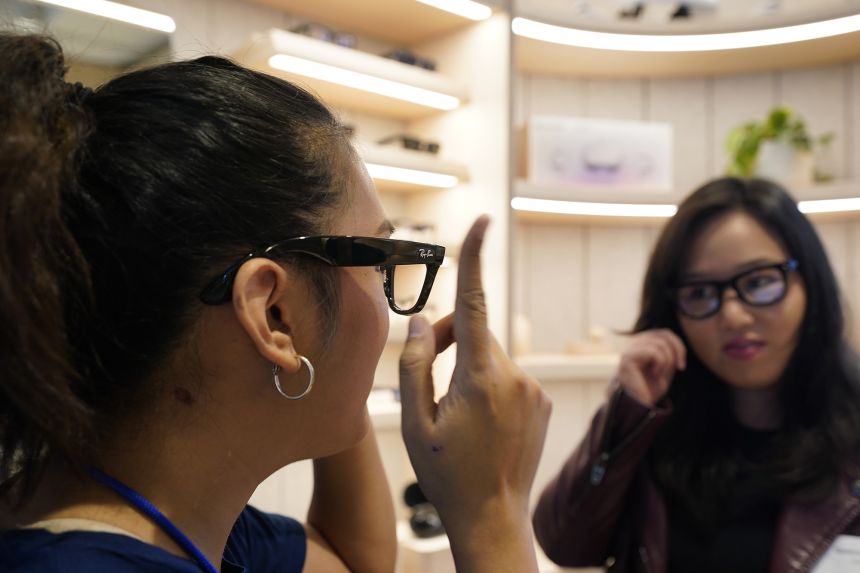
While innovation is progressing rapidly, widespread adoption faces hurdles. Many consumers remain wary over privacy, data security, and the social acceptability of camera-equipped wearables. Early products suffered from battery life issues, clunky design, and limited use cases. Today, Meta’s Ray-Ban Meta glasses do not yet project visual information on the lenses, which some analysts view as a disadvantage compared to hardware from Google or Samsung projected to include heads-up displays and richer app integrations.
Guillaume Chansin of Counterpoint Research notes, “To truly replace the smartphone, smart glasses will have to provide seamless visual feedback — not just audio or app integration — all in a form factor people are comfortable wearing every day.” Companies are investing in more fashionable, lightweight form factors and enhanced AI voice capability to combat these hurdles.
A Glimpse Into the Future
This year’s Meta Connect conference is expected to showcase not only the latest advancements in AI for smart glasses, but also Meta’s ongoing commitment to building an ecosystem for AI-driven personal computing. Prototypes like the Orion augmented reality glasses, which Zuckerberg demoed last year, signal a roadmap toward wearable devices that are simple, intuitive, and deeply integrated with personal and social needs.
Whether Meta will ultimately win the smart glasses race remains to be seen, but their push has undoubtedly catalyzed an industry-wide shift toward truly wearable AI. As the market heats up and consumer attitudes evolve, one thing is clear: the future of personal technology is not just in our pockets, but increasingly, on our faces.


