
Nvidia CEO Jensen Huang Praises Trump’s AI Plan as U.S. Accelerates Race for Global Leadership
By Fox Business Staff | July 24, 2025
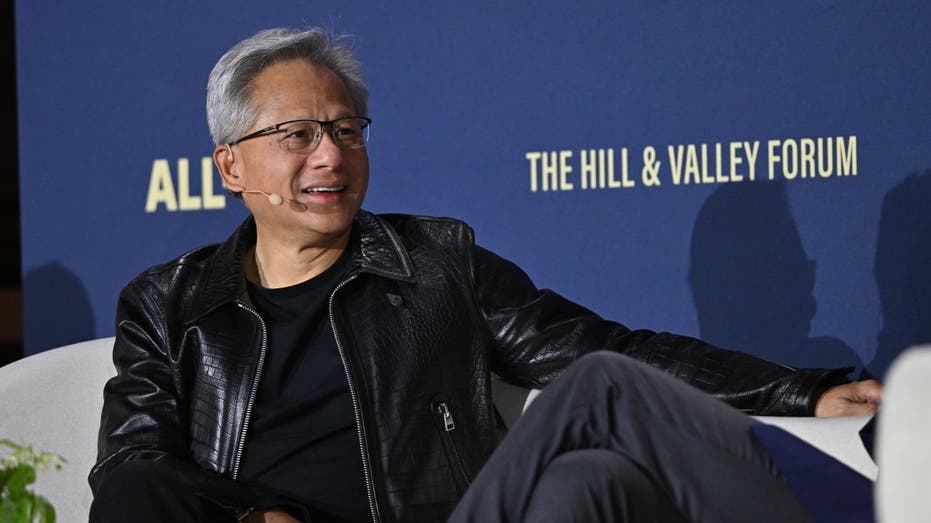
Nvidia CEO Jensen Huang has thrown his support behind President Donald Trump’s recently announced AI action plan, describing the policy as a pivotal moment that will reshape the contours of U.S. technological leadership for years to come. In a featured interview on Fox News’ “Special Report” with Bret Baier, Huang asserted the country stands at a “transformational time, an inflection point in technology,” as federal investments and strategic directives push artificial intelligence to the heart of economic and national policy.
AI as Critical Infrastructure
Huang, widely regarded as a technology visionary, underscored the rising consensus among industry titans and policymakers: artificial intelligence is evolving into a vital backbone of global economic systems. “We’re reinventing computing for the first time in 60 years,” Huang said, emphasizing that President Trump’s new agenda will “accelerate AI innovation in America … [and] AI deployment in America with all of the infrastructure and the energy that he’s going to put to bear.”
The White House’s AI action plan, unveiled at a high-profile ceremony, pledges substantial public and private investments, streamlined regulatory environments, and new incentives for tech R&D. The strategy seeks not only to nurture homegrown AI capabilities, but also to ensure the U.S. leads in setting global standards for the next era of digital infrastructure.
Competing on a Global Stage
Huang highlighted the administration’s threefold priorities: building out the American tech stack, exporting U.S. AI standards worldwide, and accelerating domestic AI deployment. “He’s going to enable [the] American tech stack to be proliferated around the world at an incredible rate. I think these three initiatives are going to fundamentally change the United States’ position in years to come,” he said.
This strategic shift comes as the United States faces intensifying competition from China and the European Union, both of which have invested billions to develop sovereign AI ecosystems and assert regulatory influence. According to the Congressional Research Service, global AI investment topped $180 billion in 2024, with the U.S. accounting for more than a third of all venture capital raised by AI startups worldwide. But as China scales up domestic chip production and launches state-driven AI initiatives, U.S. policymakers are determined to keep an edge with robust infrastructure and regulatory support.
Nvidia’s China Dilemma: Balancing Commerce and Compliance
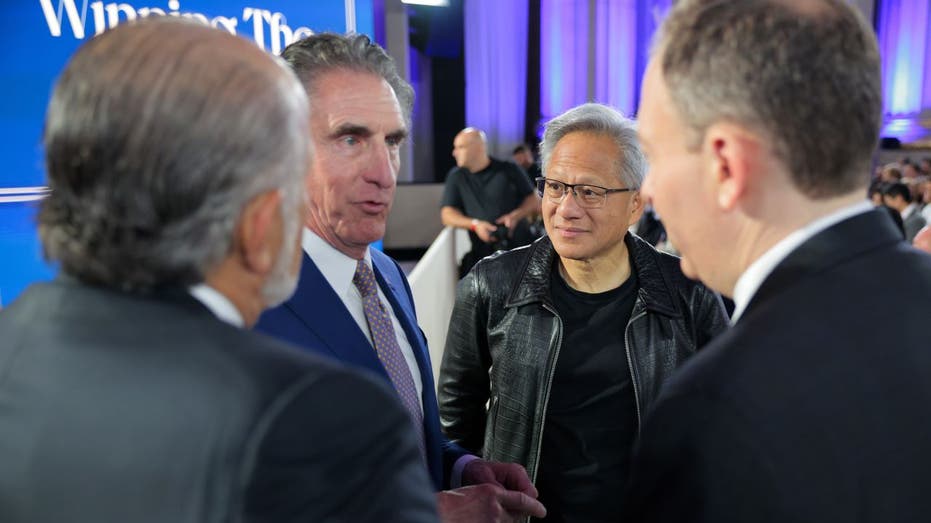
As America’s leading maker of AI accelerators and high-performance chips, Nvidia finds itself at the nexus of commercial opportunity and geopolitical scrutiny. During the interview, Baier questioned Huang regarding Nvidia’s H20 chip—a processor specifically developed with restrictions to meet U.S. export controls but targeted for sale in the lucrative Chinese market.
After several fluctuating regulatory decisions, the Biden administration recently allowed limited sales of Nvidia’s H20 in China. The Trump White House, while temporarily tightening chip export controls, has since backed policies that favor U.S. technology global standardization. Huang defended the decision to compete in China, stating, “The important thing to realize is that America wins when American technology becomes a global standard … 50% of the world’s AI researchers are in China, tens of thousands of AI startups in China. We want to make sure we have every opportunity to compete in that marketplace and win those developers.”
He added, “When half of the world’s AI researchers develop on an American tech stack … as the technology diffuses around the world … we become the global standard.” Despite persistent concerns regarding intellectual property risk and competitive imitation in China, Huang maintained confidence in the American innovation ecosystem: “No industry … has dominated the world in technology and innovation [more than U.S. computing]. We‘ll take anybody on and innovate at a rate that nobody has ever seen.”
Powering AI: Energy Policy as a Foundation for Growth

Modern AI systems, particularly large language models and advanced analytics, are incredibly energy-intensive. Huang noted that “without energy, we will not be a world leader in AI.” He pointed to President Trump’s pro-energy, pro-infrastructure stance as a critical enabler for new industries and future-proofing America’s economic competitiveness.
Industry research shows data center energy use in the U.S. could double by 2030 due to AI growth, with global data demand slated to multiply several-fold. Trump’s policy aligns with calls from tech CEOs for expanded grid capacity and incentives for clean and reliable energy sources to ensure sustainable AI advancement.
The Stakes: U.S. Technology, Security, and Workforce
President Trump’s AI agenda draws parallels to landmark policies such as the Cold War-era investments in aerospace and the internet. The 2025 executive order tasks federal agencies to accelerate adoption of AI tools, contract with private partners, and bolster academic research. Major U.S. corporations—including Oracle, Microsoft, and OpenAI—are also investing in moonshot projects such as the “Stargate” AI infrastructure initiative, aiming to secure U.S. preeminence in cloud computing and data analytics.
For American workers, AI’s expansion means both opportunity and disruption. Huang offered a cautiously optimistic forecast: “AI will become a fundamental infrastructure in every company and every industry.” While some jobs will be transformed or displaced, he and other industry leaders point to new roles in AI engineering, cybersecurity, and data management, as well as higher productivity and new business models.
Conclusion: Setting the Standard for AI’s Future
As policymakers, CEOs, and researchers grapple with the pace and impact of AI, the U.S. is doubling down on ambitious strategies to secure its lead in the digital frontier. Nvidia’s Jensen Huang remains confident that America’s heritage of innovation and openness will prevail, with AI at the center of the next industrial revolution.
“Just as the world was built on the American dollar, we want the world to be built on this [AI] standard,” Huang concluded. As the White House pledges to do “whatever it takes” to maintain leadership, the stakes for industry, workforce, and national security have never been higher—and the race for technological dominance grows increasingly fierce.


