
PwC: How is Investment in Semiconductors Driving AI & EVs?
By AI Magazine Editorial
The global semiconductor industry is entering an unprecedented era of capital investment, spurred by explosive demand in artificial intelligence (AI), electric vehicles (EVs), advanced computing, and other transformative technologies. According to new analysis from PwC, industry-wide semiconductor manufacturing investments, commonly known as ‘fab investments,’ are projected to exceed $1.5 trillion by 2030. This surge is expected to have profound impacts on the global economy, industrial supply chains, and innovation across multiple sectors.
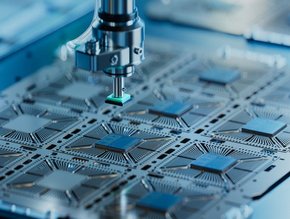
The $1.5 Trillion Semiconductor Surge
The scale of recent and planned semiconductor investments marks a historic shift compared to earlier decades. In 2022 alone, global semiconductor capital expenditure (capex) was estimated at over $180 billion, with megaprojects spanning the United States, Europe, South Korea, Taiwan, Japan, and China. PwC’s analysis suggests a compound annual growth rate (CAGR) in fab investments of nearly 10% over the decade, driven by strategic government incentives (e.g., the U.S. CHIPS Act, EU Chips Act) and urgent private sector needs for more computing power.
Key drivers include:
- AI Acceleration: The emergence of generative AI models (like OpenAI’s GPT-4/5 and Google Gemini) and highly parallelized compute workloads.
- Electric and Autonomous Vehicles: EVs and autonomous vehicles require advanced chips for battery management, sensors, and safety-critical operation.
- Edge Computing & 5G: Proliferation of IoT devices and real-time analytics at the network edge.
- Supply Chain Resilience: Geopolitical instability is motivating governments to localize and fortify semiconductor supply.
Collectively, these trends are triggering a “once-in-a-generation” buildout of high-tech fabs and supply ecosystems. PwC forecasts more than 100 new semiconductor fabs becoming operational globally by 2030.
AI & Semiconductor Synergy
Artificial intelligence is both a main driver and a major beneficiary of the semiconductor investment boom. Modern AI models, especially large language models (LLMs) and deep learning networks, require immense processing capabilities—far beyond what was needed in the pre-AI era.
Market Implications:
- Nvidia—the market leader in AI chips—briefly became the world’s most valuable public company in 2024, surpassing $3 trillion in market capitalization and quadrupling its revenue in two years.
- Google, Amazon, and Microsoft are all investing heavily in custom AI accelerators, data center hardware, and on-premise chip manufacturing solutions.
- The global AI hardware market is expected to grow from $17 billion in 2023 to over $100 billion by 2030, supported by ever-more specialized chips.
Semiconductor material science and miniaturization are enabling lower-power, higher-density chips critical for scaling AI into phones, medical devices, industrial robots, and vehicles. The advent of 3nm and even 2nm manufacturing nodes—led by TSMC, Samsung, and Intel—has dramatically increased transistor density, further amplifying performance gains for AI workloads.
Electric Vehicles: A Chip-Driven Transformation
The rapid expansion of the global EV market—projected by the International Energy Agency (IEA) to top 45 million new units sold by 2030—is deeply intertwined with semiconductor innovation. Modern electric vehicles can contain up to 3,000 semiconductor chips, managing everything from power delivery and battery health to infotainment and autonomous driving.
Key statistics and developments:
- Automotive chip revenue reached $76 billion in 2023, and is growing at 14% CAGR (SIA / IHS Markit).
- Companies like Tesla, BYD, and Volkswagen are forging strategic partnerships with semiconductor giants to secure supply and co-develop new chip architectures.
- Supply chain disruptions during 2021–22 highlighted how pivotal chips are, causing multi-billion dollar losses and production delays globally.
Beyond EV drivetrains, chips enable the safety-critical ADAS features, real-time navigation, and energy management systems necessary for next-generation mobility.
Reshaping Global Supply Chains
The semiconductor boom is catalyzing a structural rethink for global supply chains. Following trade tensions and pandemic-era shortages, governments are offering billions in incentives to attract fab investments and localize production capacity. Major developments include:
- United States: The $280 billion CHIPS and Science Act aims to bring 20+ new fabs onshore by 2030—Intel, TSMC, and Micron are leading the charge.
- European Union: The EU Chips Act sets an ambitious target for 20% of the world’s chips to be produced in Europe by the end of the decade.
- Asia: South Korea, Japan, Taiwan, and China are collectively scaling up regional investment to remain at the heart of global chip supply.
These moves are designed not only for technology competitiveness, but as strategic responses to national security concerns and emerging industry policy.
Challenges Ahead
Despite the optimistic trajectory, the industry faces significant hurdles:
- Global talent shortages in chip design, photolithography, and materials engineering;
- Economic risks if oversupply or project delays occur;
- Escalating ESG pressures, as fabs must reduce water use, emissions, and hazardous chemicals to meet climate targets;
- Intensifying geopolitical rivalries, potentially fracturing tech supply chains further.
Industry leaders and policy-makers will need to coordinate closely, balancing resilience, growth, and sustainability in their investment decisions.
The Road Ahead
With $1.5 trillion in fab investments forecast for the decade, the semiconductor industry is positioned as the engine at the heart of tomorrow’s digital economy. The fusion of advanced chipmaking with AI and electrified mobility is set to transform not only how devices are built, but how people live, move, and work worldwide.
For investors, policymakers, and technology leaders, the next five years will be critical. Decisions made today about semiconductor capacity, research funding, and global coordination will determine who leads—and who follows—in the fast-evolving AI and EV landscapes.
Stay tuned as we continue to analyze this dynamic sector and its wide-reaching impact across the global marketplace.


