
Robinhood’s Blockbuster Blockchain Push, Regulated Perpetual Futures, and SEC Plans to Fast-Track Crypto ETFs: Weekly Recap
| By Galaxy Digital Research Team
Robinhood Unveils Its Blockchain Ambitions with Robinhood Chain
This week at the Ethereum Community Conference (EthCC), Robinhood made a bold entry into the world of decentralized finance by announcing the Robinhood Chain—an Ethereum Virtual Machine (EVM)-compatible Layer-2 blockchain built on the Arbitrum Orbit stack. The development, long anticipated by the fintech community, highlights Robinhood’s deep commitment to integrating blockchain and tokenization with mainstream investing.
Robinhood, led by CEO Vlad Tenev, aims to fundamentally alter how traditional assets are held, traded, and utilized. The Robinhood Chain’s tokenization engine allows users to trade tokenized derivatives of traditional stocks, held in custody by a U.S. broker-dealer. These tokens can then be traded on-chain, transferred between whitelisted wallets, integrated into decentralized applications, and even self-custodied—all elements currently unavailable with conventional securities trading.
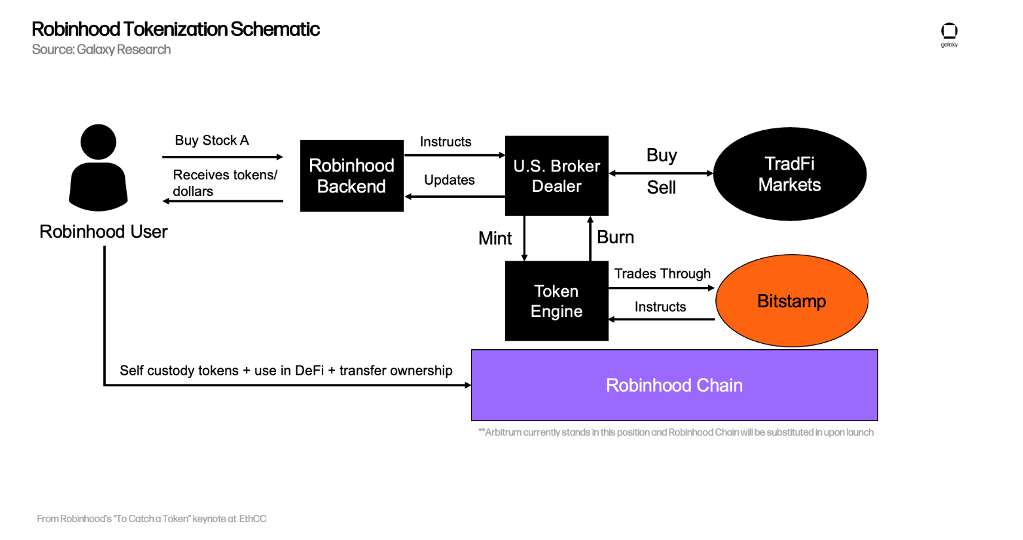
Notably, Robinhood Chain enables “24/5” trading on launch, targeting around-the-clock trading in the near future. Driving this initiative further, Robinhood’s acquisition of crypto exchange Bitstamp is expected to bridge off-chain asset trading with blockchain, especially outside traditional market hours.
In a controversial twist, Robinhood is granting EU users access to tokens referencing private company equities—including OpenAI and SpaceX. However, these tokens are not actual equity, as OpenAI has clarified. They offer indirect exposure and liquidity to shares that would otherwise be illiquid and difficult to access by the public.
Disrupting the Traditional Finance (TradFi) Landscape
Robinhood’s move signifies more than a technical upgrade; it represents a direct challenge to established exchanges such as NYSE and NASDAQ. By enabling users to move assets natively on blockchain networks and transact at any time, the Robinhood Chain erodes the core advantage of legacy exchanges—concentrated liquidity during restricted trading hours. Revenues from market data and transaction fees could shift toward brokerage-operated blockchains, incentivizing more fintechs to follow Robinhood’s model.
Rollup-based chains, like those operated by Coinbase (see: Base), have shown the profitability of controlling the sequencer—Coinbase’s Base reportedly generates over $150,000 per day in sequencer fees. Robinhood’s dual role as sequencer operator and asset custodian could unlock new revenue streams and developer ecosystems dedicated to services built atop tokenized assets. This “tokenization stack” model monetizes everything from asset issuance to application-layer transaction fees, adding value beyond traditional trading.
Intense Regulatory Scrutiny and Industry Pushback
Whether Robinhood can maintain this operational model remains to be seen, especially with heavy regulatory oversight looming. In the U.S., the Securities and Exchange Commission (SEC) has not yet formally endorsed the approach—particularly as EU users enjoy access to tokenized stocks derived from U.S.-listed equities. Industry groups, such as the Securities Industry and Financial Markets Association (SIFMA), have vocally pushed back, urging the SEC to ensure tokenized equities remain within the Regulation NMS framework and warning against unregulated alternatives.
The path of tokenized assets is laden with legal and operational uncertainties, particularly related to public and private issuers’ rights, market structure, and the enforceability of blockchain-based representations of equity. The scalability and adaptability of Robinhood’s model, if blessed by regulators, has the potential to redefine access, functionality, and programmability of assets on a global scale.
Robinhood and Coinbase Advance Perpetual Futures Markets
Expanding beyond tokenized assets, Robinhood also debuted its perpetual futures products in the EU, powered in part by its Bitstamp acquisition. These contracts, offering up to 3x leverage on bitcoin and ether, enable direct access to crypto market dynamics through an intuitive and regulated brokerage platform.
Meanwhile, Coinbase prepares to introduce a CFTC-regulated version of perpetual-style futures for U.S. traders. Unlike traditional perpetuals—which are the backbone of offshore crypto derivatives markets—Coinbase’s contracts offer exposure to nano-sized bitcoin and ether with a unique five-year maturity structure in addition to perpetual funding requirements. This innovative approach is designed to comply with U.S. regulatory standards while delivering 24/7 crypto exposure.
Market Implications and Structural Dynamics
Robinhood’s EU perpetuals build on established crypto market conventions, while Coinbase’s compliance-driven innovation seeks to bridge gaps in U.S. regulation. The key differentiator is the design of Coinbase’s contracts: by tying funding rates to the spread between futures and spot prices, their products may introduce structural funding dynamics attractive to hedgers and delta-neutral institutional funds, but potentially less appealing to long-only investors due to premiums above spot pricing.
Despite differences, the expansion of regulated perpetuals in key jurisdictions signals that regulated crypto derivatives are on an upward trajectory, offering new opportunities for both retail and institutional investors—and challenging the dominance of offshore exchanges.
SEC Eyes ‘Fast-Track’ Crypto ETF Approvals
Responding to a crush of more than 35 pending crypto exchange-traded product (ETP) applications, the SEC is reportedly developing a “generic standard” that could streamline the ETF approval process. Under current rules, every crypto ETF—from Bitcoin to Solana—requires a lengthy review and multiple amended filings, often stretching for months. The proposed standardized process would grant greater transparency to issuers, exchanges, and investors, reducing regulatory uncertainty and potentially accelerating market access.
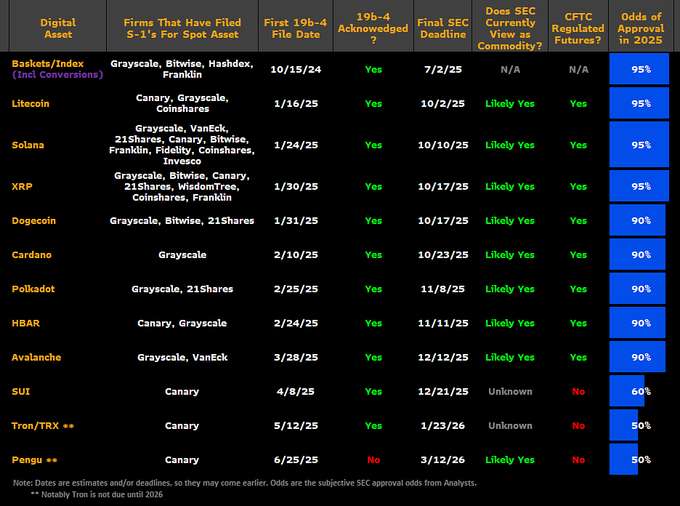
Approval is by no means guaranteed for all applicants. Criteria under consideration likely include factors such as network decentralization, maturity, liquidity, ownership concentrations, and protocol transparency. The CLARITY Act’s eligibility framework, which sets rules for decentralization and open participation, is referenced as a possible guide.
Market data shows U.S. Bitcoin ETPs have seen nearly $50 billion in net inflows since launch, dwarfing Ethereum ETP demand. The performance gap suggests that, while fast-tracking could open doors for more crypto ETFs, appetite may vary significantly by asset and investor familiarity.
Key Charts: Ethereum’s Blob Utilization and ETH Burn
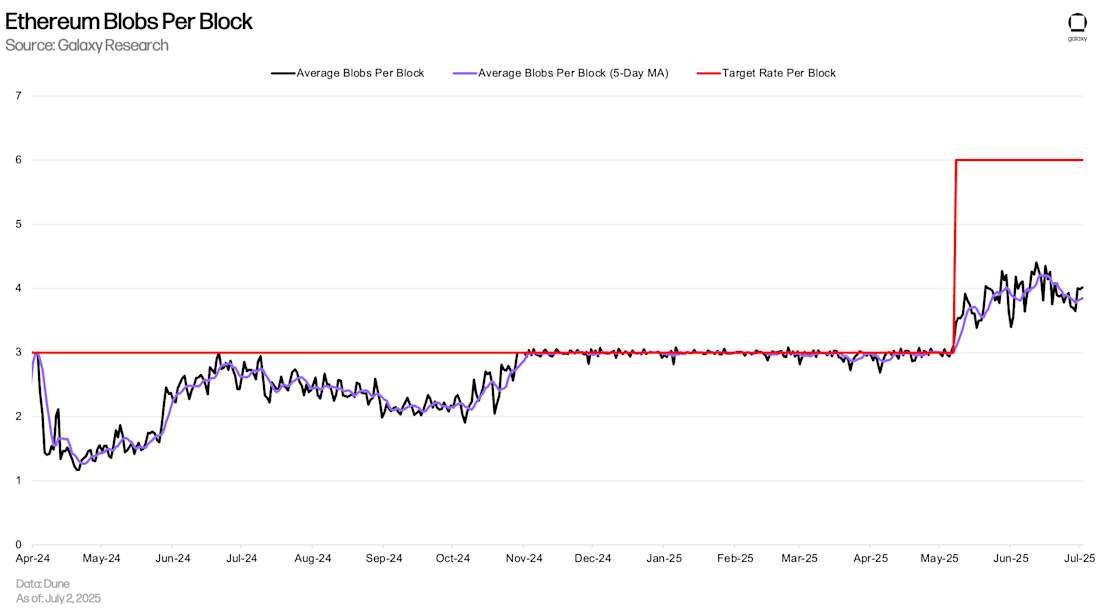
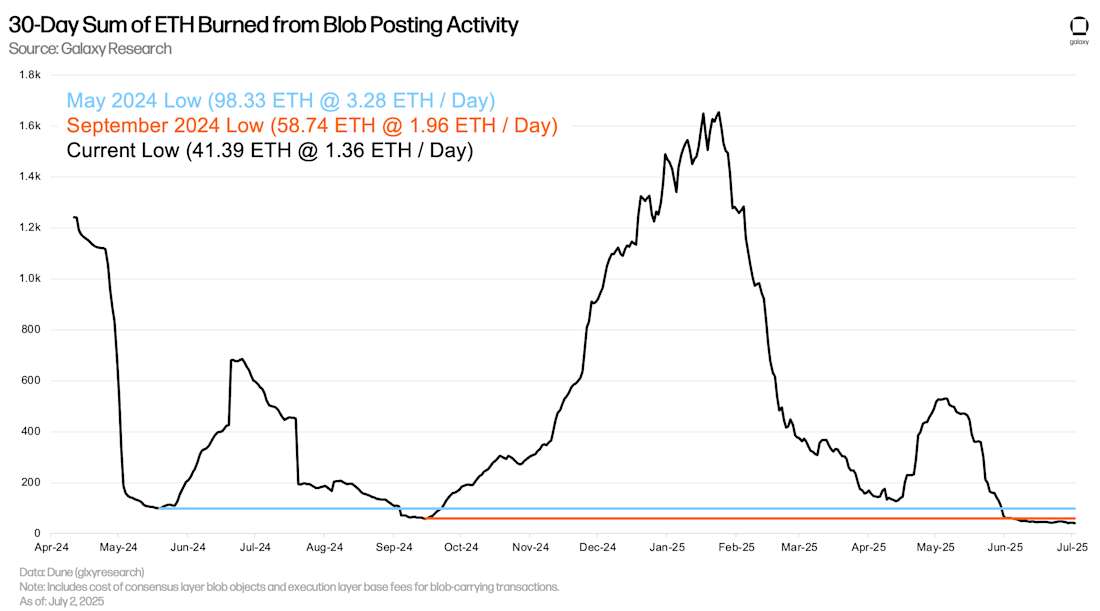
Two months after Ethereum’s major Pectra upgrade—focused on rollup scalability—blob space in each block is underutilized, making data posting unusually cheap and driving near-zero burn rates for ETH from blob activity. While this benefits layer-2 chains and their users by lowering costs, it means Ethereum’s revenue, and its deflationary burn dynamics, are diminished for now. Experts expect blob demand to rise as more applications scale, potentially increasing both fees and burned ETH.
Additional Headlines Shaping the Crypto Landscape
- Circle and Ripple both apply for U.S. banking charters, signaling increasing convergence between crypto and mainstream banking.
- Public companies have outpaced ETFs in bitcoin accumulation for the third consecutive quarter, reflecting growing corporate adoption.
- A recent survey estimates 48 million Americans (14% of the population) now own bitcoin, up from previous years.
- Figma’s IPO filing reveals a $70 million stake in a Bitcoin ETF, exemplifying treasury diversification among tech companies.
- Nasdaq celebrates 142 IPOs in the first half of 2025, the highest since 2021, underscoring vibrant capital markets for tech and crypto-linked ventures.
- Senator Lummis (R-WY) introduces a standalone crypto tax bill, further anchoring digital assets within U.S. financial policy debates.
- Multiple blockchain upgrades and governance changes from Lido, BNB Smart Chain, and Botanix signify continued protocol innovation.
- Elon Musk stirs speculation in the crypto market with reports suggesting continued interest in Bitcoin.


