
Senate Engaged in Marathon Voting Over Trump’s Sweeping Tax and Spending Bill Amid Deep Political Divisions
Date: June 30, 2025
By: The Guardian US Politics Staff
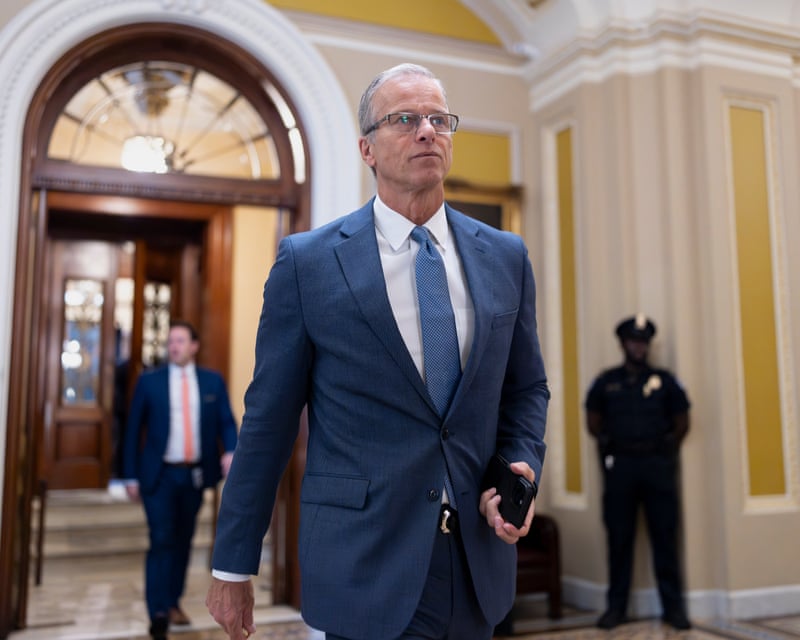
Introduction: An All-Night Senate Standoff
The U.S. Senate is embroiled in a dramatic marathon “vote-a-rama” over President Donald Trump’s ambitious tax and spending bill, legislation that would represent one of the largest overhauls of federal domestic policy in decades. As voting extends past its 17th hour, the bill’s passage is far from certain, exposing fierce partisan divisions and drawing major figures—both political and corporate—into the fray. The proposed legislation would enact sweeping tax cuts, overhaul spending priorities, and roll out new—and often controversial—provisions touching on health care, immigration, trade, and civil rights.
What’s at Stake: Massive Fiscal, Social, and Geopolitical Implications
- Tax Cuts: The bill promises the largest tax cuts in modern U.S. history, with projections indicating significant reductions for corporations and high-income households. However, independent analyses warn that the wealthiest Americans stand to benefit most, with an estimated $100,000 average annual savings for the top 1% (per the nonpartisan Tax Policy Center).
- Spending Shifts: Trump’s agenda includes sharp increases in military and border security funding, while imposing limits or outright cuts to social programs such as Medicaid, which covers over 77 million low-income Americans. The bill also targets federal funding for reproductive health organizations, notably Planned Parenthood.
- Deficit Surge: Nonpartisan Congressional Budget Office (CBO) estimates show the package could add more than $3.3 trillion to the national debt over ten years, a figure disputed by Republican leaders but cited as alarming by fiscal conservatives in both parties.
- Trade and Foreign Affairs: Beyond domestic spending, the bill is surrounded by parallel moves in U.S. foreign policy, including the lifting of sanctions on Syria, tough postures toward Cuba and Japan, and ongoing tariff disputes with Canada and the EU.
Senate Dynamics: A Razor-Thin Margin and Partisan Warfare
The Senate’s session has become a marathon of proposed amendments and procedural maneuvers. With a divided Republican caucus and near-unified opposition from Democrats, GOP leaders can afford to lose no more than three votes. Already, senators Rand Paul (R-KY) and Thom Tillis (R-NC) have broken ranks, citing concerns over fiscal discipline and controversial policy riders.
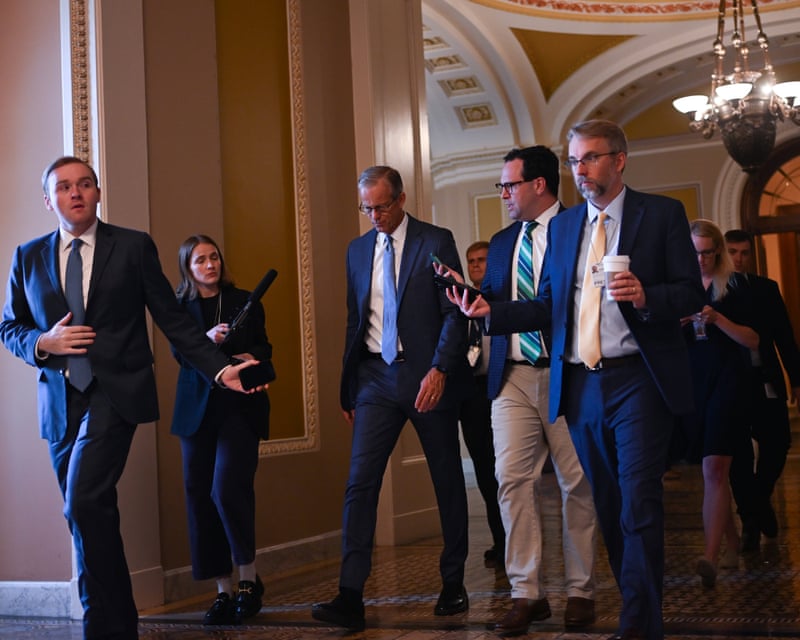
Key Democratic amendments—including efforts to protect Medicaid funding, maintain support for the Consumer Financial Protection Bureau, and safeguard reproductive health funding—have been summarily rejected by the Republican majority. Meanwhile, the bill contains highly charged language blocking Medicaid payments for gender-affirming medical care and stepping up immigration enforcement on minors, fueling a charged atmosphere inside the chamber and on the streets outside, where dozens of protesters have been arrested.
Acrimony and Alliances: Trump, Musk, and the Political Landscape
President Trump has aggressively promoted the bill via social media, warning of a “whopping 68% tax increase” if Congress fails to enact his package—a claim widely challenged by analysts but one that underscores the stakes he has attached to its success.
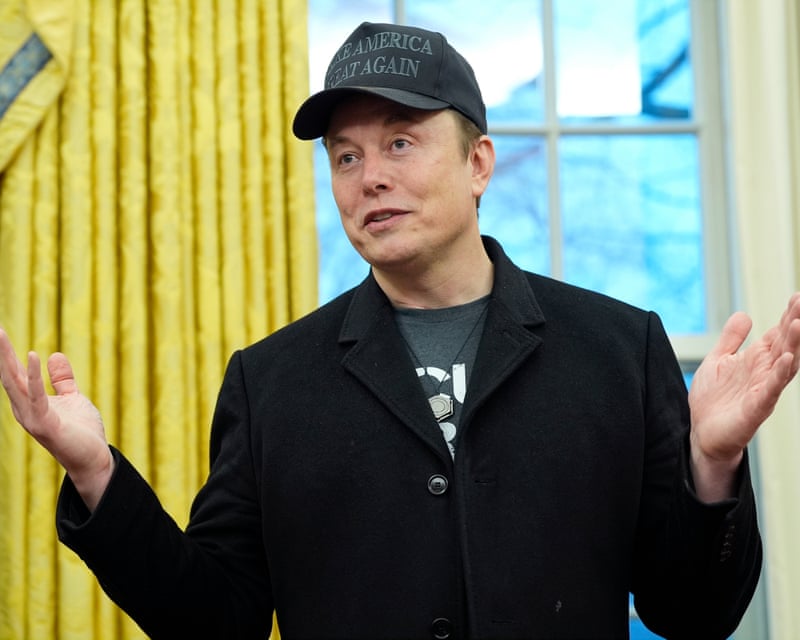
The ongoing drama drew an unexpected twist as billionaire Elon Musk, a former Trump supporter and major donor, sharply criticized the bill. Musk decried its projected deficit impact and loss of support for industries of the future such as electric vehicles. In a remarkable escalation, he threatened to form a new “America Party” and to finance primary challenges against lawmakers who support the bill, reflecting growing fractures between GOP leadership and high-profile business interests.
House minority leader Chuck Schumer (D-NY) and other critics say the bill “steals healthcare and gives tax breaks for billionaires,” while Republican leadership, including Senate Majority Leader John Thune, maintains that the tax cuts would jumpstart job creation and that social spending programs require reform to avoid bankrupting the country.
Broader Fallout: Policy Riders and Civil Rights Concerns
The bill’s scope goes well beyond fiscal policy. Noteworthy provisions include:
- Planned Parenthood Funding Ban: Inclusion of language barring Medicaid reimbursement for Planned Parenthood and similar organizations, escalating the decade-long battle over reproductive rights.
- Civil Rights Enforcement: New Justice Department protocols to expedite denaturalization of naturalized citizens convicted of certain crimes—raising alarm among immigrant advocacy groups—and a Trump administration finding that Harvard University violated the civil rights of Jewish and Israeli students.
- Education Funding Delay: A delay in the release of billions in federal education grants, affecting afterschool programs and support for English learners. The Education Department cites internal review, but critics say the decision is politically driven.
Foreign Policy Attachments: Syria, Cuba, and Global Development
In conjunction with debate on the bill, President Trump signed an executive order broadly lifting Obama-era sanctions on Syria, while keeping targeted measures against former President Bashar al-Assad. He also issued directives to strictly enforce the U.S. embargo on Cuba, including travel restrictions. The administration’s international stance has repercussions on pending trade talks with Canada (following Canada’s withdrawal of its digital services tax on U.S. tech firms) and growing friction with Japan and the EU over tariffs.
Further straining U.S. global leadership, the Trump administration shuttered USAID, the foreign aid agency praised by former Presidents Obama and Bush for preventing millions of deaths and supporting global health efforts. Health experts warn the closure could result in up to 14 million additional deaths globally by 2030, per new research in The Lancet.
What Comes Next
If the bill manages to clear the Senate, it faces further challenges in the House of Representatives, where divisions run deep over the budget’s size, content, and projected deficit impact. Should the legislation pass both chambers without significant amendment, it is set to fundamentally alter the U.S. fiscal and social contract for years to come—setting the stage for fierce political battles in the lead-up to the 2026 midterms and the next presidential election cycle.


