
Spirit Airlines Slashes Flights, Warns of More Job Cuts Amid Second Bankruptcy
Date: September 19, 2025
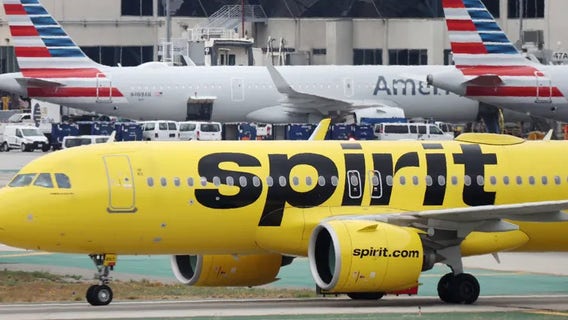
Spirit Airlines, America’s largest ultra-low-cost carrier, is facing profound turbulence, announcing plans to cut 25% of its November flight schedule as it grapples with its second Chapter 11 bankruptcy filing in less than a year. CEO Dave Davis warned staff this week that further job cuts are looming as the company desperately seeks to stabilize finances and redefine its market strategy.
Bankruptcy Pressures and Mounting Losses
The latest wave of flight reductions comes after a sustained period of financial losses for Spirit, which first sought bankruptcy protection in November 2024. Despite efforts to restructure, the airline continues to be squeezed by rising fuel costs, intense price competition from rivals, and softer demand in key travel markets. According to Davis, “Our current course is unsustainable. Immediate, decisive action is necessary to safeguard Spirit’s future.”
Industry analysts note that Spirit’s “bare bones” business model, reliant on high aircraft utilization and ancillary fees, has faced growing scrutiny in a market shifting towards more premium travel experiences post-pandemic. The removal of nearly a quarter of scheduled flights is expected to result in the grounding of dozens of Airbus A320s, idling aircraft and forcing additional layoffs across the company’s flight crews, administrative, and maintenance departments.
Market Conditions and Spirit’s Struggles
The U.S. airline sector has seen a patchy recovery since the lows of COVID-19. While travel rebounded sharply in 2023 and 2024, recent quarters have shown renewed volatility. The inflationary impact on consumer travel budgets, alongside fierce competition from discount carriers like Frontier and major players like American and Southwest, has placed Spirit under immense strain. The carrier posted a net loss of $244 million in Q2 2025, with load factors and fare yields both trending downward.
The unwinding of leisure travel demand and fewer spontaneous trips, coupled with rising operational costs, have eroded Spirit’s margins. Moreover, the breakdown of Spirit’s merger talks with JetBlue in early 2025—following regulatory intervention citing anti-competitive concerns—eliminated a potential lifeline.
Flight Cuts and Impact on Travelers
According to industry data provider Cirium, Spirit plans to cancel or consolidate over 2,500 flights across its network in November 2025, affecting routes in Florida, the Northeast, the Midwest, and select international leisure destinations. Airports most impacted include Orlando, Fort Lauderdale, and Las Vegas, with some cities seeing service reduced to a handful of weekly flights or suspended entirely for winter.
Travelers holding advance bookings on canceled flights are being offered rebooking options or vouchers, though social media is awash with complaints of long customer service wait times and refund delays. The airline pledged to maintain flexibility for affected passengers, but acknowledged “disruptions may be unavoidable” in the short term.
Industry-Wide Ramifications and Jobs at Risk
Spirit’s retrenchment is sending ripples throughout the travel sector, especially among airport operators and tourism-dependent communities. Labor unions have responded with alarm, warning that thousands of pilots, flight attendants, mechanics, and support staff face imminent layoffs or furloughs. The Association of Flight Attendants-CWA, representing Spirit’s cabin crew, called for “immediate federal intervention to safeguard aviation jobs and maintain regional air service.”
Data from Airlines for America (A4A) suggests that airline industry employment in the U.S. peaked at 755,000 in 2024, but may now decline as smaller carriers like Spirit retrench and larger airlines rationalize routes in response to economic pressures.
Spirit’s Restructuring Plan and Sector Outlook
Spirit’s stated objective is “survival, followed by sustainable growth.” To that end, executives are negotiating new agreements with aircraft lessors, seeking to shed unprofitable routes, and renegotiating vendor contracts. There is also an active review of fleet renewal plans, with some orders for new Airbus jets potentially deferred or canceled. Davis told investors on a recent call, “We’re making difficult decisions that will enable us to emerge leaner, more efficient, and focused on our core strengths in leisure travel.”
Airline consultants have suggested Spirit’s future may depend on an eventual sale or new equity partners, with some private equity firms reportedly expressing “early-stage interest”. Observers caution that Spirit must also shore up customer confidence, which has been shaken by rolling disruptions, a tarnished on-time record, and sharply rising fares across the ultra-low-cost segment.
The Broader Airline Landscape
Spirit’s crisis shines a spotlight on stress points facing the broader U.S. airline industry. While demand for air travel remains robust for major carriers and international long-haul routes, regional and discount airlines face acute risks. Ongoing challenges include instability in fuel prices, increased regulatory scrutiny, workforce retention, and evolving travel patterns as remote work reshapes business and leisure demand.
Other airlines are also adapting. Frontier Airlines, another ultra-low-cost operator, recently introduced an all-you-can-fly annual pass and has signaled its intention to capture displaced Spirit travelers. Major carriers continue to invest in premium cabins and airport amenities as they target higher-yield segments, impacting lower-cost rivals’ ability to compete on price alone.
What Lies Ahead for Spirit Airlines
As Spirit cuts flights and wages through restructuring, its survival remains uncertain but not unprecedented. The airline industry has seen multiple bankruptcies—Survivals are possible, though not guaranteed. For travelers, the key takeaways are to double-check bookings, expect increased route changes, and monitor travel alerts for ongoing disruption updates. For Spirit staff, the next several months are likely to be filled with uncertainty as the company works with creditors, regulators, and potential investors to steer toward a viable path forward.
Ultimately, Spirit’s situation is a bellwether for budget aviation in North America—a test of whether the ultra-low-cost model can survive in a post-pandemic, inflationary economy. The coming months will be crucial for Spirit, its employees, customers, and the broader travel sector.


