
Split in Hong Kong, London’s Fortunes Is About More Than Stock Markets
By Nicholas Spiro | Published: July 10, 2025
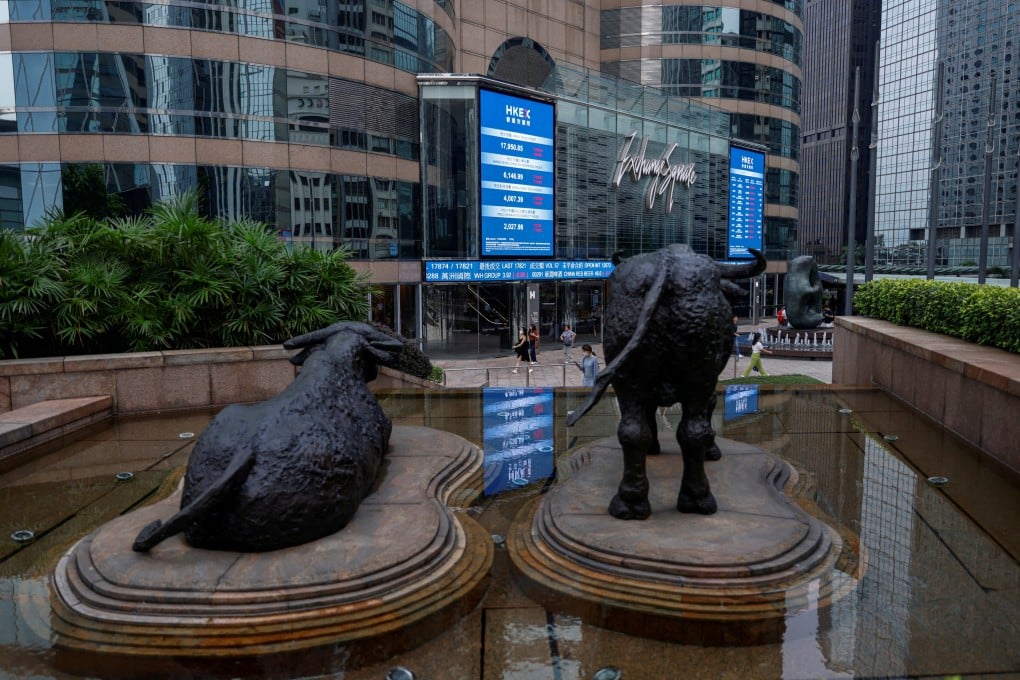
Diverging Fortunes in Global Capital Markets
The global capital markets are witnessing a remarkable divergence: while London’s financial sector battles a series of entrenched challenges, Hong Kong’s stock market is experiencing a resurgent boom. This split is not merely a reflection of local market sentiment, but a confluence of far-reaching geopolitical, technological, and policy-driven forces, setting the tone for broader debates about the future of global finance, particularly the nature of US and Chinese economic influence.
According to data compiled by KPMG and corroborated by industry bodies, Hong Kong Exchanges & Clearing Ltd (HKEX) led the world in initial public offering (IPO) fundraising in the first half of 2025, surpassing both the Nasdaq and the New York Stock Exchange. Total IPO proceeds in Hong Kong could reach up to HK$250 billion (US$32 billion) this year, a dramatic reversal of fortunes when compared to the subdued performance of Western markets.
London: Grappling with Outflows and Underperformance
In stark contrast, London’s fortunes have waned considerably. The London Stock Exchange (LSE), long a powerhouse of global capital, has seen the lowest IPO fundraising since 1995. In the first half of 2025, only a trickle of new listings materialized, contributing to a net loss of 88 companies from the main market last year. The LSE now faces the largest exodus since the global financial crisis of 2008.
This lackluster performance is the result of both structural and cyclical factors. Foremost among them is the lingering impact of Brexit, which has diminished the UK’s appeal as a hub for international capital. Regulatory uncertainty, a complex tax regime, and the challenge of attracting high-growth technology companies have left the FTSE 100 index devoid of any major tech giants, in stark contrast to US and Asian indices. Despite government efforts to simplify rules and court more listings, the LSE has struggled to compete with the deeper liquidity and innovation-friendly ecosystems of rival exchanges.
Once accounting for one-fifth of all global IPOs at its 2005 peak, the UK has failed to rejuvenate market enthusiasm. Institutional and retail investors alike remain wary, limiting their equity allocations and stifling liquidity.
Hong Kong: Resilience and Reconnection with Mainland China
Hong Kong’s 2025 surge has caught many analysts by surprise after years of pandemic-related headwinds, political unrest, and shifting investor sentiment. The territory’s position as the prime gateway between China and the rest of the world remains unmatched, with policy reforms and regulatory clarity helping to attract new listings—particularly from Chinese companies looking for dual access to offshore capital and mainland markets.
This revitalization of Hong Kong’s IPO market is built on several pillars: renewed interest from international investors, support from mainland Chinese state-owned enterprises, and the city’s unique role in Beijing’s “opening up” strategy. As other Asian financial centers such as Shanghai and Singapore jockey for global relevance, Hong Kong’s rebound underscores both the resilience of its market institutions and the latent value in its geographic and legal positioning.
Further, recent regulatory adjustments—including streamlined approval processes and incentives for tech and green companies—have ensured the city remains an attractive destination in an era of fast-changing capital flows.
Wider Ramifications: US Exceptionalism and the Global Marketplace
Beneath these headline results lies a deeper contest of narratives. The sharp divergence between Hong Kong and London feeds into two visions for the future: one in which US capital markets (bolstered by massive tech growth) continue to dominate, and another in which rapidly internationalizing Chinese finance, channeled through Hong Kong, poses a credible challenge to the established order.
US stock markets, particularly the Nasdaq, have been propelled by surging technology shares, fueled by AI innovation and record investment in big tech firms. In the first half of 2025, the S&P 500 and Nasdaq reached successive all-time highs, largely on the back of a handful of American giants such as Apple, Nvidia, and Microsoft, whose outsized market capitalizations now drive global benchmarks. London’s inability to attract or retain such market leaders is a defining feature of its relative decline.
Meanwhile, Hong Kong’s resurgence is seen by Chinese policymakers as evidence that Western financial headwinds can be navigated, provided regulatory alignment with Beijing and global capital openness is maintained. The city’s brokers, global banks, and multinational legal community continue to serve as a trusted bridge, even as the geopolitical environment becomes increasingly fractious.
Opportunities and Risks on the Horizon
Yet risks abound. Hong Kong faces persistent geopolitical turbulence tied to US-China strategic rivalry, the potential chilling effect of domestic security legislation, and ongoing competition from regional financial hubs. Moreover, Western investors remain sensitive to changes in the regulatory climate and macroeconomic signals from Beijing.
London, for its part, is under mounting pressure to reform pension fund investment rules, foster start-up listings, and increase collaboration with European and global partners to halt its outflow of listed companies. The UK government and the City of London have both signaled their intent to further liberalize capital markets, streamline listing processes, and appeal to international firms, especially as Britain seeks to reestablish ties with the European Union and the wider world.
The Bigger Picture: The Evolution of Global Financial Centres
The shifting balance between Hong Kong and London is emblematic of a broader realignment among the world’s top financial centers. New York remains dominant, but Shanghai, Dubai, Tokyo, and Singapore all continue to climb in global rankings. The era when any single city could confidently lay claim to unchallenged supremacy is ending, replaced by a more diffuse and multipolar financial system shaped by technological innovation and shifting alliances.
As the second half of 2025 unfolds, investors and policymakers alike will be watching Hong Kong’s momentum, London’s efforts at revitalization, and the ongoing contest of narratives about the future of capital markets. In this evolving landscape, adaptability, openness, and strategic alignment will be critical for any city seeking to secure its place at the heart of global finance.


