
Starmer and Macron Announce ‘One In, One Out’ Migration Deal to Address Channel Crossings
London, 10 July 2025 — In a move signaling a new chapter in Anglo-French cooperation, UK Prime Minister Keir Starmer and French President Emmanuel Macron have announced an ambitious ‘one in, one out’ migration agreement, capping off Macron’s three-day state visit to the United Kingdom. The agreement seeks to address the escalating crisis of small boat crossings in the English Channel and establish a more systematic approach to managing asylum seekers between the two nations.
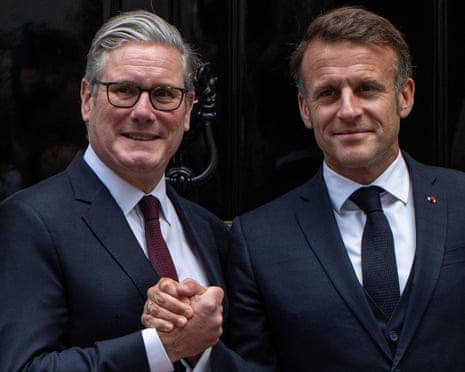
A New Phase of Anglo-French Migration Cooperation
The agreement, described by officials as a ‘forward step’ after years of deadlock, allows the UK to return certain Channel asylum seekers to France while also accepting other arrivals under a managed system. While full operational details are pending, early reports indicate that under a pilot scheme, Britain will send back an estimated 2,600 people a year — approximately 6% of those making the crossing so far in 2025. This comes against the backdrop of record-high boat arrivals, with Channel crossings exceeding 45,000 in the first half of the year, according to updated Home Office and Border Force data.
Both governments have struggled for years to achieve a functional bilateral returns agreement. The announcement follows last year’s controversial UK-Rwanda deportations scheme being dropped by Starmer’s new Labour government, a move that has been credited with restoring goodwill and trust to the negotiating table.
Key Deal Features and Ongoing Hurdles
- Returns Mechanism: Britain will return up to 2,600 arrivals a year to France, with both countries committed to a ‘one in, one out’ principle to maintain a managed flow and disrupt the people-smuggling networks that profit from illicit crossings.
- Funding Commitments: The UK and France are negotiating additional British financial contributions to support increased French policing and surveillance along the northern coast, where most small boat departures originate. Previously, the UK pledged £480 million to boost French border patrols and invest in advanced equipment such as drones and night vision systems.
- Biometric and Border Controls: The UK government also plans to deploy biometric testing kits to assist Border Force officers in detecting illegal working, addressing French concerns about the UK’s shadow economy serving as a magnet for undocumented migration.
- Judicial and Political Sensitivities: French officials remain wary of domestic legal challenges to expanded sea interceptions and have highlighted the ‘complex and fluid’ nature of ongoing negotiations. Disputes over funding levels and the timeline for rollout remain unresolved.

Political Implications and International Context
The migration pact marks Macron’s first UK state visit by a European leader since Brexit and is seen as a cornerstone for re-engagement between the UK and France after a period of strained relations. The plan comes as Europe faces renewed pressure on its external borders: the EU as a whole recorded over one million first-time asylum applicants in 2024, the highest level since 2016, according to Eurostat. Record Channel crossings have become a flashpoint for British domestic politics, with immigration ranking among the top concerns for UK voters in recent opinion polls.
Labour officials credit the new era of UK-French diplomacy, fostered by the Starmer-Macron rapport, as pivotal in breaking the negotiation deadlock that stymied the previous Conservative government. The Sunak administration had also explored reciprocal returns agreements but was hampered by Paris’s unease about illegal working in Britain and legal uncertainty in France.
Operational and Legal Questions Remain
Despite Thursday’s announcement, significant operational questions are yet to be fully answered. French negotiators are seeking further UK funding to intercept boats closer to the French coast, already moving to expand sea interceptions to within 300 metres of shore. French legal experts, however, caution that civil liberties groups may challenge such measures.
In the UK, the migration deal is seen as a key test for Labour’s new migration policy, which aims to balance humanitarian obligations with political pressure to crack down on irregular migration. The Labour government has also emphasized plans to speed up returns, bolster border technologies, and increase cooperation with European partners beyond France — notably through discussions with Belgium, the Netherlands, and the EU Commission on wider regional migration management frameworks.
Responses from Stakeholders
Humanitarian organizations such as the UN Refugee Agency and the International Organization for Migration have cautiously welcomed renewed Anglo-French cooperation while urging the government to uphold international asylum standards. Some migration advocacy groups warn that bilateral returns deals without safe pathways may simply shift the burden rather than reduce risks for vulnerable migrants.
On the political spectrum, pro-Brexit and nationalist critics argue the agreement does not go far enough to address broader EU migration dynamics, while liberal and business leaders have praised the deal as a pragmatic solution to an intractable cross-border challenge.
Outlook
The formal signing of the ‘one in, one out’ migration agreement marks an inflection point in UK-French relations and the broader debate about European migration management post-Brexit. While a pilot phase may launch as soon as autumn 2025, full implementation will hinge on resolving outstanding funding, enforcement, and legal challenges over the coming months.
Ongoing high migration flows via the Channel mean operational collaboration between London and Paris is likely to remain a top priority well into 2026. As governments seek a balance between border control, international law, and humanitarian imperatives, Thursday’s announcement stands as both a diplomatic breakthrough and a blueprint for evolving migration policy in a divided Europe.


