
Supreme Court Allows Trump Administration to Strip TPS Protections from Over 300,000 Venezuelan Migrants
By Anna Commander and Gabe Whisnant — October 3, 2025
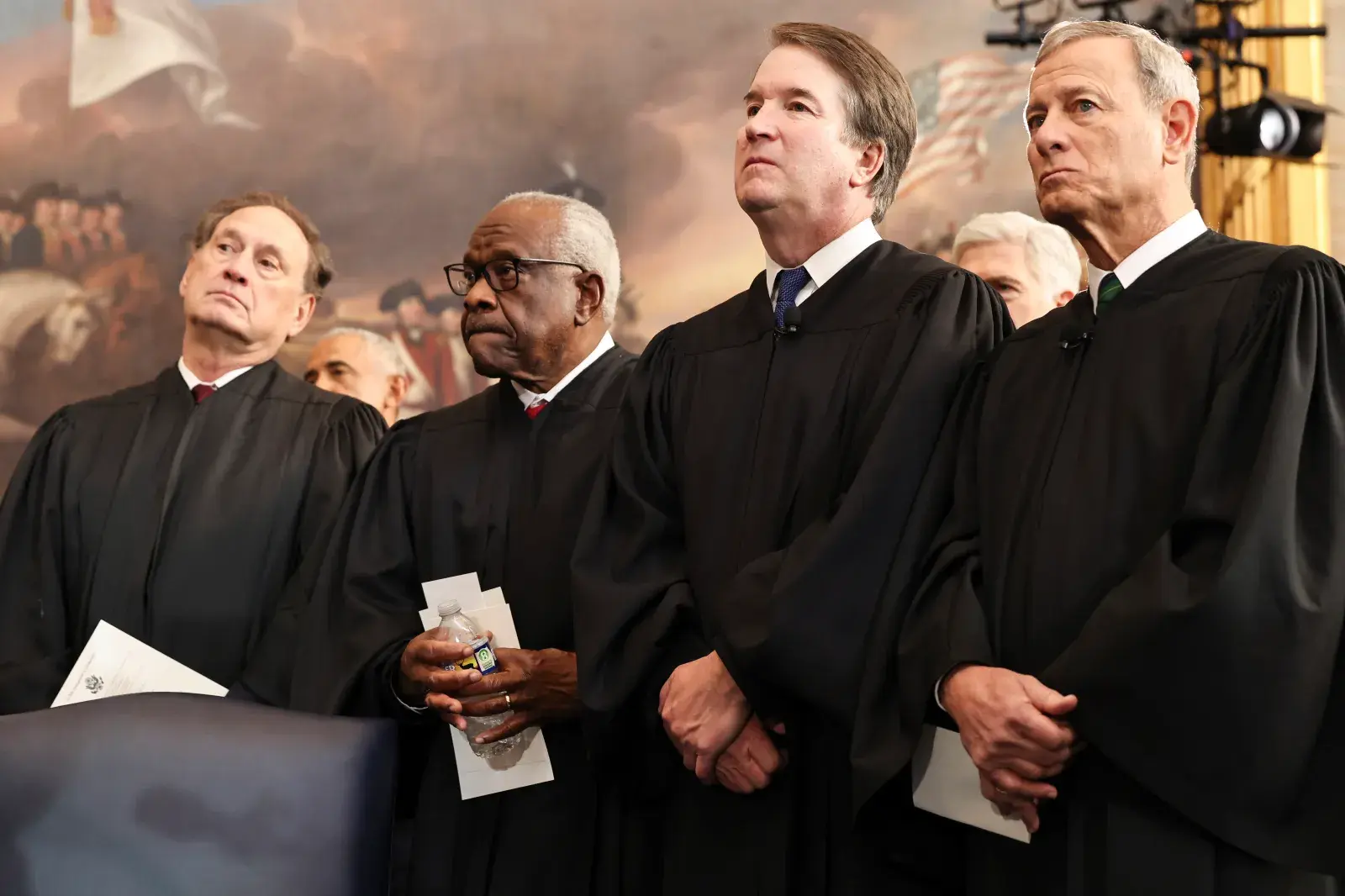
The Supreme Court’s Decision and Its Immediate Impact
On Friday, the U.S. Supreme Court, in an emergency order, sided with the Trump administration to allow the immediate stripping of Temporary Protected Status (TPS) from over 300,000 Venezuelan migrants. This order halts a prior lower court ruling that had found the administration improperly ended the humanitarian program. The emergency ruling means thousands of Venezuelans who were previously protected from deportation may now face an uncertain future in the United States. The decision sets the tone for what could be a defining year in U.S. immigration policy as the nation approaches a heated 2026 election cycle.
TPS was enacted by Congress in 1990 as a humanitarian measure to provide haven to migrants originating from countries facing armed conflict, natural disasters, or other extraordinary conditions. For over a decade, Venezuela has been gripped by political instability and economic collapse, prompting successive U.S. presidents to allow its nationals to remain and work legally in America. President Joe Biden’s administration expanded these protections, but former President Donald Trump and his team contested their provision and sought their reversal, saying the legal criteria for extension were insufficiently met.
Judicial Context and Arguments
The order from the conservative-majority Supreme Court temporarily overrides the decision of U.S. District Judge Edward Chen, who previously found that the Department of Homeland Security (DHS) had acted with “unprecedented haste and in an unprecedented manner” and with a “preordained purpose of expediting termination of Venezuela’s TPS.” Chen’s ruling was supported by a 9th Circuit appellate panel, which described the DHS as having “made its decisions first and searched for a valid basis for those decisions second.”
But the Supreme Court’s intervention, as emphasized by its most recent ruling, overrides these findings at least for now. Justice Ketanji Brown Jackson, writing in dissent, accused the Court of a “grave misuse of our emergency docket,” and warned that “repeated, gratuitous and harmful interference with cases pending in the lower courts while lives hang in the balance” risks undermining the judicial process and the lives it impacts.
Practical Fallout: Migrant Lives in Turmoil
The Supreme Court’s decision is not just a procedural footnote;—it has immediate and dramatic human consequences. As of September 2025, the TPS program protected approximately 320,000 Venezuelans in the U.S., with a broader pool of eligible migrants crossing into the U.S. amid Venezuela’s continuing collapse. For many, TPS has meant the ability to live openly, work legally, and raise families without fear of imminent deportation. Migrant advocates report that the suspension of protections is already leading to job losses, the eviction of families, and increased deportations.
“Our community is experiencing heartbreak and renewed fear of separation,” said Luis Parra, an organizer with the Venezuelan-American Network for Human Rights. “This decision will devastate families that have built lives here, contributed to our economy, and remain unable to return to a country in crisis.” According to the Center for Migration Studies, over 80% of Venezuelan TPS holders are in the labor force, frequently working in hospitality, construction, and service industries where labor shortages persist.
Employers across states such as Florida, Texas, and New York are voicing concerns as well. A recent report from the American Business Immigration Coalition warned that rescinding TPS could cost the U.S. economy over $2 billion annually in lost productivity and turnover.
Broader Implications for U.S. Immigration Policy
The current legal battle is emblematic of a larger standoff over TPS and the future of humanitarian migration programs in the United States. The Trump administration has repeatedly sought to roll back TPS not only for Venezuelans but also for Haitians, Salvadorans, Nicaraguans, and other vulnerable communities. Trump officials argue that the original crises justifying TPS designations have waned and that the program is being abused to grant de facto permanent residence. Advocates and many lawmakers, however, refute this, pointing to the worsening humanitarian and political conditions in countries such as Venezuela and Haiti. They further argue that TPS serves vital U.S. foreign policy and humanitarian interests, and that abrupt terminations undermine America’s long-standing tradition of offering refuge to those in need.
The Supreme Court’s willingness to intervene “in a matter still being litigated in the lower courts” raises concerns among legal scholars about the increasing reliance on the so-called “shadow docket” to issue far-reaching emergency rulings without oral argument or full briefing. These decisions, they caution, may introduce lasting precedent about the limits of presidential and DHS authority and the rights of non-citizens under U.S. law.
Political Reactions and Ongoing Debate
The Court’s ruling arrives as immigration and border policy remain hot-button issues across the 2026 campaign landscape. Republican leaders have praised the intervention, arguing that strong borders and immigration enforcement are top priorities as migrant encounters at the U.S-Mexico border continue at record highs. Democrats and several moderate Republicans, meanwhile, have called for bipartisan immigration reform and a permanent congressional solution for TPS holders – something that has eluded consensus for decades. Senator Bob Menendez (D-NJ) stated, “This is the moment for Congress to finally step up and pass a path to citizenship for TPS recipients. Our communities cannot live in perpetual uncertainty.”
As the ruling reverberates across statehouses and migrant communities, groups including the American Civil Liberties Union and National Immigration Law Center have redoubled calls for legislative action, scheduling rallies and urging eligible TPS holders to seek legal counsel and explore alternate forms of relief.
What Happens Next?
The Supreme Court’s emergency order is not a final ruling—legal proceedings in the underlying cases will continue in lower courts. The Biden administration has yet to signal whether it will seek to reestablish or expand TPS under different procedures. In the meantime, immigrant rights organizations and Democrats in Congress are pushing for urgently-needed legislative reform to protect TPS holders and overhaul a system many view as outdated and politically weaponized.
Should the courts eventually uphold the administration’s move, Venezuelan nationals whose TPS expires would be subject to removal. DHS has not publicly detailed its timeline for enforcement, but ICE removals for TPS holders are expected to increase in 2026 unless political winds shift. Given current global crises, the U.S. approach to TPS remains closely watched by international agencies and the Venezuelan government, which has thus far been unable to assure returnees of safety or economic stability.
Conclusion
The Supreme Court’s intervention, while procedural, marks a pivotal moment for American humanitarian policy, with the lives of hundreds of thousands hanging in the balance. As judicial and legislative branches grapple for control over the direction of U.S. immigration law, those most affected continue to face the uncertainty and instability that TPS was originally designed to alleviate.
The complexities of this case—and its broader policy ramifications—underscore the urgent need for comprehensive immigration reform. Until then, Venezuelan migrants and other TPS holders must brace for a turbulent chapter with their futures in the United States in doubt.


