
Supreme Court Upholds Trump’s Firing of Democratic FTC Commissioner, Signaling Shakeup in Independent Agencies
Date: June 2025
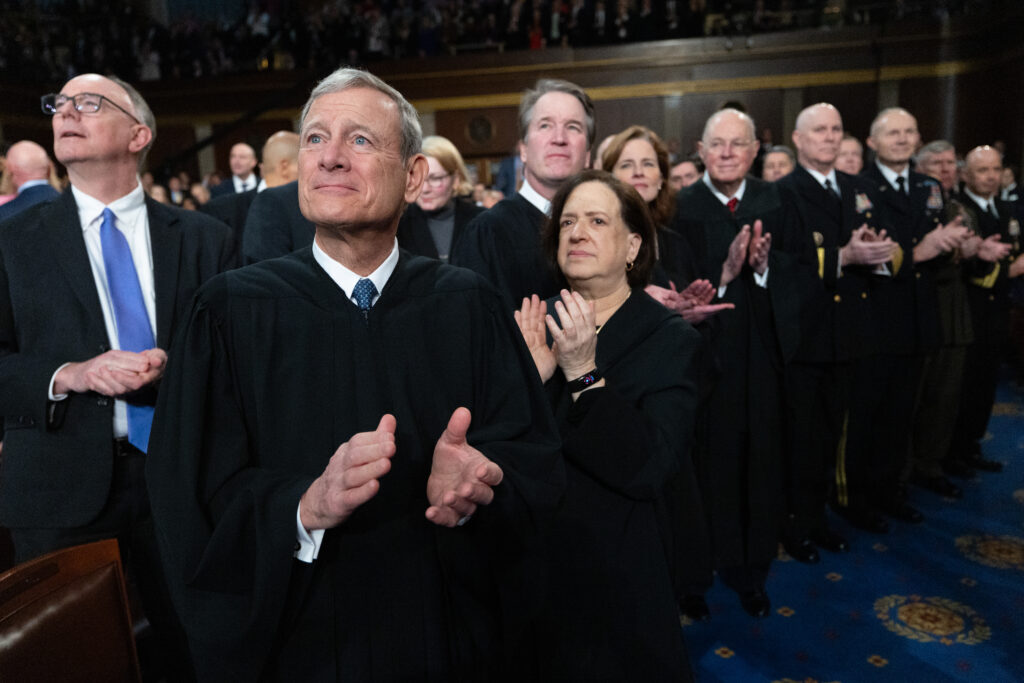
On Monday, June 23, 2025, the U.S. Supreme Court issued a landmark 6-3 decision upholding former President Donald Trump’s removal of Rebecca Slaughter, the last Democratic member of the Federal Trade Commission (FTC), without stated cause. The move bucks nearly a century of legal tradition, notably challenging the precedent set by Humphrey’s Executor v. United States (1935), which has long insulated independent federal agencies from direct political firings by the president.
The majority’s unsigned order — issued as part of the Court’s controversial emergency, or “shadow,” docket — grants Trump a stay on a lower court ruling that had required Slaughter’s reinstatement. Simultaneously, the Court announced plans to hear oral arguments in December on whether to fully overturn Humphrey’s Executor, indicating that a dramatic change to the structure and independence of U.S. regulatory agencies may be on the horizon.
A Historic Precedent Under Threat
Humphrey’s Executor v. United States has served since 1935 as the judicial foundation for the autonomy of federal agencies such as the FTC, Securities and Exchange Commission (SEC), and Federal Communications Commission (FCC). That ruling held that presidents could only remove commissioners for specific causes, such as inefficiency or malfeasance, preserving a check against overt political interference.
The current Court’s actions, however, signal a potential willingness to grant future presidents far greater authority to dismiss appointees at will. Legal experts say this could profoundly reshape the delicate balance between Congress’s intent in establishing independent agencies and the executive’s control over federal operations.
According to Dr. Emily Haggerty, a law professor at Georgetown University: “If the Supreme Court overtly reverses Humphrey’s, it would give the White House sweeping new powers — not only over the FTC, but over a wide range of independent regulatory bodies, potentially undermining checks and balances built into modern U.S. governance.”
The Decision and Its Dissent
The Supreme Court’s majority did not offer a detailed explanation for its decision. However, the dissent, authored by Justice Elena Kagan and joined by Justices Sonia Sotomayor and Ketanji Brown Jackson, delivered a sharp rebuke. Justice Kagan accused the majority of undermining nearly a century of settled law purely via the emergency docket, which typically provides for expedited, sometimes unsigned, orders outside the normal oral argument schedule.
“The President cannot, as he concededly did here, fire an FTC Commissioner without any reason,” Kagan wrote. “To reach a different result requires reversing the rule stated in Humphrey’s: It entails overriding rather than accepting Congress’s judgment about agency design.”
Kagan further criticized the recent trend of major Supreme Court changes made through the so-called “shadow docket,” bypassing the regular process of precedent review. She warned, “Our emergency docket should never be used, as it has been this year, to permit what our own precedent bars. Still more, it should not be used, as it also has been, to transfer government authority from Congress to the President, and thus to reshape the Nation’s separation of powers.”
Political and Legal Implications
This ruling lands amid a wider debate over the structure and power of administrative agencies in the federal government. Conservatives have long criticized the so-called “administrative state,” arguing that independent commissions sometimes wield unchecked power. Proponents counter that such independence is necessary to shield vital regulators from political retaliation and short-term partisan interests.
The Supreme Court’s decision follows a pattern of recent rulings expanding executive authority. In decisions such as Seila Law v. CFPB (2020), the Court found restrictions on presidential removal powers unconstitutional for single-director agencies, laying groundwork for further rollback of agency independence. Monday’s order pushes even further, threatening multi-member bodies like the FTC or SEC.
This shift has immediately alarmed consumer advocates and progressive organizations, many of whom warn that undermining agency independence could subject core regulatory functions to heightened political influence, from antitrust enforcement to consumer protection. Nearly 30 federal agencies would be affected should the Supreme Court officially overturn Humphrey’s Executor later this year.
Broader Context: The ‘Shadow Docket’ and Judicial Transparency
Criticism has also mounted over the Supreme Court’s increasing reliance on the so-called “shadow docket.” Over recent years, the Court has issued more consequential rulings outside the regular argument calendar, typically in unscheduled, unsigned, and unexplained orders. Critics — including several lower court judges — argue this lack of transparency erodes public trust and leaves lower judiciary in legal limbo. Judge Sheila Robbins of the U.S. District Court recently stated, “Without clear explanations from the highest court, lower courts are left guessing between formal precedent and sudden departures.”
What’s Next for Agency Independence?
The Supreme Court will revisit the fate of Humphrey’s Executor in December 2025, with oral arguments scheduled on whether to fully overturn the historic precedent once and for all. If the Court grants the executive branch broad powers to remove agency commissioners without cause, it could mark one of the most significant shifts in American constitutional law on executive authority in nearly a century.
For now, legal scholars, lawmakers, and regulatory agencies alike are bracing for a potentially transformative decision. The outcome could redefine how America’s multifaceted regulatory machinery is insulated — or exposed — to the political winds blowing from the White House.
As this is a developing story, further legal arguments and public reactions are expected in the coming months.


