
The Fall of Elon Musk Down Fortune’s 100 Most Powerful People in Business List Shows How Power Is Impermanent
By Diane Brady
August 5, 2025
This week, Fortune released its much-anticipated 2025 ranking of the 100 Most Powerful People in Business. This diverse and dynamic list encapsulates not only business acumen but also vision, impact, and the ability to influence industries and societies on a global scale. This year’s reshuffling at the top of the rankings is a telling reminder that power in the modern business world is anything but static.
A New Leader: Jensen Huang at No. 1
One of the most significant changes from last year’s list is the ascension of Nvidia CEO Jensen Huang to the No. 1 position. Huang’s rise comes as Nvidia cements its role at the epicenter of the artificial intelligence (AI) boom. Over the past year, Nvidia’s market capitalization soared past $3.2 trillion, overtaking tech giants like Apple and Microsoft during 2025. The company’s AI chips have become fundamental infrastructure for generative AI models, autonomous vehicles, data centers, and scientific computing.
Huang’s leadership has not only driven innovation but also enabled Nvidia to secure critical partnerships and strengthen its dominance, with products essential to the ambitions of OpenAI, Google, Microsoft, and Meta. The company’s recently reported revenue exceeded $106 billion for fiscal 2025, up markedly from $60.9 billion in 2024, showing how Huang’s decisions have translated into robust growth and future influence.
The Musk Descent: Why Power Is Fleeting
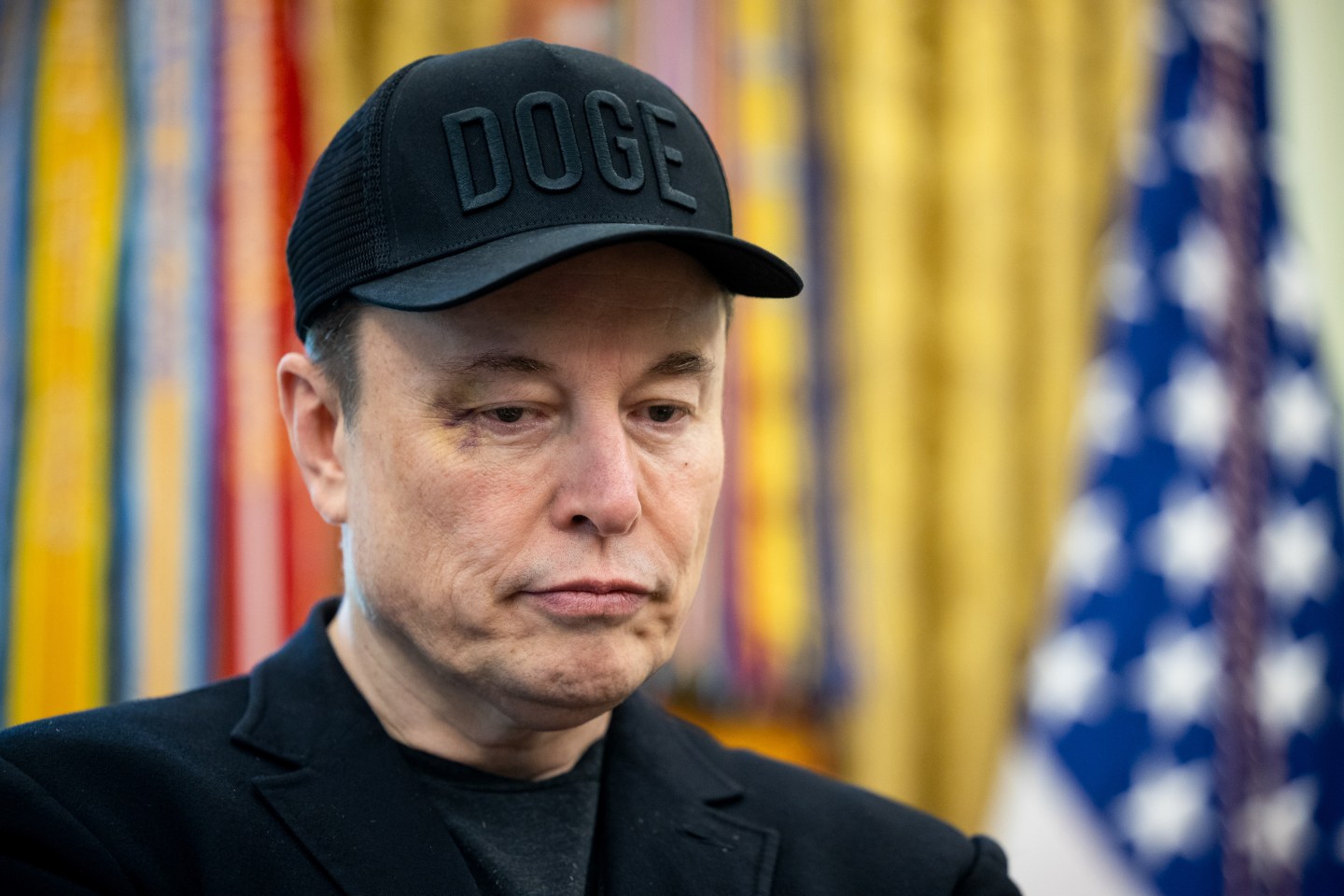
Perhaps even more headline-grabbing is the movement of Elon Musk from No. 1 last year to No. 4 in 2025. Musk’s business portfolio—spanning Tesla, SpaceX, X (the former Twitter), and xAI—remains vast and impactful. However, his drop in the rankings underscores the multifaceted nature of business power, which goes far beyond financial results or company size and considers reputation, industry impact, regulatory environment, and the evolving expectations of leaders.
Musk’s past year has been characterized by increased regulatory scrutiny, particularly regarding Tesla’s vehicle safety features, autonomous driving claims, and workplace culture. Tesla’s share price volatility and rising competition from established automakers (like Ford and GM) and Chinese rivals (notably BYD, which in July 2025 surpassed Tesla in global electric vehicle sales according to the Fortune Global 500) have further pressured Musk’s influence in the automotive sector.
At SpaceX, the company continues to lead in commercial space launches and Starlink satellite deployments, but the space market is seeing increased investment and new entrants—dampening its previously unassailable position. As for X and xAI, while Musk has fueled conversations in tech and politics, the platforms have faced criticism over moderation, adoption, and, in xAI’s case, its race to match rivals such as OpenAI, Anthropic, and Google DeepMind.
The Criteria: What Defines Power?
Unlike rankings based on revenue or market cap alone, the Fortune Most Powerful list uses a holistic framework. Factors include:
- Company health and performance
- Innovation and disruptive capacity
- Industry and global influence
- Social and political impact
- Leadership style and endurance
This multifactor approach is why, for example, Lisa Su, CEO of AMD and cousin to Jensen Huang, is fast closing in on Huang with AMD’s rapid advances in AI and graphics processing, and why leaders in emerging industries continue to climb.
Powerful Rivalries Fuel the Business World
This year’s rankings and companion coverage, highlight the impact of rivalries among leading companies and CEOs. Whether it’s Nvidia versus AMD, OpenAI against Meta and Anthropic, or Tesla’s faceoff with BYD and legacy automakers, competition fosters both innovation and instability. The presence of strong rivals ensures that even today’s most powerful figures face constant pressure to adapt and excel.
For Musk, challengers are growing on multiple fronts: BYD in China on electric vehicles, Jeff Bezos’s Blue Origin on space launches, and Sam Altman’s OpenAI and Dario Amodei’s Anthropic in AI. Power, therefore, is not just about commanding industries but navigating persistent threats to one’s dominance.
Evolution of Influence: External Forces and Policy Changes
The past year saw not only corporate rivalries but also enhanced scrutiny by regulators worldwide. Musk, in particular, faced investigations into labor practices, the handling of social media content, and antitrust issues surrounding Tesla’s market share. Meanwhile, tech CEOs have been called to testify on Capitol Hill multiple times concerning AI’s societal impacts and the responsibilities of digital platforms.
Political shifts also play a role. As governments in the U.S., Europe, and Asia impose new rules on data privacy, emissions standards, and cross-border tech investment, even the most powerful executives must demonstrate agility and foresight to retain influence.
Power Is Relative—and Temporary
The 2025 Fortune list ultimately illustrates that power in business is not a permanent asset—but a dynamic state awarded to those who combine ambition with adaptability. Musk’s journey from the top down reflects both his spectacular achievements and the relentless pace of change in the sectors he leads. Figures like Jensen Huang demonstrate how visionary leadership can propel a company—and its CEO—into new realms of global influence.
Next year’s list might highlight different names, as markets, technologies, and societies evolve. For now, the rise of AI and chipmaking leaders, the continued competition in electric vehicles and spaceflight, and the constant scrutiny of regulatory authorities all converge to define power in 2025.


