
Trump Administration Backs Down in Part: DC Police Chief Remains Amid Federal Takeover Controversy
By CNN Staff | August 15, 2025

Federal Control Spurs Legal Battle and Protests
In a historic and controversial move, President Donald Trump declared a public safety emergency in Washington, DC, triggering a partial federal takeover of the Metropolitan Police Department (MPD). The action, which followed a highly publicized assault on a former government employee and concerns over violent crime, initially mandated the appointment of DEA Administrator Terrance Cole as “emergency police commissioner,” drastically shifting command authority away from local officials.
Attorney General Pam Bondi’s order was met with immediate legal opposition from DC officials. The district’s Attorney General, Brian Schwalb, swiftly filed a lawsuit challenging the federal incursion as an excessive use of power that violated the District’s Home Rule guarantees—long a contentious issue in the nation’s capital, which lacks full statehood and Congressional representation.
“Very important win for Home Rule today,” Schwalb said after a tense court session, reflecting cautious optimism that the Trump administration had agreed to revise its order to restore authority to Police Chief Pamela Smith—at least on paper.
Judge’s Intervention and Order Revision
The standoff reached a tipping point in federal district court, where Judge Ana Reyes urged the parties to find a practical solution amidst mounting public concern. Reyes—herself recently the focus of high-profile legal debates—directed the Department of Justice to rework the controversial language or face a temporary restraining order halting the federal intervention.
Following intense deliberations, the Justice Department’s revised order allowed Chief Smith to remain at the helm of the MPD while requiring all significant directives from the administration to funnel through DC Mayor Muriel Bowser’s office. While this revision avoided an outright federal personnel takeover, it maintains the unprecedented reality of federal officials directing local police through the mayor, sidestepping traditional DC Home Rule protections.
“Residents of the District of Columbia…have a right to feel safe and to be free from the scourge of violent crime,” Bondi’s new order declared, referencing what the administration described as an ongoing crisis.

Maintaining Control: Short-Term, Broad Powers
Despite the revised order, the Trump administration retains broad authority to direct police operations, justified under Section 740 of the DC Home Rule Act, which allows the President to request police services in an emergency. Legal experts, however, note the law’s ambiguity—especially regarding the installation of external commanders and the override of local laws, such as DC’s sanctuary city provisions.
“The law says the mayor shall provide such services of the Metro PD as the President may deem necessary and appropriate,” legal analyst Elie Honig explained. “But what DC is trying to argue is, well, ‘provide such services’ does not mean take over our personnel.’”
Under current terms, unless extended by Congress, federal control is limited to 30 days. Both the White House and DOJ have indicated intentions to seek congressional authorization for a longer-term federal role, reflecting ongoing concerns about urban crime rates and public safety policy heading into the 2026 election year.
Public Response: Widespread Protest and Concern
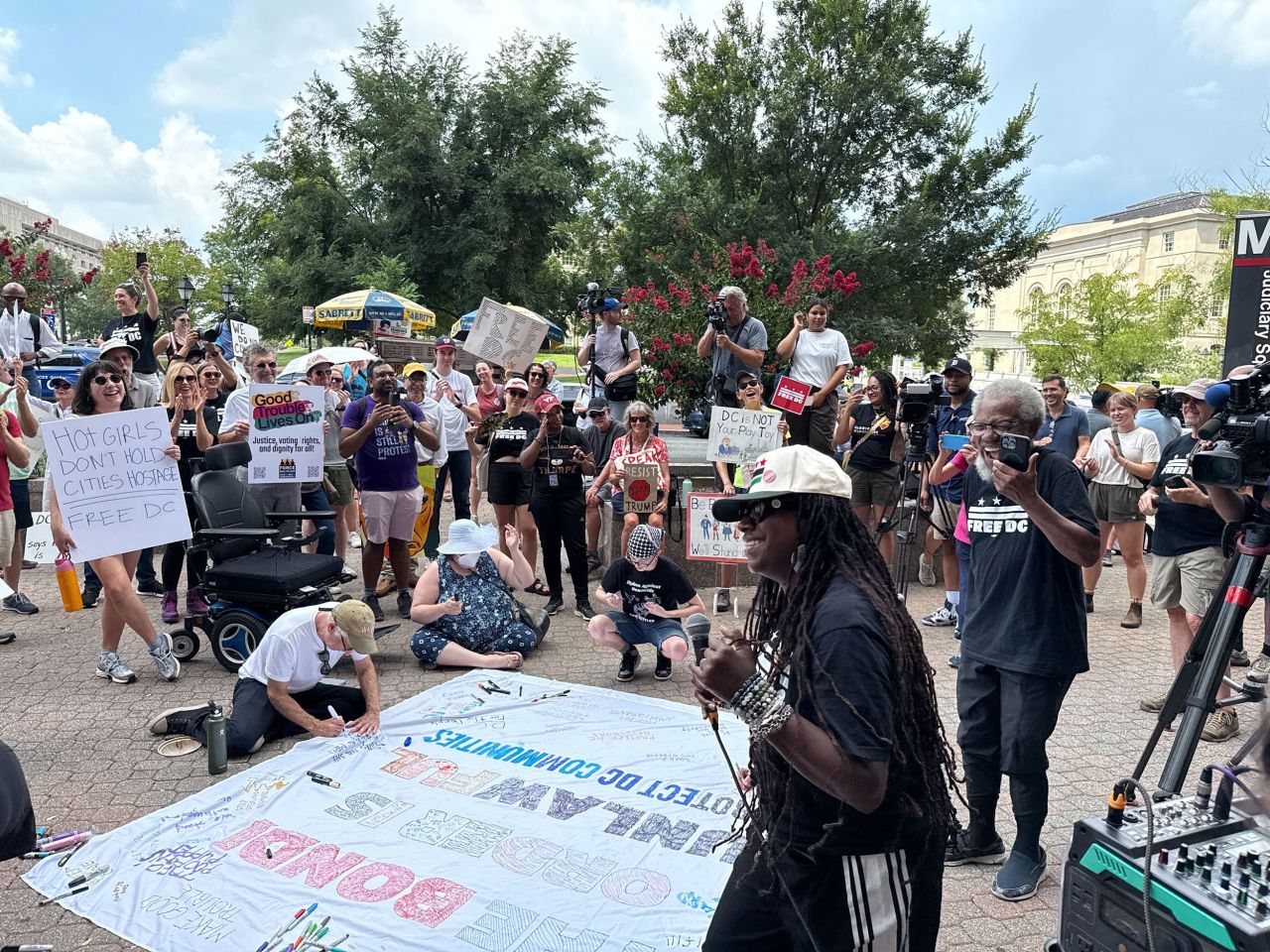
The emergency federal takeover has ignited significant grassroots opposition. Demonstrators gathered at DC police headquarters and landmarks such as the National Mall in recent days, protesting what they called a “dangerous precedent” and an assault on local democracy.
“With Trump’s takeover, I felt what’s going on in DC is terrifying,” said Katie Garcia, a local resident. Others described increased stops by federal agents and a climate of heightened mistrust—raising echoes of civil liberties concerns seen in protests nationwide during the previous decade.
Chief Smith, in her own court filings, underscored the risk to public safety and to MPD officers of an unclear chain of command, arguing, “In my nearly three decades in law enforcement, I have never seen a greater threat to law and order than this directive.”
Crime, Policing, and Political Divisions
The stated impetus for the crackdown—rising violent crime—has itself been contested. DC, like several other major U.S. cities, saw fluctuating crime statistics in 2024 and early 2025, with some categories of violent crime up and others down. MPD data reported an average of 55 daily adult arrests earlier this year, while the joint operation’s first night under federal direction saw 33 arrests and multiple firearms seized, according to White House officials. Critics argue that federal intervention risks politicizing law enforcement and setting a precedent that could be invoked in other Democratic-led cities.
Policymakers and legal advocates are closely watching how the courts define the scope of presidential emergency powers—an issue growing more prominent in the wake of recent national crises.
Looking Ahead: Congressional Role and Lasting Impacts
According to the Home Rule Act, continued federal control of DC police beyond 30 days will require explicit Congressional approval—a process likely to be hotly debated given the current divisions in Congress. The Trump administration has stated its intent to seek an extension, arguing for the necessity of sustained intervention.
In the meantime, DC officials—including Mayor Bowser and AG Schwalb—continue to explore legal avenues to reassert full local autonomy.
This episode is being viewed as not only a test of the District’s self-governance but also as a bellwether of federal-local relations in metropolitan America. The legal and civic outcomes may influence how future administrations deploy emergency powers in the face of local resistance.
The next 30 days, and the debates in Congress they may trigger, are certain to keep Washington, DC at the forefront of the national conversation on governance, civil liberties, and public safety.


