
Trump Administration Requests $58 Million Security Boost After Charlie Kirk Assassination Amid Rising Political Violence
By Scott Wong and Raquel Coronell Uribe | September 14, 2025
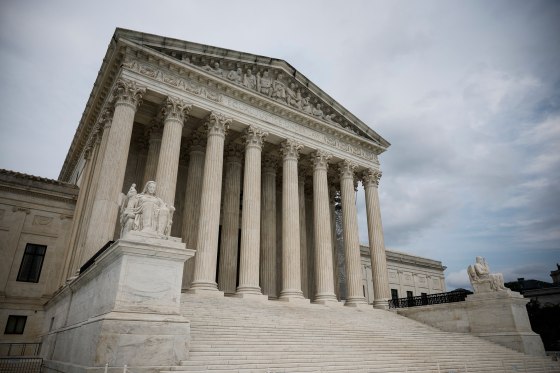
The Trump administration has formally requested Congress approve a $58 million increase in federal security funding, following the assassination of conservative commentator Charlie Kirk in Utah. This urgent bid for action reflects growing anxiety across the executive and judicial branches after a recent spike in threats and acts of political violence against prominent public figures in the United States.
Security Funding Urgency Intensifies Left and Right
The administration’s request, confirmed by senior aides, specifically calls for expanded protections for members of all three federal government branches. While supportive of increased protective measures for Congressional members, the White House has deferred to legislative leaders on the exact security approach for lawmakers, highlighting a cooperative but urgent bipartisan effort to address the deteriorating safety landscape faced by public officials.
This plea for additional security resources comes amidst heated negotiations over a stopgap funding bill to avoid a federal government shutdown. Recent weeks have witnessed a marked uptick in political violence, as high-profile officials and their families have been targeted, sparking alarm on Capitol Hill and across the nation. Some lawmakers have moved events behind closed doors or cancelled public appearances altogether, a trend raising questions about the effects on American democracy and public engagement.
Wave of Violence and Assassination Attempts
Kirk’s assassination represents the latest in a distressing sequence of attacks. Earlier this year, Democratic Minnesota lawmaker Melissa Hortman and her husband were killed in what authorities describe as a politically motivated attack. Her Democratic colleague and spouse were also gravely injured. Pennsylvania Governor Josh Shapiro’s residence was recently the site of an arson attack. Most notably, last summer saw two assassination attempts targeting President Donald Trump, incidents which culminated in a sweeping review of executive protection protocols by the Secret Service and Department of Homeland Security.
According to the U.S. Marshals Service, threats against federal judges have more than doubled from just a decade ago, while the U.S. Capitol Police reported a record 9,600 threats or concerning statements against Members of Congress in 2024. This climate of volatility is not unique to the United States; democracies worldwide have reported surges in political violence, as underscored by the 2022 assassination of former Japanese Prime Minister Shinzo Abe and other high-profile attacks.
Reactions from Lawmakers and Security Leaders
In response to these alarming incidents, House Democrats scheduled a virtual briefing with the House Sergeant at Arms and the Chief of the Capitol Police to discuss updated security protocols and guidance. Invitations were also extended to lawmakers’ spouses and significant others, underscoring the broader scope of concern for familial safety. The briefings come on the heels of internal reports urging upgraded protective measures not only for principals but also their loved ones, as political violence has increasingly spilled past official boundaries.
Lawmakers from both political parties expressed support for the Trump administration’s funding request. Senator Chris Coons (D-Del.), in a televised interview with Senator James Lankford (R-Okla.) on CBS’s “Face the Nation,” emphasized the urgency, stating, “I hope we will invest in securing our public life, because incidents like this tragedy in Utah, like the murder of Melissa and her husband, Mark Hortman, in Minnesota, frankly, fuel further anger in our country. And the ways in which folks are then taking the horrific images of these incidents and propagating them on the internet adds fuel to the fire.”
Sen. Lankford concurred, adding, “When we’re talking about protecting judges and protecting individuals, it’s not just their personal safety. It is really declaring to the nation that we believe that these tasks are hard, that there should be intense debate, that we have very different perspectives.”
Broader Context: Protecting Democracy and Civil Discourse
Experts warn that the rising tide of threats risks undermining the foundation of American democracy. The Department of Justice and Department of Homeland Security have ramped up monitoring of domestic threats, while the Federal Protective Service has begun deploying new screening technologies and expanding training for officers in response to evolving risks. Agencies are also reviewing the public availability of officials’ home addresses and personal data, a chronic issue exacerbated by social media and doxing attempts.
Political analysts note that, historically, political violence has surged during periods of cultural polarization and contentious electoral cycles. The U.S. has seen repeated cycles of targeted attacks, but the current volume and severity have reached levels unseen since the 1970s. Congressional leaders fear that sustained violence may chill civic participation, dissuade qualified individuals from seeking public office, and hinder the open debate central to democracy.
Future Steps and Legislative Actions
Passage of the $58 million security request remains uncertain in a deeply divided Congress, but momentum appears to be building as more lawmakers acknowledge the gravity of current threats. House and Senate security committees are considering a range of measures, including enhanced threat intelligence, expanded resources for the U.S. Marshals Service, increased physical barriers for judicial and legislative buildings, and bolstered cyber defenses to counter digital harassment and doxing.
The need for a sustained response has become a rare point of consensus on Capitol Hill. Leadership aides anticipate that the final appropriations may attach additional oversight and transparency requirements to ensure funds are used effectively.
Conclusion
As the Trump administration presses Congress for swift action, the debate underscores a dark reality: the safety of public officials can no longer be taken for granted. Given the recent string of high-profile attacks and a demonstrable surge in threats, government institutions at all levels are moving to adapt. With bipartisan support emerging, Congress faces a critical test—whether it can respond decisively to ensure that American democracy remains open, engaged, and secure for all participants.


