
Trump Unveils Sweeping AI Action Plan Centered on Global Dominance, Industry-Led Innovation
| By The Associated Press
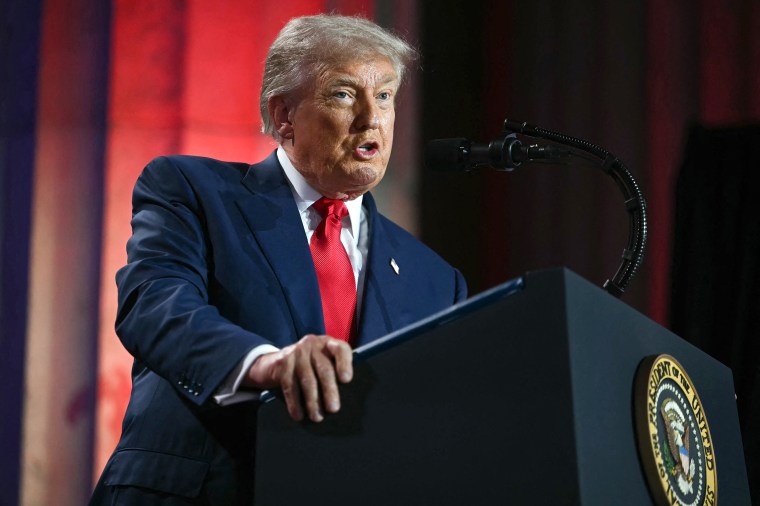
The AI Action Plan: A New Direction for US Technology Policy
President Donald Trump unveiled a comprehensive new “AI Action Plan” on Wednesday, signaling a dramatic shift in U.S. technology policy with an explicit focus on ensuring American dominance in the global artificial intelligence race. Appearing at the “Winning the AI Race” summit—co-hosted by bipartisan policymakers and the “All-In” tech podcast—Trump was joined by key industry figures and his top AI adviser, David Sacks, a prominent Silicon Valley investor and critic of AI regulation.
The plan, echoing the priorities of influential technology lobbyists and powerful venture capital backers, outlines an aggressive effort to scale up innovation, prioritize pro-business strategies, and directly challenge what Trump argues are excessive federal regulations slowing technological progress. It marks a notable reversal from the Biden administration’s emphasis on AI safety guardrails and ethical frameworks, which Trump revoked shortly after taking office in 2025.
Key Components: Deregulation, Accelerated Growth, and Export Expansion
- Environmental Deregulation: Trump’s executive orders call for dramatically reducing environmental review requirements, especially for permitting the construction of AI data centers and supercomputing factories. Critics argue this approach could threaten air and water quality, while proponents say it’s necessary to keep pace with Chinese infrastructure expansion.
- Boosting U.S. AI Exports: With the stated goal of making American AI a dominant global standard, the plan seeks to streamline export approval for AI technologies, urging federal agencies to support companies seeking access to overseas markets and limiting state-level export restrictions. According to the U.S. International Trade Administration, AI represents one of the fastest-growing segments in U.S. tech exports, seeing double-digit annual growth in 2023 and 2024.
- Anti-“Woke AI” Mandates: Tapping into a frequent culture-war rallying cry, the plan prohibits federal contracting with any tech company whose AI models are deemed ideologically biased. Trump insists future AI systems operating in government or critical industries must be “objective and founded on American values.” This echoes high-profile controversies such as Google’s 2024 image generator rollout, which faced backlash over perceived political correctness.
- Federal Preemption Over States: Trump’s plan aims to establish a single national regulatory approach, superseding state laws seen as obstructive to AI development. “We need one common sense federal standard that supersedes all states,” Trump said, warning that a patchwork of state rules could stifle innovation and lead to costly legal battles.
Supercharging AI Infrastructure: The Data Center Boom
A centerpiece of the AI Action Plan is a commitment to accelerating the construction of AI supercomputing infrastructure. Demand for AI capabilities has sparked a digital arms race, with U.S. technology giants including OpenAI, Amazon, Microsoft, Meta, and xAI building multibillion-dollar data centers nationwide. OpenAI, in partnership with Oracle, recently launched a massive new data center complex in Abilene, Texas, part of the “Stargate” project highlighted by Trump earlier in the year.
“We will be adding at least as much electric capacity as China,” Trump declared. “Every company will be given the right to build their own power plant.” The president’s stance is widely supported by industry executives seeking reliable, low-cost energy for AI operations, but has alarmed environmentalists and local residents already wary of rising power demand and its contribution to climate change.
According to industry tracker Synergy Research Group, global investment in AI data centers exceeded $75 billion in 2024, with the U.S. accounting for nearly half that total. Recent forecasts from the International Energy Agency (IEA) suggest that data center electricity consumption worldwide could double by 2026 if current trends continue.
Opposition and Debate: Who Benefits?
The White House push for deregulation and rapid expansion has been cheered by venture capitalists such as Marc Andreessen and Elon Musk, both vocal proponents of tech acceleration and innovation freedom. However, more than 100 advocacy organizations—from labor unions to privacy groups—have signed a resolution condemning the plan as prioritizing corporate profits over public benefit.
J.B. Branch of Public Citizen, a tech accountability watchdog, warned: “Under this plan, tech giants get sweetheart deals while everyday Americans will see their electricity bills rise to subsidize discounted power for massive AI data centers. Americans deserve an AI future rooted in safety, fairness, and accountability—not a handout to billionaires.”
The United Nations has also weighed in, with Secretary-General António Guterres urging the world’s leading tech companies to commit to powering all new data centers with 100% renewable energy by 2030, a sharp contrast to Washington’s deregulatory approach.
Industry, Investment, and the Road Ahead
The Trump administration’s AI Action Plan sets the tone for the next chapter in America’s tech policy—one that may define the boundaries between government oversight, global competition, and free enterprise for years to come. Already, venture capital investment in U.S.-based AI startups surpassed $65 billion in the first half of 2025, according to PitchBook, reflecting investor confidence in lighter-touch regulation and robust government support.
Still, the intense debate over how best to harness the promise of AI without sacrificing public interest or environmental protections is far from settled. Expect contentious hearings, legal challenges, and continued lobbying as Congress, state governments, and the White House wrestle over the delicate balance between innovation, competition, and responsibility in the age of artificial intelligence.


