
Trump Welcomes Philippine President Marcos Jr. to White House, Signals Potential Trade Deal Amid Geopolitical Tensions
WASHINGTON, D.C. — President Donald Trump held a high-profile summit with Philippine President Ferdinand Marcos Jr. at the White House on July 22, 2025, marking a pivotal moment for U.S.-Philippines relations and reshaping the security and economic landscape of the Indo-Pacific region.
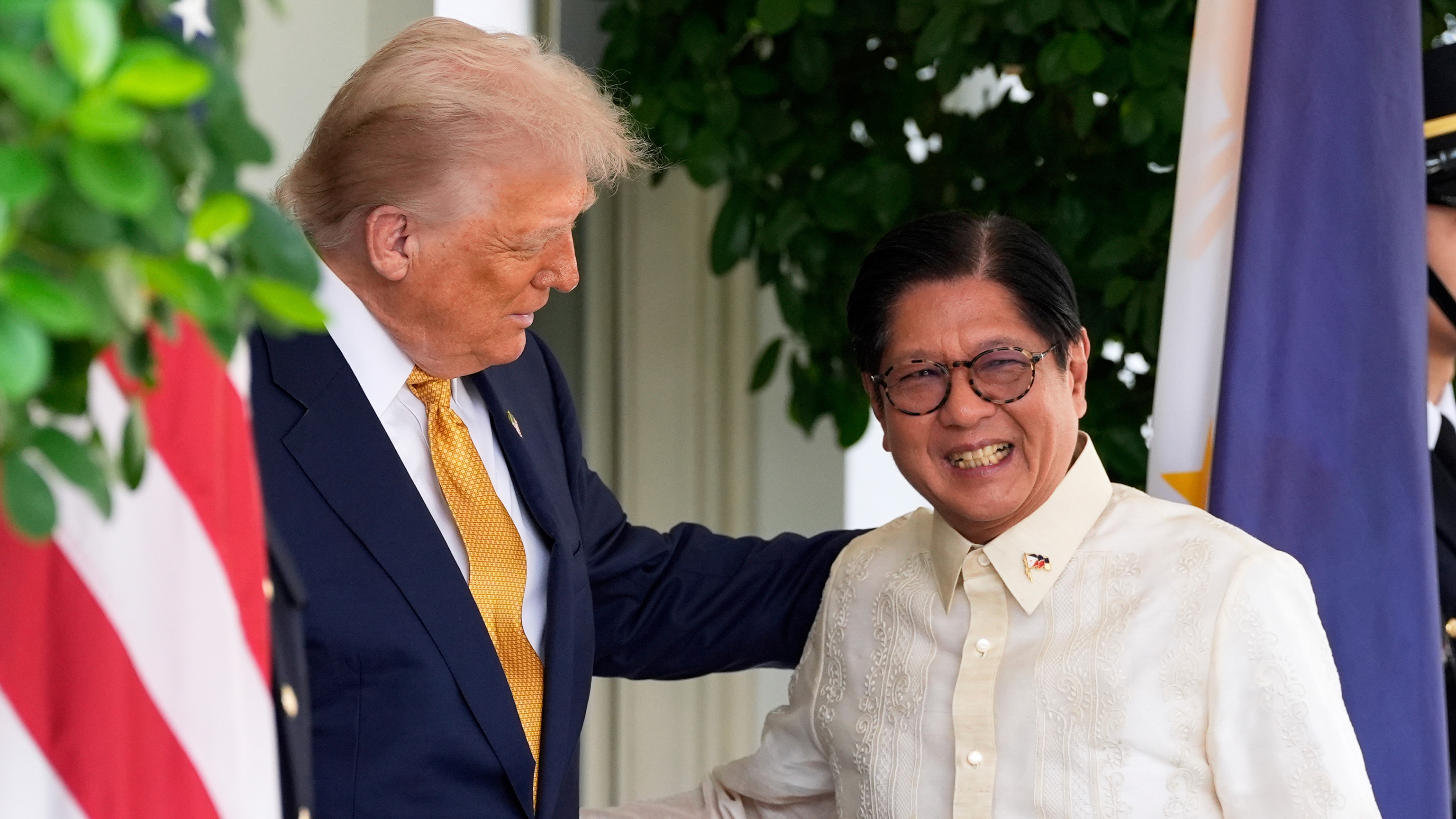
Strengthening an Age-Old Alliance
The bilateral talks come at a time of mounting tension in the Asia-Pacific, with the U.S. looking to reaffirm its alliances amid China’s growing assertiveness, especially in contested territories like the South China Sea. The Philippines, a U.S. treaty ally since 1951, stands at the front line of these disputes, regularly clashing with Beijing over maritime access and sovereignty.
President Marcos Jr. is the first Southeast Asian leader to engage with President Trump in his second term, underscoring the Philippines’ critical role in U.S. strategic calculations. The summit is also a reflection of the Biden, and now Trump, administrations’ bipartisan effort to “pivot to Asia” to counterbalance Chinese influence.
Trade at the Forefront: Prospects and Pressure
Bilateral trade topped the summit agenda. When asked by reporters about the possibility of a U.S.-Philippines trade agreement, President Trump responded optimistically, “I think we will,” hinting at a breakthrough on the ongoing discussions. Both sides are pushing to solidify a deal before the August 1 deadline when the U.S. has threatened to impose a 20% tariff on Filipino goods.
“The Philippines is ready to negotiate a bilateral trade deal that will ensure strong, mutually beneficial and future-oriented collaborations,” Marcos declared before departing for Washington. His Finance Secretary, Ralph Recto, indicated the Philippines may offer zero tariffs on select U.S. goods—a move expected to benefit both nations’ export sectors and deepen economic ties.
The U.S. and Philippines share over $30 billion in annual two-way trade, with the U.S. importing electronics, machinery, and agricultural products from the Philippines. For Manila, ensuring preferential access to the vast American market is crucial to mitigating economic headwinds.
White House Press Secretary Karoline Leavitt confirmed that trade was a central subject, stating, “Perhaps this will be a topic of discussion,” as negotiations progress.
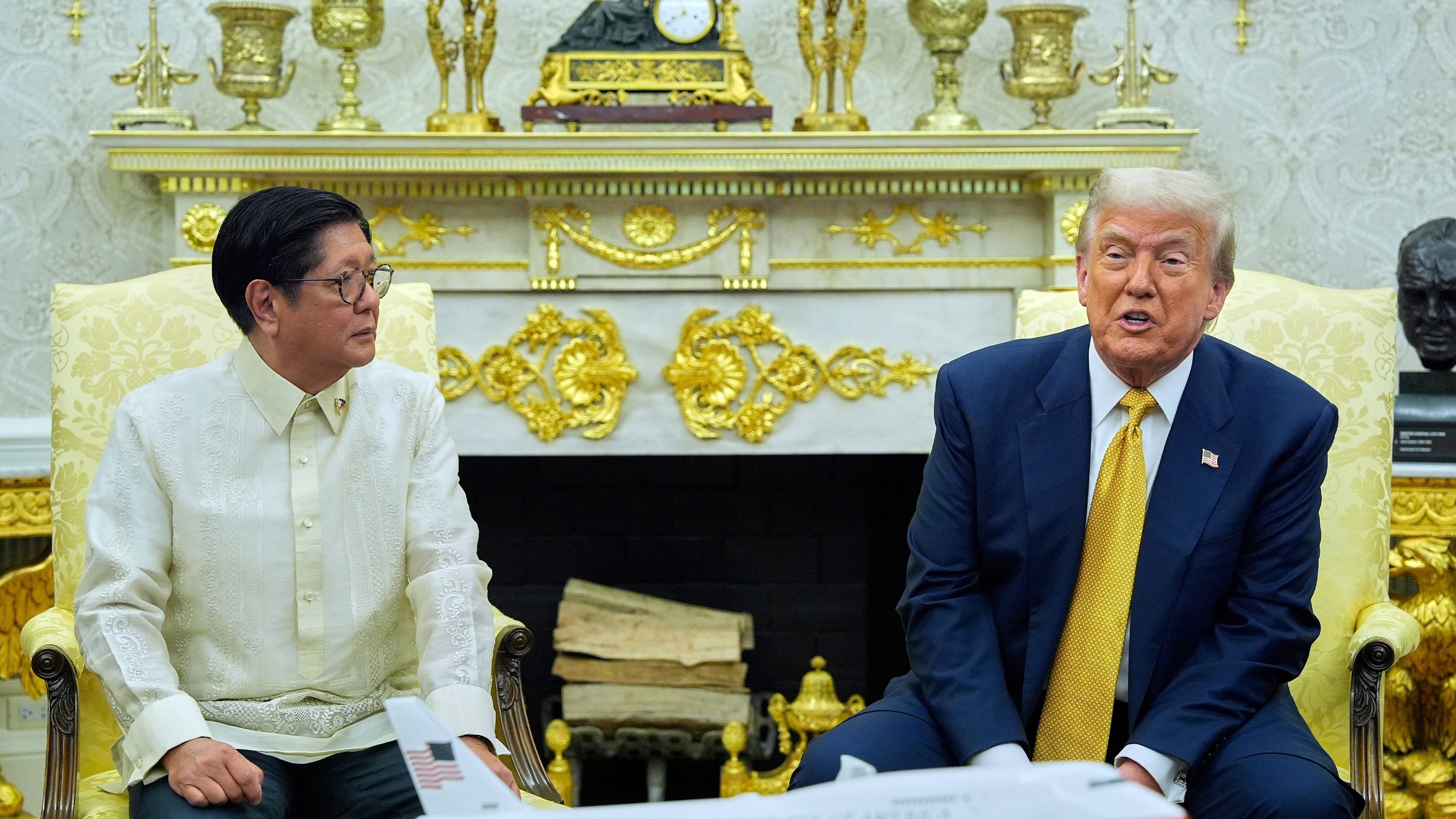
Security Commitments Reinforced
U.S. officials highlighted the enduring defense partnership with Manila. “Our storied alliance has never been stronger or more essential than it is today,” noted U.S. Defense Secretary Pete Hegseth after reaffirming that the 1951 Mutual Defense Treaty covers armed attacks on both armed forces in the Pacific, explicitly including the volatile South China Sea region.
Since earlier this year, military cooperation has expanded, with frequent joint exercises and American support for modernizing the Philippine armed forces. In 2024 alone, the U.S. increased its military aid to the Philippines, including funding for coastal radar networks and maritime surveillance. These moves come amid increasingly aggressive actions by the Chinese coast guard, which has used water cannons against Filipino vessels in disputed waters.
President Marcos thanked the U.S. for these commitments, stating, “The assurance of mutual defense continues to be the cornerstone of our relationship, especially in these uncertain times.” He highlighted growing concerns among ASEAN nations over China’s island-building and militarization efforts.
Regional Diplomatic Context and U.S.-China Dynamics
Beyond trade and security, the summit is part of a broader diplomatic choreography across the Indo-Pacific. Just prior to the White House meeting, State Secretary Marco Rubio and Chinese Foreign Minister Wang Yi held dialogue on the sidelines of the ASEAN Regional Forum in Kuala Lumpur, seeking to manage rivalry and explore practical cooperation.
The Philippines, for its part, has filed dozens of diplomatic protests over Chinese incursions in the South China Sea during 2024 and 2025. Recent confrontations near Scarborough Shoal—one of the world’s richest fishing grounds—have exacerbated tensions, raising fears about freedom of navigation for nearly $3 trillion in annual global commerce transiting the region.
To de-escalate, Washington has increased its naval presence and conducted freedom-of-navigation patrols alongside Philippine vessels—a signal to regional partners of U.S. commitment to a “free, open, and rules-based Indo-Pacific.” Asian and European allies have largely echoed condemnation of China’s assertive posture, while Beijing maintains its territorial claims are “indisputable.”
A New Chapter for U.S.-Philippines Relations?
The outcome of the ongoing trade negotiations is poised to set a fresh direction for U.S.-Philippines relations at a time of global economic uncertainty and shifting defense alliances. Both nations have much at stake: for Trump, securing a bilateral trade deal supports his economic agenda and demonstrates U.S. influence in Asia, while for Marcos, tangible security and economic benefits serve to bolster domestic support amid intense geopolitical rivalry.
Experts note that the U.S.-Philippine alliance remains one of the oldest and most strategically significant in the region. Through renewed trade agreements, increased military aid, and diplomatic engagement, Washington and Manila hope to preserve peace and stability in the Indo-Pacific and demonstrate their resilience in the face of mounting challenges from China.
As details of a potential deal are finalized, both leaders face scrutiny at home and abroad—Trump with an eye on global leadership and election prospects, Marcos on shoring up his own administration’s credibility and regional influence. The coming weeks will determine whether the visit will be remembered as a turning point or as another chapter in the ongoing contest for Indo-Pacific supremacy.


